News
Governors spend N512bn on travels, offices

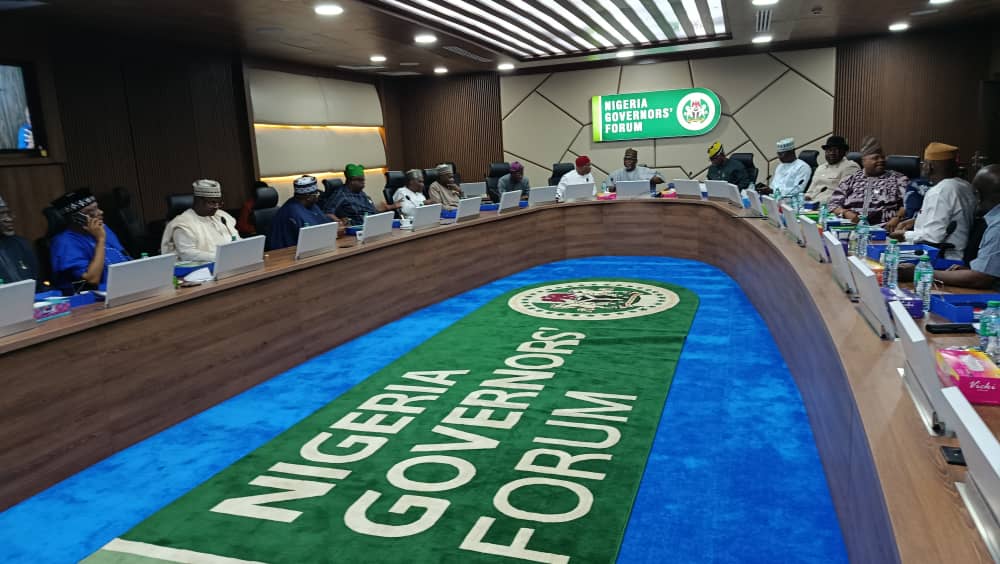
Thirty-three state governments spent at least N512.10bn on Government Houses, Governors’ Offices and travel and transport in the first six months of 2026, an amount about 4,713 times higher than the combined six-month salary of Nigeria’s 36 governors, an analysis of state budget implementation reports has shown on Monday.
The analysis showed that while a governor’s stated monthly salary of N503,000 translates to N3.018m over six months, the combined six-month salary of all 36 governors would amount to just N108.65m.
Against this, the available records showed that N420.01bn was identified under Government House, Governor’s Office and related executive administration expenditure, while another N92.09bn was spent under travel and transport budget heads.
The combined amount stood at N512.10bn. The six-month salary of all 36 governors, therefore, represented only 0.02 per cent of the identified expenditure on executive offices and travel.

The figures offers a striking contrast to the ongoing debate over the official salaries of Nigerian governors.
Delta State Governor, Sheriff Oborevwori, recently said his monthly salary was N503,000, arguing that some senior civil servants, including permanent secretaries earned N900,000 monthly, more than state governors.
But an analysis of the cost of maintaining the offices occupied by governors shows that their salaries represent only a fraction of the wider public expenditure and perks associated with the offices.
While the personal salary of a governor may appear modest compared with the salaries of some senior public servants, the analysis shows that the wider cost of maintaining the executive office runs into hundreds of billions of naira.
The figure is not the personal income of governors. Government House and Governor’s Office budget heads cover a broad range of official expenses, including administrative operations, staff, protocol, maintenance, official residences, utilities, security-related activities, state functions and other expenditure required to run the executive arm of government.
Similarly, travel and transport spending covers official local and foreign trips, transportation and related expenses across the wider state public service.
However, the figures provide an indication of the enormous public cost attached to maintaining the structures surrounding the offices of state governors and the larger fiscal question on the total public cost of maintaining the office and the administrative structures around it.
The analysis is based on available Budget Implementation Reports for the first and second quarters of 2026, using the largest identifiable Government House, Governor’s Office or executive administration expenditure line in each state, alongside the general travel and transport expenditure head.
Abia, Adamawa, Bauchi, Bayelsa, Borno, Cross River, Ebonyi, Ekiti, Enugu, Gombe, Imo, Jigawa, Kaduna, Kano, Katsina, Kogi, Kwara, Lagos, Nasarawa, Niger, Ogun, Ondo, Oyo, Plateau, Sokoto, Taraba, Yobe and Zamfara had the complete data. Comparable data were unavailable for Edo, Osun and Rivers.
For comparison, available records for the first half of 2025 showed N465.07bn spent under Government House, Governor’s Office and similar executive administration heads, while N92.73bn was recorded for travel and transport. The combined figure stood at N557.80bn.
This means that, based on the states and budget heads for which comparable data were available, the first-half 2026 expenditure was about N45.70bn lower, representing a 8.19 per cent decline, compared with the corresponding period of 2025.
Government House and Governor’s Office expenditure accounted for the larger share of the spending.
The amount fell from N465.07bn in the first half of 2025 to N420.01bn in the corresponding period of 2026, representing a reduction of N45.05bn or 9.69 per cent.
Travel and transport spending, however, was largely unchanged. Available records showed that states spent N92.09bn on travel and transport in the first six months of 2026, compared with N92.73bn in the same period of 2025.
This represented a marginal decline of about N643.66m, or 0.69 per cent.
The figures suggest that while spending under Government House and executive administration heads moderated in the available records, the cost of official travel remained broadly stable.
Commenting on the development, a development economist, Aliyu Ilias, said the enormous cost associated with maintaining executive offices showed why it was misleading to focus only on a governor’s basic salary without taking into account the wider expenses and privileges attached to the office.
He argued that executive offices in Nigeria had become excessively expensive to maintain, partly because political office holders had significant influence over how the institutions under their control were structured and funded.
“Ordinarily, anything that has to do with executive office in Nigeria appears to be much more expensive because they actually direct how it works there. And with the docile state assemblies we have, who always concur, it is clear that our democracy is very expensive because of the way we maintain their offices, and that is why it is very juicy.
“Some even want to go as far as borrowing money to win an election and, when they enter office, they believe they are going to repay the money. So, it is not correct to say that a Permanent Secretary is earning better than a governor when you isolate the governor’s salary without adding the other travel perks and expenses attached to the office.
“The governor just wanted to be sensational. But with the addition you have done, it shows that they are taking the bigger cheque from the spending arising from the high income that the state is generating,” Ilias said.
A state-by-state analysis of the 2026 Government House or Governor’s Office expenditure, Kogi recorded the highest amount at N65.34bn, followed by Ogun with N45.26bn and Lagos with N45.04bn.
Kano recorded N25.87bn, while Ekiti spent N25.22bn and Cross River recorded N23.92bn.
Bayelsa recorded N22.99bn, Imo N19.43bn and Enugu N16.20bn.
At the lower end of the available records, Oyo recorded about N1.95bn, Sokoto N2.20bn, Kwara N2.59bn and Abia N2.78bn.
Kogi’s figure alone represented more than 15 per cent of the identifiable Government House and Governor’s Office expenditure captured in the 2026 dataset.
On travel and transport, Plateau recorded the highest identifiable expenditure at N10.11bn in the first six months of 2026.
Lagos followed with N8.23bn, while Taraba recorded N5.16bn.
Niger spent N4.45bn, Ekiti N4.41bn, while Bauchi recorded N3.75bn and Yobe N3.68bn.
Oyo recorded one of the lowest identifiable amounts at N667.52m, while Kano recorded N626.95m.
The figures also showed wide variations in expenditure patterns between 2025 and 2026.
For example, Kogi’s Government House and Governor’s Office expenditure increased from N51.99bn in the first half of 2025 to N65.34bn in the corresponding period of 2026. This represented an increase of about N13.34bn, or 25.66 per cent.
Bayelsa’s identifiable spending rose from N14.48bn to N22.99bn, an increase of N8.51bn, or 58.75 per cent.
Cross River’s expenditure increased from N9.91bn to N23.92bn, representing a rise of about N14.01bn, or 141.37 per cent.
Ekiti, which had no comparable 2025 figure in the dataset provided for this analysis, recorded N25.22bn in the first six months of 2026.
Other states, however, recorded significant reductions.
Ogun’s identifiable Government House and Governor’s Office expenditure declined from N49.83bn in the first half of 2025 to N45.26bn in 2026, a reduction of N4.57bn, or 9.17 per cent.
Kano’s expenditure fell from N28.84bn to N25.87bn, representing a decline of about N2.98bn, or 10.32 per cent.
Niger recorded a smaller decline from N13.13bn to N14.15bn, although the available figures show an increase of about N1.02bn, or 7.74 per cent, underscoring the differences in spending patterns across the states.
Lagos recorded one of the most significant increases in the available data, with identifiable spending rising from N25.86bn in 2025 to N45.04bn in 2026, an increase of about N19.18bn, or 74.16 per cent.
The Revenue Mobilisation Allocation and Fiscal Commission is constitutionally responsible for determining the remuneration of governors and other political office holders. The existing remuneration framework remains in force while a broader review is being processed by the relevant authorities.
In recent weeks, RMAFC said its review of remuneration for executive and legislative office holders had reached an advanced stage, with proposed legislation expected to be considered by the National Assembly.
The spending also comes at a time when state governments have received significantly higher allocations from the Federation Account following the Federal Government’s economic reforms.
An analysis of Ministry of Finance data previously showed that N47.25tn was shared through the Federation Account between 2023 and 2025 alone, accounting for more than half of the N93.13tn distributed over the nine years from 2017 to 2025.
The sharp increase in revenues has intensified public scrutiny over whether the additional resources flowing to states are being translated into better infrastructure and public services.
The records reveal a huge gap between the official salaries of governors and the actual cost of maintaining the executive structures around their offices.
While the basic pay of a governor may appear modest, it represents only a fraction of the public funds required to run Government Houses, Governors’ Offices and official travel. The broader question, therefore, is not simply how much governors earn as salaries, but how much it costs taxpayers to maintain the offices they occupy. (Punch)
-

 News10 hours ago
Nigerians Already Enjoying Cheaper Transport Fares – Tinubu
-
News4 hours ago
Inside Sunrise’s Mambilla money trail: $1.74m to Dasuki’s son, Agunloye’s ‘medical expenses’ — and a promised cut for Malami
-
Metro3 hours ago
Woman Allegedly Kills Husband Planning To Marry Second Wife In Kano