Politics
2027: APC, opposition clash over FG’s $1bn household palliative


The All Progressives Congress and opposition parties have clashed over the Federal Government’s $1bn Household Prosperity and Empowerment Social Protection Project, with the opposition alleging that the initiative is designed to influence voters ahead of the 2027 general elections.
The opposition parties, including the African Democratic Congress and National Democratic Congress, questioned the timing of the programme, which was launched in Abuja on Wednesday amid growing political activities ahead of the elections.
However, the APC rejected the allegations, insisting that the initiative was a genuine effort by the Bola Tinubu administration to tackle poverty and provide sustainable economic support for vulnerable Nigerians.
The Federal Government said the programme was designed to move Nigeria’s social protection system beyond short-term palliatives to sustainable economic empowerment and self-reliance.

Launched under the theme, “From Palliatives to Pathways,” the initiative targets vulnerable households by improving beneficiary identification, providing immediate support during economic shocks and creating pathways for households to graduate from poverty.
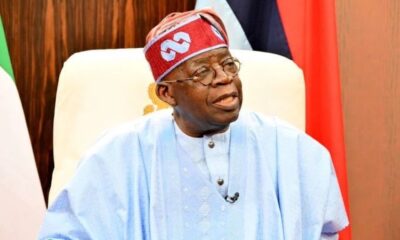
The programme was unveiled by the First Lady, Senator Oluremi Tinubu, who said the economic reforms of the Tinubu administration had made continued support for vulnerable Nigerians necessary.
“Under the leadership of His Excellency, President Bola Ahmed Tinubu, GCFR, our nation is implementing far-reaching reforms to strengthen the economy, lay a solid foundation for sustainable growth, and shared prosperity,” she said.
She added that many families continued to face difficulties despite the ongoing reforms, stressing that the HOPE-SP project would provide “immediate stabilisation assistance” while placing vulnerable households on a path to recovery, empowerment and self-reliance.
The Federal Government said the programme would target about 7.6m vulnerable households, with eligible beneficiaries expected to receive a one-off digital shock-response payment of N40,000. Beneficiaries are to be selected from the National Social Register and verified with their National Identification Numbers.
The launch also featured the unveiling of other components of the government’s new social protection architecture, including the One-Humanitarian-One Poverty Response System, the Emergency Cash Transfer Programme and a ministerial blueprint for humanitarian affairs and poverty reduction.
The Minister of Humanitarian Affairs and Poverty Reduction, Dr Bernard Doro, said the government was moving away from fragmented interventions and reactive palliatives towards a system that would identify vulnerable households, assess their needs and track their progress towards economic self-reliance.
He disclosed that more than N600bn had been disbursed in cash transfers to vulnerable Nigerians over the past three years, reaching slightly more than 10m households.
ADC raises concerns
However, opposition parties said the timing of the new intervention raised questions, particularly with the 2027 elections less than a year away.
The African Democratic Congress described the $1bn programme as a reaction to the economic hardship Nigerians had experienced under the Tinubu administration and linked its launch to the growing popularity of the party’s presidential candidate, Atiku Abubakar’s proposal for a targeted production subsidy.
In a statement by its National Publicity Secretary, Bolaji Abdullahi, on Thursday, the party questioned why the government was only now making a major financial commitment to social protection after years of complaints from Nigerians over rising food, transport and energy costs.
The party said the government had previously insisted that there was no money to adequately cushion the effects of its economic reforms but had now found $1bn for a new intervention as elections approached.
“Why did the poor only become visible when their votes become valuable?” the ADC asked.
The party also questioned the funding and administrative structure of the programme, particularly the role of the First Lady in unveiling a Federal Government intervention.
“Is this a Federal Government programme or a project of the First Lady?” the party asked, demanding clarification on the budget head or financing arrangement under which the money was approved, the institution responsible for accounting for the funds and who would ultimately answer to the Auditor-General and the National Assembly.
The ADC said it supported genuine efforts to protect vulnerable Nigerians but argued that palliatives could not substitute for policies that restored purchasing power and expanded economic opportunities.
It further accused the administration of attempting to address the consequences of its economic policies through what it described as a politically motivated intervention ahead of the 2027 elections.
Timing wrong — NDC
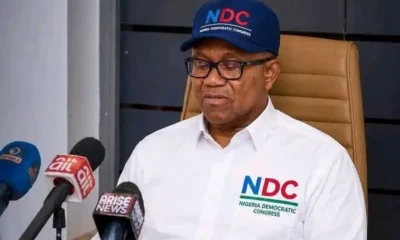
Also reacting, the Nigeria Democratic Congress said it welcomed any genuine intervention aimed at improving the welfare of Nigerians but questioned the timing of the HOPE-SP launch.
The party’s National Publicity Secretary, Osa Director, told our correspondent that the proximity of the elections made the development open to political interpretation.
“We welcome every move directed at addressing the challenges facing our people. However, with elections just a few months away, one may wonder why the government is just realising the need for this intervention.
“The timing will definitely elicit questions that the ruling party and the government in power may be unwilling to answer,” he said.
On its part, the Social Democratic Party was more direct in its assessment, describing the initiative as a voter-inducement strategy packaged as an empowerment programme.
The party’s spokesman, Rufus Aiyenigba, told The PUNCH that the intervention amounted to “a household votes prospecting outreach,” although he added that such an initiative could not guarantee electoral victory.
The opposition criticism comes against the backdrop of the administration’s wider social protection efforts since the removal of petrol subsidy and the unification of the foreign exchange market, policies which the government has repeatedly defended as necessary for economic recovery.
The government has maintained that its latest social protection framework is intended to ensure that vulnerable Nigerians are not left behind as economic reforms take effect.
APC defends project
However, the ruling All Progressives Congress dismissed the opposition’s allegations, arguing that the proximity of the 2027 elections did not mean the government should suspend its responsibilities to Nigerians.
APC Director of Publicity, Bala Ibrahim, said the Federal Government had a duty to continue implementing programmes designed to improve the welfare of citizens irrespective of the electoral calendar.
“Because an election is coming does not mean the government should fold its arms and shy away from its responsibilities. It is supposed to continue,” Ibrahim said.
According to him, the fact that an intervention would be delivered close to an election did not automatically make it an electoral inducement.
“Whether or not there is an election coming, the government is doing what it ought to continue doing. There is nothing wrong with extending the strategy in such a way that the dividends of democracy will come to the people as close as possible to the time of the election.
“That is strategic timing. It is not corruption. It is not anything that is done deliberately to change the hands of the clock,” he said.
Reacting to the opposition’s claim that the intervention was designed to woo voters, Ibrahim said there was nothing inherently wrong with government initiatives gaining public support, provided they were legitimate.
“If they say it is done with a view to wooing voters, what is wrong with wooing voters as long as what is done is legitimate?” he asked.
The APC spokesman said the Federal Government’s intervention programmes had been in development before the 2027 election season and that their implementation should not be interpreted solely through the political calendar.
“Democratic dividends going to the people are works in progress. They have been in the plan, and the timing has just come at this material time when the election is close by. I don’t see anything wrong with that,” he added.
The controversy over the HOPE-SP places the Tinubu administration’s latest social protection initiative at the intersection of two competing narratives.
The government’s argument that it is strengthening social protection to shield vulnerable Nigerians from economic shocks, and the opposition’s contention that the intervention is coming at a politically convenient time.
For the government, the immediate challenge will be to demonstrate that the $1bn programme is transparently funded, fairly implemented and capable of producing measurable improvements in the lives of its intended beneficiaries.
The opposition parties, meanwhile, are likely to continue scrutinising the programme as the country moves closer to the 2027 elections.
Atiku challenges Tinubu
Meanwhile, former Vice President Atiku Abubakar challenged the government of President Bola Tinubu to reconcile conflicting figures on the number of households reached under its expanded cash-transfer programme.
Atiku said the contradiction between the government’s earlier claim that 15 million vulnerable households had been reached and a more recent figure of “slightly over 10 million households” raised serious questions about the programme’s implementation and the government’s management of public funds.
In a statement issued by his Senior Special Assistant on Public Communication, Phrank Shaibu, on Thursday, the ADC presidential candidate asked the Federal Government to explain what happened to the five million households missing from the latest figure.
“On July 16, 2026, the Presidency officially declared that expanded cash transfers had reached 15 million vulnerable households. It repeated essentially the same figure on August 2, 2026. Yet on August 26, 2026, the Minister of Humanitarian Affairs suddenly told Nigerians that only ‘slightly over 10 million households’ had been reached.
“So, where did five million households go? These are not opposition figures. They are Tinubu’s figures contradicting Tinubu’s figures,” the statement read in part.
The former Vice President also questioned the financial figures associated with the programme, saying the government’s reported expenditure did not appear to correspond with the number of beneficiaries and the amount each household was expected to receive.
According to him, qualifying households are to receive ₦25,000 monthly for three months, amounting to ₦75,000 per household.
He argued that if 10 million households received the full three-month payment, the total would amount to about ₦750bn, while payment to 15 million households would exceed ₦1.1tn.
Atiku said the Federal Government’s reported expenditure of just over ₦600bn requires further explanation.
“How many received one tranche, two tranches or all three? How many payments failed or were reversed? How many names were merely lifted from an existing social register and presented as evidence of actual payment?” he asked.
The ADC presidential candidate insisted that inclusion in a social register should not be treated as proof that beneficiaries actually received government funds.
“A name on a social register is not a bank alert. Counting people in a database is not the same thing as proving money reached them,” he stated.
Atiku called on the Federal Government to publish detailed records of the payments, including verified beneficiary households, payment tranches, state-by-state distribution figures, failed transactions and reversals.
He also demanded an independent audit of the programme, saying Nigerians should be able to verify how the reported hundreds of billions of naira were spent.
“If ₦600bn truly moved, then government must show the trail: unique verified households, payment tranches, state-by-state distribution, failed transactions, reversals and an independent audit,” he said.
The former vice president’s criticism comes against the backdrop of the Federal Government’s expanded social protection measures, which the Tinubu administration has presented as part of its response to the rising cost of living and the economic difficulties confronting vulnerable households.
The cash-transfer programme was expanded following the removal of the petrol subsidy and the resulting increase in transportation, food and other household costs.
The government has repeatedly argued that targeted social interventions are necessary to cushion the effects of economic reforms on poor and vulnerable Nigerians.
Atiku, however, said government should focus more on reducing the underlying cost pressures driving households into poverty than on expanding the number of people receiving palliatives.
“Beyond the arithmetic lies a bigger indictment. A government boasting that tens of millions of households require emergency cash transfers should not be congratulating itself. It should be explaining why its economic policies pushed so many people into desperation,” he added.
He accused the government of worsening the financial pressure on households through higher fuel, transport, food and energy costs.
“Tinubu has turned poverty into a government programme: make fuel expensive, transport rises; transport rises, food rises; food rises, medicine becomes expensive; the family basket shrinks,” Atiku said.
He added that businesses were also facing higher energy and logistics costs, while workers had lost purchasing power.
“When millions become poorer, government registers them as ‘vulnerable,’ gives some of them cash and calls it reform.
“That is not prosperity. It is the industrial production of poverty followed by the bureaucratic management of the poor,” he argued.
The ADC chieftain contrasted the administration’s cash-transfer strategy with his proposed approach to reducing the cost of living, particularly through intervention in the domestic petroleum value chain.
He said his proposed policy would involve a targeted, capped and transparent intervention designed to lower fuel and transportation costs at source.
“This is precisely why Atiku proposes a targeted, capped and transparent intervention in the domestic petroleum value chain. It is designed to reduce fuel and transportation costs at source,” he said.
According to him, reducing fuel costs would have a wider impact across the economy by lowering transportation and logistics expenses for farmers, traders, manufacturers and households.
“When petrol becomes cheaper, the bus driver spends less, the farmer moves produce more cheaply, the trader pays less for haulage, businesses face lower logistics costs and the savings travel through the economy to the family kitchen,” he said.
He argued that the difference between his proposal and the Tinubu administration’s approach was that his plan would seek to tackle the causes of rising household expenses rather than compensate people after the damage had been done.
“Tinubu waits until poverty enters the home and arrives with a cash-transfer form. Atiku wants to reduce the cost pressures that drove the family into poverty in the first place,” he said.
The former vice president said a credible anti-poverty programme should ultimately reduce the number of people dependent on government assistance rather than expand the pool of beneficiaries.
“A serious anti-poverty policy should reduce the number of people needing palliatives, not celebrate how many millions have become vulnerable,” he said.
He also accused the Federal Government of applying a different standard of accountability to opposition proposals and its own expenditure.
“The same government that demands every kobo of Atiku’s proposed intervention cannot ask Nigerians to accept its own hundreds of billions on faith. That is not accountability. It is hypocrisy armed with a calculator,” Atiku said.
He called on the government to reconcile the conflicting beneficiary figures and provide verifiable evidence of the payments made.
“Until the Tinubu administration reconciles these figures and produces a verifiable payment trail, Nigerians are entitled to keep asking: where did the five million households disappear to?
“Did they graduate from poverty, vanish from the social register, or simply disappear because government propaganda ran ahead of the truth?,” he asked.(Punch)
-

 Metro19 hours ago
My wife miraculously woke up after six months in coma – Akpabio
-
Politics19 hours ago
Presidential Campaign Council: We don’t need your validation – OK Movement replies NDC
-
News19 hours ago
Former Kogi governor Ibrahim Idris dies at 77
-
Politics19 hours ago
2027: Remo group warns sons against breaking Ogun zoning pact
-
Sports19 hours ago
Haaland Makes EPL Record As Manchester City Overcome Sunderland In 8-Goal Thriller
-
Politics18 hours ago
Tinubu deserves second term, says Mimiko
-
Politics19 hours ago
2027: I’ll Never Spend Holidays Abroad If Elected – Obi
-
News19 hours ago
Niger govt unaware of miners’ arrest before deaths in NSCDC custody — Bago