Politics
Tinubu’s Growth Story Runs Into Hunger Crisis Ahead of 2027

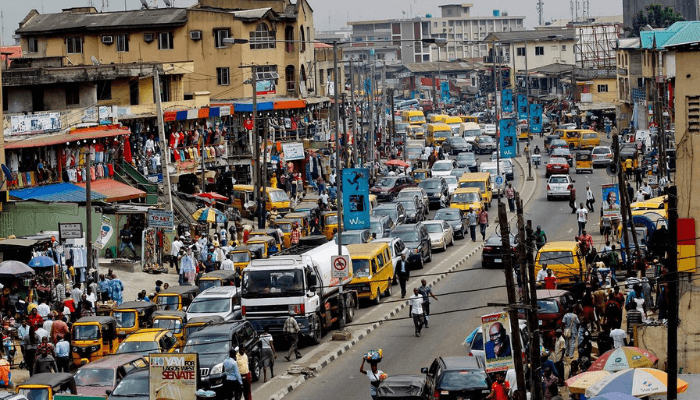
Nigeria’s economic recovery story is gaining traction on paper, but President Bola Tinubu’s administration faces a far more difficult test on the streets: whether ordinary Nigerians can actually feel the improvement in their pockets and on their dining tables.
Fresh economic data show that Nigeria’s real GDP grew by 4.43% year-on-year in the second quarter of 2026, up from 3.89% in the first quarter. The economy also grew by 3.87% in 2025, compared with 3.38% in 2024.
For the Tinubu administration, the figures provide evidence that its controversial reforms—including fuel-subsidy removal, naira reforms and tighter fiscal policies—are beginning to produce macroeconomic stability.
But the political problem is that economic growth has yet to translate into comparable improvements in household welfare.

Food remains particularly painful. In July 2026, food inflation was reported at 20.31% year-on-year, rising sharply from 17.52% in June, according to figures cited from the National Bureau of Statistics.
That creates a dangerous disconnect for Tinubu as he heads into the 2027 presidential election: the economy may be growing while Nigerians continue to feel poorer.
Growth versus the cost of living
The administration can point to stronger GDP growth, improved oil production, increased investor confidence and better macroeconomic indicators.
Moody’s recently revised Nigeria’s economic outlook from stable to positive, citing stronger-than-expected growth, improved foreign-exchange reserves and greater resilience to external shocks.
Yet these improvements have not erased the consequences of the adjustment Nigerians have endured since 2023.
The removal of the petrol subsidy and naira devaluation dramatically increased the cost of transportation and imported goods. Reuters reported in August that the cost of preparing a typical Nigerian jollof rice meal had risen to more than twice its level when Tinubu assumed office.
For households whose incomes have not risen at the same pace, slower inflation does not necessarily mean cheaper food. It simply means that prices are increasing more slowly.
That distinction could become crucial during the 2027 campaign.
Hunger is becoming an electoral issue
Food insecurity is particularly worrying because it affects the most basic measure of economic wellbeing: whether families can afford to eat adequately.
A food-security assessment projected that 34.7 million Nigerians across 27 states and the Federal Capital Territory could face food insecurity or worse between June and August 2026. It also identified insecurity, disrupted agricultural production and economic pressures among the factors driving the crisis.
The government has introduced several measures aimed at increasing food production and reducing prices, while Tinubu declared a state of emergency on food security in 2023.
But the persistence of high food prices means the administration cannot simply point to policy interventions. Voters will ultimately judge whether those interventions have produced affordable food.
The political danger for Tinubu
This is where the administration’s economic narrative could collide with political reality.
Tinubu’s strongest argument for seeking a second term is likely to be that his government inherited a deeply distorted economy and undertook reforms that previous administrations avoided.
The counterargument from the opposition is equally straightforward: after more than three years of painful reforms, Nigerians should be seeing tangible improvements in their standard of living.
Reuters reported that public dissatisfaction remains high, with nearly 80% of Nigerians surveyed believing the country is moving in the wrong direction, despite improved investor sentiment and stronger macroeconomic indicators.
That creates an uncomfortable political equation for the president.
GDP growth can win praise from economists and investors. But food prices determine what millions of voters experience every day.
The 2027 test
Tinubu therefore enters the election season with a mixed economic record.
On one side are stronger growth numbers, improved oil production, better external-sector conditions and increased confidence from international financial institutions. On the other are high food prices, weakened purchasing power, poverty and widespread frustration over the cost of living.
The administration’s challenge over the next few months will be to convert macroeconomic recovery into household-level relief.
If food becomes significantly more affordable, wages begin to catch up with prices and household purchasing power improves, Tinubu could argue that the pain of his reforms was temporary and that Nigerians are beginning to reap the benefits.
If growth remains largely statistical while families continue struggling to afford food, the opposition will have a powerful political message for 2027.
Ultimately, the election may not be decided by how fast Nigeria’s economy grows, but by a much simpler question:
Can Nigerians afford to live better than they did before Tinubu’s reforms?
And that is where the president’s growth story currently runs into Nigeria’s hunger crisis.(BusinessDay)
-

 Metro12 hours ago
My wife miraculously woke up after six months in coma – Akpabio
-
Politics12 hours ago
Presidential Campaign Council: We don’t need your validation – OK Movement replies NDC
-
News18 hours ago
Tinubu Confirms Absence From UNGA, Asks Shettima To Lead Nigeria’s Delegation
-
News12 hours ago
Former Kogi governor Ibrahim Idris dies at 77
-
Politics12 hours ago
2027: Remo group warns sons against breaking Ogun zoning pact
-
Politics12 hours ago
2027: I’ll Never Spend Holidays Abroad If Elected – Obi
-
Sports12 hours ago
Haaland Makes EPL Record As Manchester City Overcome Sunderland In 8-Goal Thriller
-
News11 hours ago
Niger govt unaware of miners’ arrest before deaths in NSCDC custody — Bago