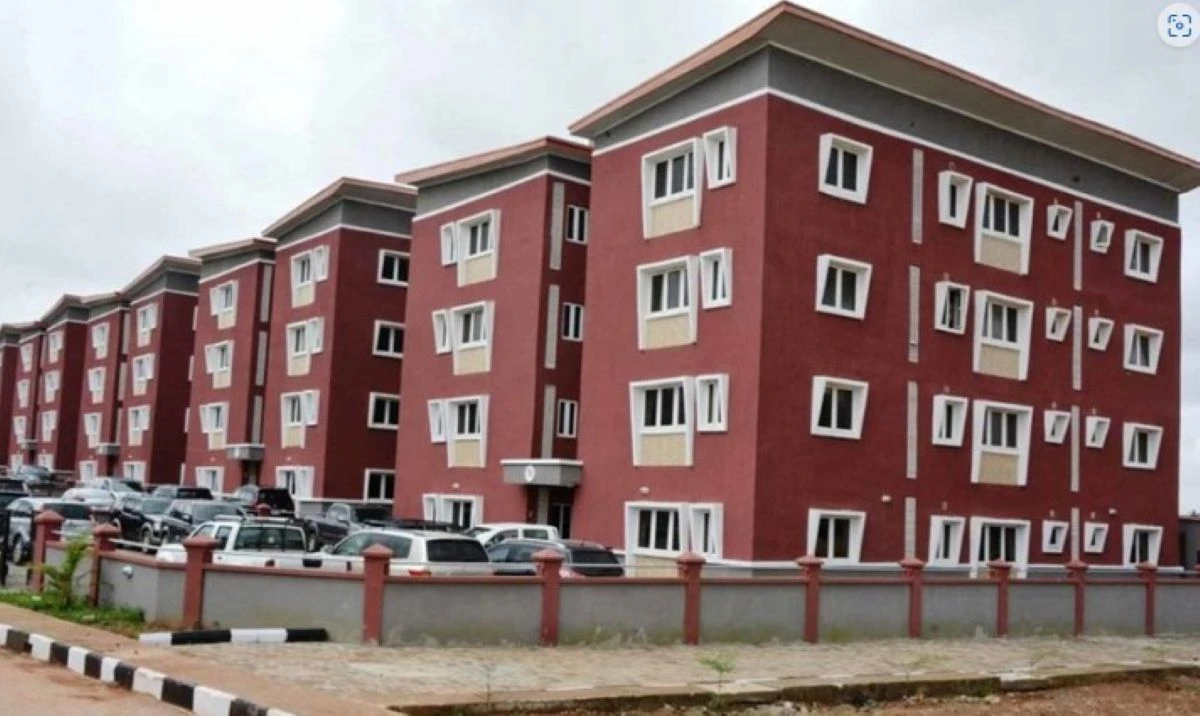
Lagos has a homeownership rate of 31%, with 51% of residents living in rented accommodation.
This is according to a report by Fortren & Company.
The figures highlight the city’s strong reliance on rental housing amid growing demand driven by its large population, economic importance and concentration of businesses and professionals.
The report assessed 10 major African cities selected based on their economic significance, expatriate and mobile professional activity, and rental market maturity, while providing geographic representation across different regions of the continent.

What the report is saying
Fortren & Company’s data shows significant differences in homeownership and rental patterns across the selected African cities.
- Abidjan recorded the lowest homeownership rate at 22%, with 78% renting.
- Nairobi had the highest homeownership rate at 61%, with 39% renting.
- Kampala recorded 29% homeownership and 71% rental, while Dakar recorded a 50% split.
- Addis Ababa recorded 33% homeownership, with 67% renting.
The report notes that the 31% figure for Nigeria refers to people living in their “personal house”, whether built, gifted, purchased or inherited, rather than only homes acquired through mortgages.
Lagos housing costs remain elevated
Lagos ranked fourth among the 10 cities for high-end two-bedroom rental costs, with average annual rent of $19,379 in 2026.
- The report attributes high property prices to limited land availability, strong demand in prime locations, rising construction costs, speculation and currency devaluation.
- High-end properties in Ikoyi, Victoria Island and Banana Island are typically dollar-denominated, while some ultra-luxury developments along the Bourdillon, Alexandra and Gerrard corridors in Ikoyi command rents of up to $130,000 annually.
- The cost of renting also extends beyond annual rent, with tenants facing advance payments and additional charges when securing accommodation.
Nigeria is among markets where tenants typically pay annual or multiple years’ rent in advance.
- Agency fees typically range from one to two months’ rent or 10% of annual rent.
- Legal and agreement fees can range from 5% to 10% of annual rent.
- Other costs include caution deposits, stamp duty, utility deposits, internet installation and service charges.
The report says these additional costs can make the actual cost of securing a rental property significantly higher than the headline rent.
More insights
Rising development costs are adding to the pressure on Lagos’ housing market, with land prices more than doubling in several parts of the city in recent years.
- Developers also face sharp increases in construction materials, with cement now selling for about N12,500 to N15,000 per bag, compared with N5,000 to N6,000 at the end of 2023, while reinforcement steel has risen to between N1 million and N1.5 million per tonne.
- For medium-sized residential developments, construction materials and labour can account for about 50% to 65% of the construction budget, while land can represent around 20% of expected revenue on some projects.
- Construction costs for building the carcass are currently estimated at about N350,000 to N400,000 per square metre, with some projects reaching N450,000, depending on specifications and site conditions, according to a registered quantity surveyor who spoke to Nairametrics.
These rising costs are prompting developers to reduce unit sizes, move to areas where land is cheaper, use alternative materials and develop projects in phases, although industry experts say a significant portion of the higher costs is ultimately passed on to buyers and tenants.
What you should know
Lagos’ housing deficit stood at about 3.4 million units in 2025, with the state requiring an estimated 227,576 new homes annually to keep pace with population growth and replace ageing housing stock.
- The state also requires about N6 trillion annually to bridge its housing capital gap, according to a housing and capital market report presented at a GTI Investment Group forum, underscoring the scale of funding needed to expand housing supply.
- Land remains a major cost for developers, particularly in prime locations. Victoria Island recorded an average land price of N3.05 million per square metre, according to Estate Intel, adding significantly to the cost of delivering new housing in the area.
Meanwhile, some Lagos residents spend between 60% and 70% of their income on rent, according to findings presented at the GTI Investment Group housing forum, as limited housing supply and rising development costs continue to put pressure on rents and affordability. (Nairametrics)