Politics
2027: Atiku bets subsidy backlash can crack Tinubu’s northern vote

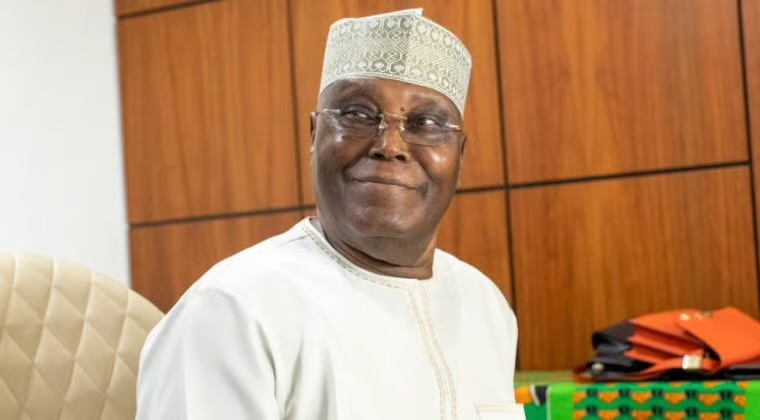
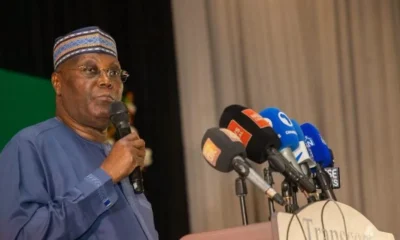
Atiku Abubakar is betting that one of President Bola Tinubu’s proudest economic achievements can become one of his biggest electoral liabilities.
The opposition presidential candidate has promised to “restore” fuel subsidies if elected in January 2027, putting the cost of living at the centre of a campaign that is only beginning to gather pace.
“I will return subsidy; Nigeria is rich enough to look after the welfare of its citizens,” Atiku has said. “The fundamental responsibility of the government is the welfare of the people.”
The pitch is aimed squarely at the economic pain that followed Tinubu’s decision to scrap petrol subsidies on his first day in office in May 2023. Petrol that sold for N189 ($0.14) a litre before the reform now costs around N1,300 or more at many filling stations, with successive increases feeding through into transport, food and other household costs.

The political risk for Tinubu is particularly acute in northern Nigeria. The region supplied about 5.5 million of the 8.8 million votes that put him in the presidency in 2023. Atiku, himself a northerner, is now trying to persuade voters that the president made the government richer at their expense.
“Honestly, the people at the grassroots are happy with it,” Salman Dauda, a Sokoto-based analyst, tells The Africa Report of Atiku’s subsidy message. “It’s resonating with the likes of the okada [motorcycle taxi] riders and traders.”
For Tinubu, the danger is that a reform whose benefits are visible in Abuja’s accounts remains associated elsewhere with an abrupt decline in purchasing power.
Scrapping the subsidy has sharply increased the money available to the federal government and Nigeria’s 36 states. But complaints over lavish spending by some governors have complicated the government’s efforts to persuade voters that those additional revenues are improving their lives.
“People are always complaining about the cost of petrol and the way the governors are spending the money,” Dauda says.
A subsidy – but not the old one
Atiku’s proposal is more complicated than his campaign rhetoric suggests.
His team says it would not restore the opaque system under which the government subsidised imported petrol and struggled to verify how much fuel Nigerians actually consumed.
Instead, Atiku is proposing a targeted and capped subsidy for domestic refining, under which government support would be linked to verified production.
His campaign says the policy would be transparently budgeted and independently audited, with qualifying Nigerian refineries receiving support designed to lower production costs and ultimately reduce prices for consumers.
That distinction has not stopped Tinubu’s campaign from seizing on the word ‘subsidy’.
Abdulaziz Yari, the former Zamfara governor appointed director-general of Tinubu’s 2027 campaign, has described Atiku’s promise as an attempt to hoodwink Nigerians.
“Anybody who is deceiving Nigerians, saying I am going to bring subsidy back is lying,” Yari said, arguing that the old regime was riddled with waste and corruption.
“Nobody can tell you exactly what quantity of petrol is being consumed per day,” he said. “As chairman of the Nigerian Governors’ Forum, we challenged the NNPC [Nigerian National Petroleum Company] for four years to tell us the exact number, but there was nothing.”
APC national chairman Nentawe Yilwatda has made the fiscal argument more directly.
“Subsidy may appear attractive because it promises cheaper petrol, but Nigerians must also ask the bigger question: who pays for the subsidy?” he said.
The argument points to one of Tinubu’s strongest defences.
Successive Nigerian governments had struggled to eliminate a subsidy system that drained public finances and encouraged the smuggling of cheap Nigerian petrol across the country’s borders. Atiku and the other leading candidates in the 2023 presidential election had themselves advocated ending the subsidy.
Three years after Tinubu acted, Nigeria’s macroeconomic position has improved. Foreign exchange reserves have climbed above $53bn, their highest level in more than 17 years, while economic growth has strengthened and the government has considerably more revenue to distribute.
The IMF said in June that the reforms had produced “improved macroeconomic outcomes and built resilience”.
But it also estimated that poverty had reached 63% under Nigeria’s national poverty line and that 27 million Nigerians faced food insecurity in late 2025.
That gap between improving national indicators and household hardship is where Atiku is trying to fight the election.
“I believe the wealth of a nation is not measured by how much government collects, but by how much the money in the pockets of its people can buy,” he said.
Pressure across the north
Some of the sharpest economic pressure is being felt in states critical to the northern contest.
Nigeria’s food inflation rose to 20.31% year on year in July. Adamawa recorded the country’s highest rate, at 51.36%, followed by Katsina at 30.84% and Zamfara at 30.65%.
The picture differs significantly between states — Borno, for example, recorded falling food prices on the same measure — but the figures offer Atiku fertile campaign territory in several northern battlegrounds.
Rising costs are compounded by insecurity.
Kidnappings have accelerated across Nigeria, with the North-West and North-Central particularly exposed to bandit attacks and mass abductions. SBM Intelligence recorded 7,825 people kidnapped between July 2025 and June 2026, up 66% on the previous year.
The deteriorating security environment is also disrupting farming and pushing up production costs.
In August, a mass abduction in Niger State again focused national attention on the government’s struggle to contain armed groups operating across parts of northern Nigeria.
“The people of northern Nigeria cannot be expected to continue suffering from economic hardship and insecurity while political leaders simply return during election periods to ask for our votes,” says Murtala Jangede, convener of the North-West Youth Unity Forum.
The political question is whether that anger turns into votes for Atiku.
Tinubu has formidable defences. The APC now controls 31 of Nigeria’s 36 state governments, giving the president a nationwide network of governors and political operators that is considerably stronger than the one he took into the 2023 election.
His choice of Yari to run the presidential campaign also underlines the importance the president attaches to holding the north.
The government is meanwhile betting that economic conditions will continue to improve before polling day. It has promoted compressed natural gas as a cheaper alternative to petrol and points to rising government revenues, stronger reserves and economic growth as evidence that the pain of its reforms is beginning to deliver results.
Atiku is wagering that voters will judge those claims against something simpler: the price of filling a fuel tank, transporting produce or feeding a family.
Five months before the election, that does not mean he has won the argument. But it has given Tinubu an uncomfortable question to answer in a region he cannot afford to lose. (The Africa Report)
-

 News16 hours ago
Abuja Workers Turn To Pick-Up Trucks Amid Rising Transport Costs
-
 Politics21 hours ago
Security Operatives Guard Tinubu’s Billboards Ahead Campaign Launch
-
 News16 hours ago
Ebola patient in Nigeria is Swiss, had not visited DR Congo – Foreign Ministry
-
Politics16 hours ago
Results With Discrepancies Won’t Be Uploaded On IREV – INEC
-
Politics16 hours ago
2027: You Can’t Hide Voters’ Register And Expect Trust – Atiku Tells INEC
-
 News16 hours ago
Zamfara Community Fights Back
-
Politics16 hours ago
South-East has better presidential options than Peter Obi – Umahi
-
Metro16 hours ago
One Dead, Several Feared Trapped As Building Collapses In Lagos