News
N33.75bn Cash Transfer Mystery: FG Failed to Prove Millions of Vulnerable Nigerians Received Funds — Auditor-General

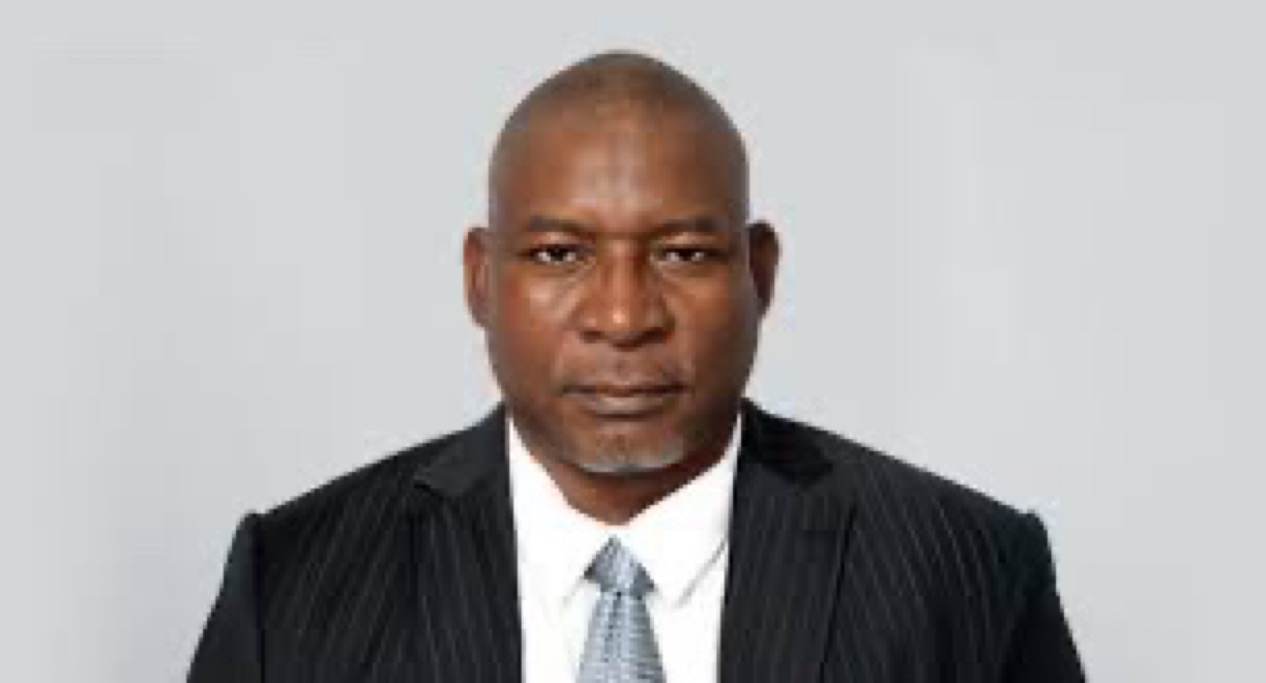
The Federal Government has come under fresh scrutiny after the Auditor-General for the Federation (AuGF) disclosed that it could not provide sufficient evidence to auditors to establish that N33.75 billion earmarked for cash transfers actually reached more than 3.29 million vulnerable households.
The finding raises serious questions about the government’s ability to track billions of naira allocated to social intervention programmes and verify that public funds intended for Nigeria’s poorest citizens are reaching the people for whom they were budgeted.
The programme was introduced as part of the Federal Government’s broader social protection efforts aimed at supporting vulnerable households and cushioning the effects of economic hardship.
But according to the audit finding, the documentation and other evidence made available to auditors were insufficient to establish that the reported beneficiaries were genuine recipients of the funds.

Billions spent, beneficiaries unverified
At the heart of the issue is N33.75 billion in public money and a beneficiary population of more than 3.29 million households.
The inability to adequately verify the payments means auditors were unable to independently establish that the money transferred by the government ultimately landed in the accounts or hands of the intended beneficiaries.
For a programme designed to support some of the country’s most economically vulnerable citizens, the gap in verification is significant.
Cash-transfer programmes depend heavily on accurate beneficiary databases, reliable identification systems, transparent payment records and effective monitoring. Where these safeguards are weak, the risk of ghost beneficiaries, duplicate records, payments to ineligible recipients or other leakages increases.
Audit finding does not automatically mean N33.75bn was stolen
The Auditor-General’s finding, however, should not be interpreted as proof that N33.75 billion was stolen.
Rather, the audit conclusion points to a failure by the government or relevant implementing agencies to provide auditors with adequate evidence to independently verify that the funds reached legitimate beneficiaries.
That distinction is important.
Nevertheless, the absence of sufficient evidence creates an accountability problem because public officials are expected to demonstrate how taxpayers’ money was spent and who ultimately benefited from it.
Where billions of naira are disbursed under a programme specifically targeted at vulnerable Nigerians, the government should be able to produce reliable records showing who received the money, when it was paid, through which channel and whether the recipient met the eligibility requirements.
Transparency challenge for social intervention programmes
The revelation comes at a time when the Federal Government is relying heavily on social intervention programmes to cushion Nigerians from the impact of economic reforms and rising living costs.
Cash transfers have increasingly become a central component of government efforts to provide immediate assistance to poor households.
But the effectiveness of such programmes ultimately depends not only on how much money is allocated but also on whether the money reaches the intended people.
The audit finding could therefore increase pressure on the government to strengthen its beneficiary verification and payment-monitoring systems.
It also raises broader questions about how Nigeria measures the success of its social programmes.
If government cannot satisfactorily demonstrate that billions of naira reached verified beneficiaries, determining the actual impact of the programme becomes considerably more difficult.
Calls for stronger accountability
The latest finding is likely to intensify calls for greater transparency around government cash-transfer schemes.
Civil society organisations, lawmakers and accountability advocates are expected to demand clearer beneficiary records, independent verification of payments and stronger mechanisms for tracing public funds from government coffers to individual recipients.
The government may also face pressure to explain why the evidence presented to auditors was inadequate and whether additional documentation exists that could resolve the auditors’ concerns.
For millions of Nigerians struggling with the rising cost of food, transport, housing and other essentials, the issue goes beyond accounting procedures.
It is ultimately about whether money publicly presented as assistance for vulnerable citizens actually reaches them.
With N33.75 billion and more than 3.29 million households involved, the Auditor-General’s finding has placed another spotlight on the transparency of Nigeria’s social spending—and on the government’s responsibility to account for every naira allocated in the name of the poor.
-

 Politics10 hours ago
Presidency denies withholding ₦250bn NLNG dividends from states
-
News9 hours ago
5 Security Operatives Killed As B/Haram Attacks Adamawa Communities
-
News10 hours ago
FG disagrees with World Bank over H1 124% debt servicing/revenue ratio
-
Politics9 hours ago
2027: APC unveils online portal for support groups
-
Metro10 hours ago
Kidnapped Catholic Priest, three others rescued in Benue
-
News9 hours ago
Nnamdi Kanu’s Family Accuses UK Of Failing To Protect Its Citizen, Demands Action To Secure His Freedom
-
Politics9 hours ago
AbdulRazaq commends Wike’s inclusion in Presidential Campaign Council
-
Politics9 hours ago
Buhari Saw Tinubu As ‘Bad News’, Resisted His Presidency – Baba-Ahmed