News
How Tinubu’s planned absence from 81st UNGA may hurt Nigeria’s push for global partnerships

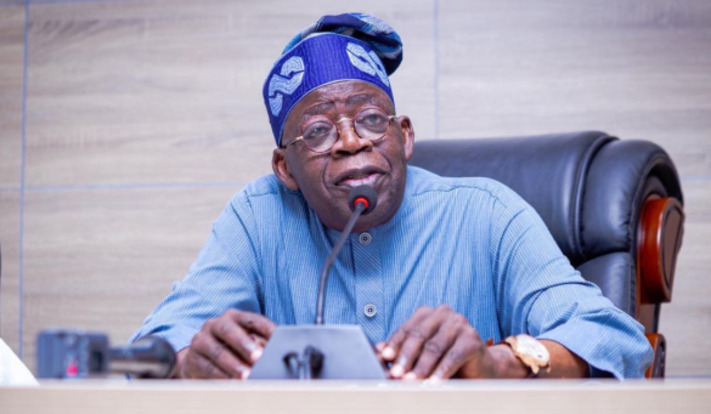
For Nigeria, the annual United Nations General Assembly (UNGA) is more than another item on the presidential calendar. It is one of the few occasions each year when the country’s president has a direct platform before world leaders, investors, diplomats and international institutions to sell Nigeria’s story, defend its interests and seek partnerships.
That is why the prospect of President Bola Ahmed Tinubu missing the 81st UNGA in New York has raised questions about what message Nigeria would send at a time when it is seeking stronger international support for security, investment and economic reforms.
In July, Jimoh Ibrahim, Nigeria’s permanent representative to the United Nations, told State House correspondents that Tinubu had confirmed he would attend the September gathering and address the world on his administration’s reform programme.
“The President has generously agreed to attend the UNGA meeting of the United Nations,” Ibrahim said. He added that the president had “a speech to give to the whole world about the reform success in Nigeria.”

Two months later, the picture has changed. Reports emerging in early September indicate that Tinubu may have shelved the trip, with Vice-President Kashim Shettima expected to lead Nigeria’s delegation. A source said intelligence about a planned anti-Tinubu protest in New York influenced the reported decision. The presidency, however, had not formally confirmed the cancellation at the time of reporting.
The development is significant because Shettima has represented Tinubu at the previous two editions. A third consecutive absence would therefore, be more than a scheduling matter. It could become a diplomatic and political signal.
The shadow of Chicago
Behind the reported protest is another, older story that has refused to disappear.
Tinubu’s opponents have revived the US legal case involving him from the early 1990s, with a lobbying firm working for Atiku Abubakar submitting historical Department of Justice records to members of the Trump administration and Congress.
The case involved the forfeiture of about $460,000 in assets connected to accounts linked to Tinubu. It was a civil asset-forfeiture matter, not a criminal prosecution, and Tinubu was not convicted of a crime in the United States.
But politically, the issue has acquired a new life. For opponents, the records provide material for challenging Tinubu’s credibility in Washington. For the Presidency, the matter is a settled, decades-old civil case being recycled for political purposes.
That battle is now spilling into the president’s international engagements.
If reports that the threat of protest contributed to Tinubu’s decision to stay away from New York are correct, it would mean a domestic political dispute has acquired an international dimension.
Nigeria needs the world
The timing could hardly be more delicate. Nigeria needs stronger international cooperation against terrorism and violent extremism. It needs foreign capital to support growth. It needs diplomatic backing for its economic reforms and greater confidence among international investors.
Washington is particularly important. Relations between Nigeria and the United States have warmed considerably after a difficult period last year.
In October 2025, US President Donald Trump redesignated Nigeria as a “Country of Particular Concern” over alleged persecution of Christians and warned that Washington could take action. Nigeria rejected the characterisation, maintaining that insecurity affects Nigerians across religious lines.
Since then, both countries have moved towards greater security cooperation. A joint working group has been established, while intelligence sharing, military training and counterterrorism cooperation have expanded.
The United States has also conducted joint operations with Nigerian forces against terrorist targets in the Lake Chad region.
In July, Trump described Tinubu’s leadership as “decisive” and said he was proud to have deployed US Special Operations Forces to equip Nigerian troops with skills, tools and intelligence.
That represented a striking shift from the rhetoric of the previous year. It is precisely why Nigeria’s physical presence in Washington and New York matters.
A president’s presence sends a message
UNGA is not simply about delivering a speech. For presidents, the week provides an opportunity for dozens of bilateral meetings with heads of government, development institutions, investors and international organisations.
For Nigeria, those meetings can translate into security partnerships, investment commitments, diplomatic support and opportunities to influence international policy.
An absent president can still achieve many of these objectives through a delegation led by the vice-president.
But there is a difference between representation and presidential presence.
At a time when Nigeria is trying to rebuild confidence in its economy and improve its global image, the absence of the country’s president from the world’s biggest annual diplomatic gathering could invite questions about priorities.
It could also hand opponents an easy narrative: that the president is avoiding an uncomfortable environment rather than confronting it. That perception may matter almost as much as the protest itself.
Soft power and the Trump factor
The administration has invested heavily in cultivating its relationship with the United States.
First Lady Remi Tinubu’s appearance at the 74th National Prayer Breakfast in Washington in February was one visible example.
Trump publicly recognised her during the event, while the Nigerian government used the broader engagement to reinforce its message about religious freedom, Nigeria’s Christian population and the country’s fight against terrorism.
The government’s reported $9 million engagement with Washington-based DCI Group has similarly been aimed at communicating Nigeria’s position to American policymakers and countering narratives about religious persecution.
The strategy appears to have produced some diplomatic dividends.
Trump’s July letter to Tinubu praised the president’s handling of security challenges and reaffirmed US support for Nigeria’s counterterrorism efforts.
Yet, the fact that evangelical leaders and some US lawmakers continue to pressure the Trump administration over Nigeria suggests that the battle for perception is far from over.
That makes UNGA potentially important. It would give Tinubu an opportunity to speak directly to the international community about Nigeria’s security challenges, economic reforms and the government’s position on religious violence.
Instead, if he stays away, the Nigerian delegation will have to carry that message without him.
The cost of absence
There is no evidence that missing UNGA would automatically damage Nigeria’s diplomatic standing.
Vice-presidents have represented presidents at international gatherings before, and Shettima is capable of leading a high-level delegation.
Nor should a president be expected to attend every international event regardless of security considerations.
But the circumstances make this particular absence different.
Nigeria is seeking foreign investment while trying to convince investors that its reforms are producing stability.
It is seeking international assistance against terrorism while its security challenges remain severe. It is fighting to improve its image after years of negative international coverage.
The danger, therefore, is not simply that Tinubu would miss a speech. It is that Nigeria could surrender a valuable platform at the precise moment when it needs to tell its own story.
For Tinubu, the decision is personal. For Nigeria, the consequences are diplomatic.
And as the country prepares for another fiercely contested election, the world will be watching not only what Nigeria says at the UN, but whether its president is there to say it.(BusinessDay)
-

 News23 hours ago
Tragedy Averted As Private Jet Loses Door Mid-Air
-
Politics12 hours ago
2027: ADC campaign accuses Kwankwaso of working for Tinubu
-
Metro22 hours ago
Anglican Church suspends Archbishop ‘with immediate effect’ over alleged misappropriation of N2 billion
-
News12 hours ago
DSS arrests fleeing Maina’s son in Abuja
-
Politics11 hours ago
2027: Tinubu afraid to face Nigerians – ADC
-
Politics11 hours ago
Buhari considered it distasteful for Osinbajo to contest against Tinubu – Babachir Lawal
-
Business23 hours ago
Importation, Insecurity Threaten Nigeria’s Food Sufficiency
-
Business22 hours ago
Households lament as sachet water hits N500 per bag in Lagos