Politics
Washington War: What Tinubu, Atiku’s $10m lobbying largesse means for Nigerians

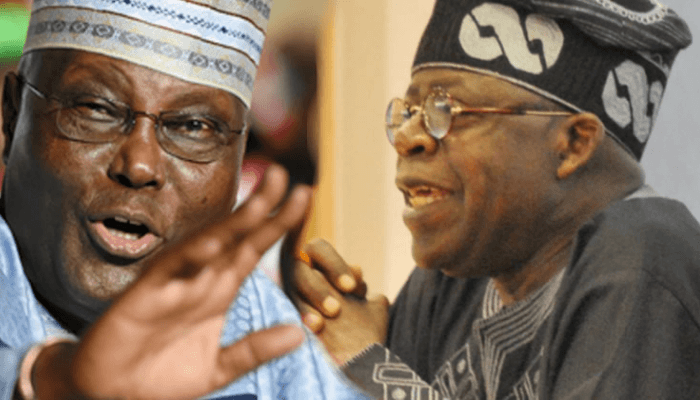
Far from the campaign rallies, political meetings and roadside posters taking shape across Nigeria, another contest is unfolding in the corridors of power in the United States, where lobbyists are being paid to shape narratives, open doors and influence policymakers.
Publicly disclosed and reported filings under the United States Foreign Agents Registration Act (FARA) show that more than $10 million has been committed to US lobbying efforts linked to the two camps surrounding President Bola Ahmed Tinubu and former Vice-President Atiku Abubakar since December 2025.
Atiku earlier this year hired Washington-based lobbying firm Von Batten-Montague-York, L.C. for $1.2 million to protect and strengthen his “reputational standing” in the United States. One of the stated objectives of the engagement is to “counterbalance” the Nigerian government’s lobbying narratives.
By July, the firm said it had begun providing members of the Donald Trump administration, Congress and senior congressional staff with historical US Department of Justice records relating to a 1993 drug-trafficking asset forfeiture case linked to Tinubu.

More than 60 pages of DOJ records were reportedly submitted as the firm sought to bring the documents to the attention of Trump and members of Congress.
On the other side is the Federal Government.
In December last year, the government reportedly engaged DCI Group for $750,000 a month, amounting to $9 million annually, to manage Nigeria’s international image and engage American policymakers.
The engagement was initially focused on communicating Nigeria’s efforts to protect Christian communities and combat terrorism amid growing international scrutiny. Its mandate has since expanded.
Together, the two engagements represent about $10.2 million. At roughly N1,400 to the dollar, that is more than N14 billion.
And that is where the story moves from Washington to Nigeria’s villages, schools, hospitals and households.
What does N14bn mean to a poor Nigerian?
For a lobbyist in Washington, millions of dollars can mean access: meetings with policymakers, strategic communication, media engagement and efforts to influence the perception of a country or politician.
For a Nigerian household struggling with poverty, the same money carries a different meaning.
The World Bank estimates that 143 million Nigerians could be living below the national poverty line in 2026.
Against that backdrop, N14 billion may appear small when measured against Nigeria’s enormous population and the size of the federal budget. But when broken down into targeted interventions, the figure becomes more tangible.
At N1million each, for instance, N14billion could theoretically provide N1million in capital to 14,000 micro, small and medium-sized enterprises, farmers or unemployed young Nigerians.
It would not guarantee that all 14,000 businesses survive or create sustainable jobs. But for a young Nigerian who has an idea but lacks the capital to buy equipment, a farmer unable to purchase inputs or a small business owner struggling to expand, N1million can represent the difference between remaining informal and taking the next step.
The same money could be channelled into primary healthcare. Nigeria’s primary healthcare centres remain the frontline of the health system, particularly for poor and rural communities. Many operate with shortages of medicines, equipment, electricity, water and health workers.
A portion of N14 billion directed at upgrading and equipping selected centres could mean functioning laboratories, maternity units, solar power, essential drugs and basic diagnostic equipment.
For a pregnant woman in a rural community, that investment would not be an abstract budgetary figure. It could determine whether she travels several kilometres for basic care or receives treatment close to home.
But is lobbying really a waste?
That is where the argument becomes less straightforward.
The Federal Government’s $9 million engagement cannot simply be placed in the same category as Atiku’s $1.2 million.
Atiku is a presidential candidate. His lobbying expenditure is political spending. The government’s contract, on the other hand, is public expenditure and should therefore, face a higher standard of scrutiny.
Yet, there is a legitimate case for Nigeria maintaining an effective presence in Washington.
The United States is an important security, diplomatic, development and investment partner. What American policymakers believe about Nigeria can have consequences for security assistance, diplomatic relations, investment and international policy.
The government’s lobbying effort was, in part, designed to counter concerns about religious persecution and communicate Nigeria’s fight against terrorism. There are indications that the security relationship has strengthened.
Nigeria and the US have deepened military cooperation, including intelligence sharing and joint efforts against terrorist groups in Nigeria and the Lake Chad region.
The government’s supporters can therefore, argue that the $9 million should not be viewed simply as public relations expenditure. If it helps secure American security cooperation, strengthen diplomatic relations or prevent damaging foreign-policy decisions, it could generate returns that are difficult to capture in a budget line.
The February appearance of First Lady Remi Tinubu at the 74th National Prayer Breakfast on Capitol Hill offered another example of the administration’s effort to engage America’s political and religious establishment.
President Donald Trump publicly recognised her at the event, an appearance widely interpreted as part of Nigeria’s broader soft-power diplomacy amid international debate over religious freedom and violence.
The uncomfortable question
Still, the argument over the lobbying expenditure is ultimately an argument about priorities.
Nigeria does need Washington.
But Nigeria also needs functioning hospitals. It needs classrooms, jobs, food security and young people who can acquire skills and start businesses. And it needs social protection for households whose incomes have been eroded by years of economic shocks.
The $10.2 million will not solve these problems.
Nor would redirecting every dollar spent on lobbying automatically lift millions of Nigerians out of poverty. The country’s development challenges require sustained investment running into billions of dollars.
But for Nigeria’s poor, it can buy something much more immediate: a functioning clinic, a trained worker, a classroom, a business grant, farm inputs or temporary relief for a struggling household. (BusinessDay)
-

 News24 hours ago
NBA probes mismanagement claims of ₦100m Imo govt gift to Owerri branch
-
Politics24 hours ago
2027: I can bet my life Obi will humiliate Soludo in Anambra – Momodu
-
Politics22 hours ago
‘No vacancy’ — Senators endorse Akpabio for 11th assembly senate presidency
-
Metro24 hours ago
Finland appeal court cuts Simon Ekpa’s jail term to four years — Report
-
News24 hours ago
Nigeria Police Order Officers To Vacate Lagos Alapere Barracks Within 30 Days For Developer
-
News6 hours ago
State Police Bill: Five Assemblies say yes, 31 yet to decide
-
News6 hours ago
Sanwo-Olu orders immediate repairs of Lagos roads
-
Politics24 hours ago
‘70 People Wasted Their Lives For Dancing Clown, Adeleke, In August Poll’ – Adeyanju Tackles Osun Gov Over Support For Tinubu’s Second Term