News
Falana, SERAP demand probe into N33.75bn cash transfer

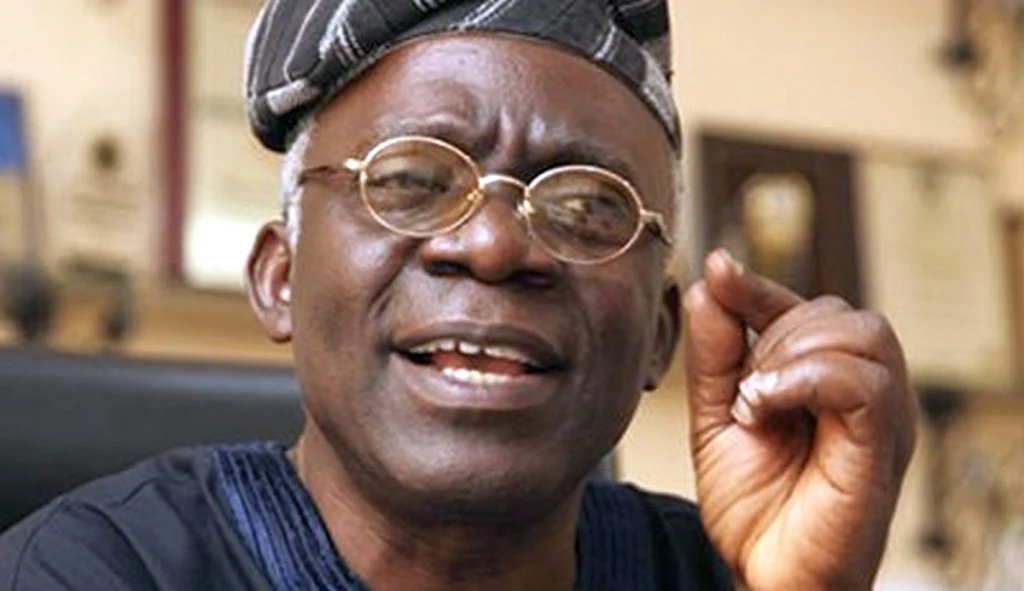
Human rights lawyer and Chairman of the Alliance on Surviving COVID-19 and Beyond, Femi Falana (SAN), has called on the Economic and Financial Crimes Commission to investigate the alleged diversion of N33.75bn meant for cash transfers to poor and vulnerable Nigerians.
Also, the Socio-Economic Rights and Accountability Project has urged President Bola Tinubu to order an immediate investigation into over N78.8bn in public funds allegedly diverted, unaccounted for or irregularly spent under the Federal Government’s social protection programmes.
Falana, in a statement issued on Sunday, urged the anti-graft agency to work with the Auditor-General for the Federation to recover the money and prosecute public officials found culpable.
The call followed a disclosure by the Auditor-General for the Federation, Shaakaa Chira, that the Federal Government could not provide sufficient evidence to auditors that N33.75bn in cash transfers intended for more than 3.29 million vulnerable households reached genuine beneficiaries.

The disclosure was contained in the Auditor-General’s 2024 Annual Report on Non-Compliance/Internal Control Weaknesses in Ministries, Departments and Agencies of the Federal Government.
Falana said the development raised serious concerns about the management of funds intended to alleviate poverty and support vulnerable Nigerians.
He said, “The Economic and Financial Crimes Commission should liaise with the Auditor-General of the Federation with a view to recovering the missing N33.75bn.
“Furthermore, the EFCC should embark on an immediate investigation of the serious allegation of the criminal diversion of the sum of N33.75 billion in cash transfers earmarked for poor and vulnerable people in the country.
“All the characters involved in the shameful conduct should be arrested and prosecuted without any delay.”
The lawyer noted that the National Social Investment Programme Agency was established as a statutory agency under the National Social Investment Programme Agency Act 2022, enacted during the administration of former President Muhammadu Buhari.
According to him, the law empowered NSIPA to design social investment programmes, manage beneficiaries’ databases, strengthen payment and accountability systems and collaborate with state governments and development partners.
The Act provides for the implementation of programmes including N-Power, the National Home-Grown School Feeding Programme, National Cash Transfer, National Social Safety-Net, Government Enterprise and Empowerment Programme and the Grant for Vulnerable Groups.
However, Falana alleged that the management of the programmes had been undermined by corruption involving some public officials.
He recalled that the pioneer Minister of Humanitarian Affairs, Disaster Management and Social Development, Sadiya Umar Farouq, was investigated by the EFCC over alleged money laundering involving more than N37.1bn.
He further recalled that in April 2026, a Federal Capital Territory High Court issued an arrest warrant against Farouq and her former Permanent Secretary, Bashir Nura Alkali, following their repeated failure to appear for arraignment.
Falana also referenced the scandal involving former Humanitarian Affairs Minister, Betta Edu, who was suspended in January 2024 after a leaked December 2023 memo directed the Accountant-General of the Federation to transfer N585m in public intervention funds into a private bank account.
The lawyer said the former Chief Executive Officer of NSIPA, Halima Shehu, was also suspended and questioned over alleged suspicious movement of funds.
He said the EFCC should conclude its investigation into the allegations involving Edu and Shehu so that the public could know the outcome.
“By now, the EFCC ought to have concluded its investigation into the scandal to enable Betta Edu and Halima Shehu to know their fate,” he said.
Following the controversies surrounding the management of social investment funds, the Federal Government introduced tighter beneficiary-tracking mechanisms, including requirements for beneficiaries to link their profiles with their Bank Verification Numbers and National Identification Numbers.
The measures were also designed to eliminate ghost beneficiaries and improve accountability in the disbursement of social protection funds.
Falana, however, said the latest revelation by the Auditor-General showed that significant questions remained about the effectiveness of the systems put in place to track social investment funds.
He also expressed concern over the planned implementation of a $3.05bn development package unveiled by President Bola Tinubu in July 2026.
According to him, the package, supported by the World Bank, is intended to deepen poverty reduction, strengthen human capital development and expand economic opportunities across the country.
Falana said the Federal Government must ensure that the funds are not subjected to the same alleged abuses that had characterised previous social investment programmes.
He urged the government to establish an independent mechanism involving credible civil society organisations to oversee the disbursement of the funds to poor and vulnerable Nigerians.
“Instead of allowing public officers to feast on the huge funds for poverty reduction in the land, the Federal Government should set up a body constituted by representatives of credible civil society organisations to disburse the $3.05bn package of development programmes to the poor and vulnerable people in the country,” he said.
Falana further claimed that the World Bank had concluded arrangements to withdraw the funds if the Federal Government failed to prevent officials from allegedly diverting resources meant for poverty reduction.
The latest controversy comes amid renewed efforts by the Federal Government and development partners to strengthen Nigeria’s social protection system and ensure that interventions reach intended beneficiaries.
The Auditor-General’s finding places fresh pressure on the government and anti-corruption agencies to establish what happened to the N33.75bn and determine whether the failure to account for the funds resulted from administrative weaknesses, fraud or criminal diversion.
SERAP, in a letter dated September 5, 2026, and signed by its Deputy Director, Kolawole Oluwadare, called on Tinubu to direct the Ministry of Humanitarian Affairs and Poverty Reduction, the National Cash Transfer Office and the National Social Safety Nets Coordinating Office to account for the funds.
SERAP specifically urged the President to compel the Ministry and NCTO to publish the full records and audit trail of the N33.751bn cash transfers made to 3,295,207 households and beneficiaries across 35 states in 2023.
It said the records should include the names of beneficiaries, payments, verification, authorisations and reconciliation, as well as an explanation for the failure of the NCTO to provide REMITA statements to auditors.
The organisation said, “The failure to provide basic payment records and beneficiary information capable of establishing that public funds reached genuine beneficiaries undermines public confidence in the cash-transfer programme and creates a serious risk that funds intended for some of Nigeria’s poorest and most vulnerable citizens may have been lost, misapplied or paid to persons who were not entitled to receive them.”
According to SERAP, the Auditor-General found that the NCTO could not provide evidence confirming receipt of the N33.751bn by the beneficiaries.
It said the audit report also raised concerns over incomplete beneficiary information and the failure to provide REMITA records needed to authenticate the payments and establish whether beneficiaries were genuine and eligible.
SERAP, therefore, called for the payments to be reconciled with the National Social Register and National Beneficiary Register, alongside an independent verification of beneficiaries to identify duplicate, fictitious, deceased, ineligible or otherwise irregular beneficiaries.
The organisation further demanded that the NCTO account for N36.744bn paid without prepayment audit, N4.616bn in expenditures without adequate supporting documents, N350.182m reportedly paid for enrolment of unbanked beneficiaries, N89.511m spent on store purchases and N17.422m advanced to staff for diesel purchases.
It said the Auditor-General had raised the possibility of diversion in relation to the N4.616bn expenditure.
SERAP quoted the audit report as saying, “The money may have been diverted.”
The organisation also drew attention to N280.42m reportedly paid to payment service providers as mobilisation and advance payments without Advance Payment Guarantees, as well as N393.71m in unutilised funds allegedly disbursed to nine states for beneficiary enrolment activities.
SERAP said although the NCTO claimed that the unutilised funds were returned to the Treasury, the Auditor-General found no evidence that the money was credited to the Consolidated Revenue Fund.
On NASSCO, SERAP said the Auditor-General identified N2.55bn in questionable expenditures, including N2.24bn paid through 158 vouchers without prepayment audit.
It also cited N44.55m spent on laptops that were neither delivered nor entered in the store ledger, N19.76m paid for advertisements without evidence of publication and N141.01m paid to two contractors for software without clearance from the National Information Technology Development Agency.
Other expenditures flagged included N16.93m paid to 56 officers for National Social Register data reconciliation without supporting documents and N14.53m reimbursed for validation and verification activities without adequate documentation.
SERAP also cited N27.56m awarded to an allegedly unqualified contractor for the design and printing of materials and N44m paid as insurance premiums to two companies without evidence of payment.
The organisation said the findings showed repeated weaknesses in the management of public funds.
“SERAP is particularly concerned that the audit findings reveal repeated failures of basic financial and administrative controls, including the failure to conduct mandatory prepayment audits, missing payment and procurement records, payments for goods and services that could not be verified, inadequate beneficiary documentation, questionable procurement processes and unaccounted-for public funds,” it said.
SERAP urged Tinubu to direct appropriate anti-corruption agencies to investigate the allegations and ensure the recovery and remittance of any public funds improperly spent, diverted or lost.
It said, “Anyone suspected to be responsible should be sanctioned and prosecuted as appropriate if sufficient admissible evidence is established, irrespective of status, position or institutional affiliation.”
The group also demanded that the government publish a comprehensive schedule showing the amount recovered, date of recovery, institution responsible and the Treasury account into which each recovered amount was paid.
SERAP further asked the government to publish state-by-state beneficiary figures, amounts disbursed, payment dates, failed and reversed transactions, amounts returned to the Treasury and all administrative and transaction costs incurred under the cash-transfer programme.
It also called for a mechanism through which beneficiaries who did not receive payments could lodge complaints, including cases where identities or bank accounts may have been used without their knowledge.
SERAP urged the ministry to publish a regularly updated register of cash-transfer beneficiaries, subject to appropriate safeguards for personal data and privacy.
The organisation warned that the allegations were particularly serious because the funds were meant to support poor and vulnerable Nigerians.
“There is a legitimate public interest in ensuring justice and accountability for these very serious allegations,” SERAP said.
It added that the findings “raise fundamental questions about the integrity, transparency and effectiveness of Nigeria’s social protection system.”
SERAP gave the government seven days from the receipt or publication of the letter to act on its demands, warning that failure to do so could lead to legal action, including proceedings before the ECOWAS Court and the World Bank Accountability Mechanism.
The organisation also relied on constitutional provisions requiring the government to promote the welfare of Nigerians and abolish corrupt practices, as well as Nigeria’s obligations under international anti-corruption conventions.
It said transparency and accountability were particularly important because the funds were part of programmes designed to provide social assistance to millions of vulnerable Nigerians.(Punch)
-

 News23 hours ago
NBA probes mismanagement claims of ₦100m Imo govt gift to Owerri branch
-
Politics24 hours ago
2027: I can bet my life Obi will humiliate Soludo in Anambra – Momodu
-
Metro24 hours ago
Finland appeal court cuts Simon Ekpa’s jail term to four years — Report
-
Politics21 hours ago
‘No vacancy’ — Senators endorse Akpabio for 11th assembly senate presidency
-
News24 hours ago
Nigeria Police Order Officers To Vacate Lagos Alapere Barracks Within 30 Days For Developer
-
News6 hours ago
State Police Bill: Five Assemblies say yes, 31 yet to decide
-
News6 hours ago
Sanwo-Olu orders immediate repairs of Lagos roads
-
Politics24 hours ago
‘70 People Wasted Their Lives For Dancing Clown, Adeleke, In August Poll’ – Adeyanju Tackles Osun Gov Over Support For Tinubu’s Second Term