News
Foreign aid bill pits Senate against NGOs

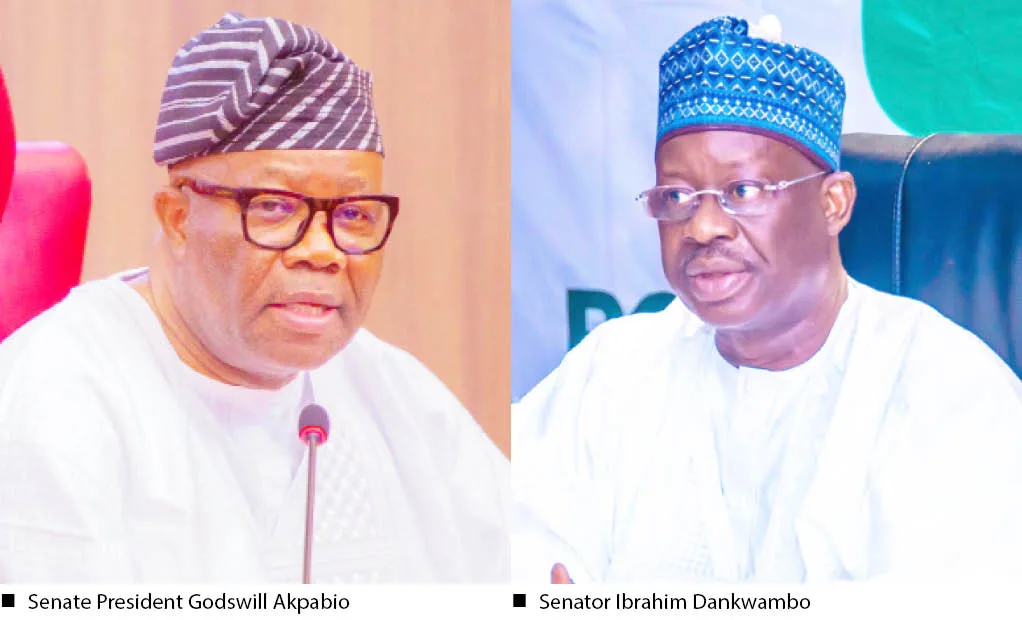
A bill seeking to compel non-governmental organisations (NGOs) to disclose funds and humanitarian aid received from foreign donors has pitted the Senate against civil society organisations.
While lawmakers said the bill aims to promote accountability and protect national security, NGOs fear it could hamper humanitarian operations and further shrink civic space.
Titled “A Bill for an Act to Provide for the Regulation, Coordination, Transparency and Disclosure of Foreign Aid, Grants and Donations Received in the Federal Republic of Nigeria; to Ensure Accountability in the Utilization of Such Aid; and for Related Matters, 2026 (SB. 1034),” the proposed legislation seeks to track funds entering Nigeria annually from foreign governments, international foundations and private donors.
Sponsored by Senator Ibrahim Hassan Dankwambo (Gombe North), the bill is part of the Senate’s purported efforts to strengthen oversight of foreign funding received by organisations operating in the country.

The bill was introduced in the Senate on May 6, 2026, and passed second reading on July 22, 2026. It is now before the Senate Committees on National Planning and Economic Development and Finance for further legislative work.
The committees are expected to hold a public hearing on the bill, where key stakeholders, including NGOs, will be invited to examine its provisions. It is not immediately clear when the committees will hold the public hearing.
Findings showed that this is the fourth time the National Assembly has attempted to introduce legislation to regulate and oversee NGO activities.
Proposals for a dedicated commission to supervise and monitor NGOs were made in 2016, 2017 and again in 2019/2020.
However, each proposal stalled at the committee stage following sustained opposition from civil society groups, which raised concerns over excessive regulatory powers.
Key provisions of the new bill
For decades, international development partners, NGOs and government institutions have funnelled foreign resources into healthcare, education, security, and governance initiatives across Nigeria amid concerns over transparency and accountability.
Section 1 of the bill seeks to establish “a comprehensive framework” to regulate and coordinate foreign aid in the country; guarantee transparency and accountability “in the receipt and utilisation” of foreign donations.
The section also seeks to ensure that foreign aid aligns with national development priorities, prevent misuse, diversion or duplication of foreign-funded projects and enhance public access to information on foreign aid.
Section 2 of the proposed law extends the regulation to Ministries, Departments and Agencies (MDAs); state and local governments; as well as local and international NGOs, Civil Society Organizations (CSOs), and private entities receiving foreign aid.
The draft applies to all forms of foreign aid, including grants, donations, technical assistance, concessional loans, and humanitarian support.
The bill seeks to establish the Foreign Aid Regulatory Commission (FARC) as an independent corporate body with perpetual succession.
Under Sections 4 and 5, FARC is granted supervisory and statutory powers, including establishing, running, and maintaining a centralised repository of all foreign assistance entering Nigeria.
The commission holds the statutory authority to demand financial documentation, perform unannounced physical inspections of aid-funded project sites, and launch comprehensive financial audits.
FARC is empowered to issue binding administrative guidelines, penalise non-compliant organisations, and suspend non-cooperative entities.

Bill criminalises non-disclosure
Section 6(1) mandates that “every entity receiving foreign aid shall register with the commission within 30 days of receipt.” Failure to register, according to the provision, constitutes an offence.
Section 7 requires recipients of foreign aid to disclose the source and amount of aid received; the purpose and conditions attached, as well as details of implementing partners and periodic reports on utilisation.
These data will feed into an open-access National Foreign Aid Register maintained by the commission under Section 8.
The proposed legislation requires that foreign aid must be used strictly for its designated purpose, with any redirection or diversion treated as a financial crime.
Section 10 of the bill states that all foreign-funded interventions must undergo annual independent audits, with copies submitted to FARC and the National Assembly.
The bill prescribes stiff penalties designed to enforce compliance.
“An individual convicted under this Act is liable to: a fine of not less than N5,000,000, or imprisonment for a term not exceeding 5 years, or both.
“A corporate body is liable to a fine not less than N20,000,000 and suspension or revocation of operational licenses,” it added.
Senate’s justification
Lawmakers argue that centralised regulation of foreign aid is long overdue, pointing to systemic flaws in Nigeria’s external funding.
Senator Dankwambo, during the debate, said that billions of naira in foreign aid are channelled to NGOs operating in Nigeria without adequate scrutiny of the sources of the funds or the purposes for which they are donated.
He said Nigeria’s foreign aid management system remains largely opaque, warning that lack of oversight poses serious national security risks and undermines public accountability.
Dankwambo, a former Accountant-General of the Federation, noted the proposed legislation would strengthen oversight of foreign aid received by NGOs and promote greater transparency and accountability.
The Senate Chief Whip, Tahir Monguno (APC, Borno North), argued that many foreign donors channelled financial assistance through NGOs without adequate scrutiny.
The Deputy Senate President, Barau Jibrin, also stated that “We can’t tell what money goes into the coffers of NGOs. Fraudsters set up bogus, pseudo NGOs and collect money from there.”
Adamu Aliero (APC, Kebbi Central) said legislation would improve the utilization of donor funds and enhance the confidence of development partners through greater transparency and accountability.
The Chairman of the Senate Committee on Finance, Sani Musa (APC, Niger East), maintained that “Most of the aid coming to so-called NGOs is not subjected to scrutiny.”
“We have seen instances where such arrangements create security concerns because we do not know who is accounting for what. Is it insurgents taking money meant for victims?” He queried.
CSOs fault bill, demand stronger existing institutions
Civil society organisations rejected the Senate’s proposed legislation and urged lawmakers to strengthen existing regulatory and anti-corruption institutions rather than establish another commission to oversee foreign-funded organisations.
The organisations said the proposed legislation could create overlapping regulatory responsibilities, impose unnecessary compliance burdens on NGOs and potentially restrict civic space under the guise of improving transparency and national security.
Country Director of Accountability Nigeria Lab, Friday Odeh, questioned the necessity of the proposed legislation, arguing that Nigeria already has several institutions with mandates covering financial reporting, anti-money laundering, corporate compliance and corruption.
“I do not think the bill should have been necessary in its current form,” Odeh said.
He listed the Economic and Financial Crimes Commission (EFCC), including its Special Control Unit Against Money Laundering (SCUML), the Nigeria Financial Intelligence Unit (NFIU), Corporate Affairs Commission (CAC), Nigeria Revenue Service (NRS), Office of the Accountant-General of the Federation, Ministry of Budget and Economic Planning and the Independent Corrupt Practices and Other Related Offences Commission (ICPC) among institutions already performing related functions.
Odeh said SCUML already registers and supervises risk-prone non-profit organisations and requires them to provide relevant documentation, while Nigeria’s anti-money laundering framework provides mechanisms for financial reporting and beneficial ownership scrutiny.
“The legislative question should therefore be why existing institutions are not effectively using the powers and data they already possess, not how to create another agency with a new compliance layer,” he said.
He argued that lawmakers should first establish the specific gaps in the existing regulatory system and determine why enforcement had failed before introducing another layer of bureaucracy.
Odeh also warned that the bill could undermine gains Nigeria had made in strengthening its financial-governance and anti-money laundering framework.
He noted that Nigeria had been removed from the Financial Action Task Force (FATF) grey list in October 2025 after completing its anti-money laundering and counter-terrorist financing action plan.
According to him, FATF had credited Nigeria’s progress to stronger inter-agency cooperation, improved access to beneficial ownership information and more effective risk-based supervision.
He said the international body had also cautioned against measures that could disrupt legitimate humanitarian and non-profit organisation activities.
“Legislators should be strengthening the EFCC, NFIU and ICPC to trace illicit financial flows, including those involving politicians and politically exposed persons, rather than introduce broad measures that could signal regulatory regression,” Odeh said.
He added that creating another regulatory structure could weaken the progress Nigeria had made with the FATF if it resulted in overlapping mandates and excessive compliance requirements.
Odeh further criticised what he described as an institutional disconnect in the legislative process, saying lawmakers sometimes introduced new laws without adequately examining the responsibilities and capacity of agencies already charged with addressing the identified problems.
Odeh warned that a blanket compliance regime could have unintended consequences for organisations providing humanitarian assistance in parts of northern Nigeria affected by insecurity and poverty.
Similarly, the Chancellor of the International Society for Social Justice and Human Rights (ISSJHR), Dr Omenazu Jackson, called on the Senate to withdraw the bill in its present form and strengthen institutions already established by law.
Jackson said his organisation supported transparency, accountability and proper utilisation of foreign assistance but warned against using those principles to control independent civil society organisations.
“We fully support the principles of transparency, accountability and the proper utilisation of foreign assistance. However, transparency must not become a pretext for governmental control of independent voices, and regulation must not become an instrument for suppressing legitimate criticism,” he said.
Jackson said the proposed Foreign Aid Regulatory Commission appeared to confer powers to register, inspect, audit, sanction and potentially suspend organisations receiving foreign assistance.
He questioned what additional function the proposed commission would perform that existing government institutions were not already empowered to undertake.
“Our fundamental question to the Senate is straightforward: What specific function would this proposed Commission perform that existing government institutions are not already empowered to undertake?” Jackson asked.
He said Nigeria already had institutions responsible for corporate registration, taxation, anti-money laundering, financial intelligence, public procurement, project accountability and regulation of charitable organisations.
Jackson therefore urged lawmakers to close specific regulatory gaps rather than establish another commission whose jurisdiction could overlap with several existing agencies.
“If the problem is inadequate disclosure, strengthen disclosure. If the problem is money laundering, strengthen the NFIU and relevant financial institutions. If the problem is taxation, strengthen the FIRS,” he said.
“If the problem is corporate compliance, strengthen the CAC. If the problem is corruption, strengthen the EFCC and ICPC. If the problem is misuse of public funds, strengthen the Auditor-General, fiscal-responsibility institutions and parliamentary oversight.”
“Why create another Commission?” he asked.
Jackson also expressed concern that the proposed law could move beyond financial accountability and affect the ability of civil society organisations to criticise government policies.
He questioned whether the proposed regulation of foreign-funded organisations could ultimately become a mechanism for determining which independent organisations could receive foreign support and what activities they could undertake.
He said civil society organisations often performed an important democratic role by asking questions that government institutions might be unwilling to raise.
Jackson also raised concerns over the penalties contained in the proposed legislation, noting that non-compliance could attract fines of up to N20 million and possible imprisonment.
He said such sanctions could create a chilling effect on civil society organisations, particularly smaller organisations that lack the resources to navigate complex regulatory requirements.
The ISSJHR chancellor further compared Nigeria’s proposed approach with regulatory frameworks in the United States and United Kingdom.
He said the United States’ Foreign Agents Registration Act (FARA) focuses primarily on persons acting as agents of foreign principals in specified circumstances rather than automatically subjecting every organisation receiving foreign funding to a general government licensing regime.
Jackson said FARA also provides exemptions covering areas including humanitarian, religious, academic and scientific activities.
He urged Nigeria to focus on unlawful foreign agencies, money laundering, terrorism financing and covert political influence rather than legitimate humanitarian activities, research, human rights advocacy and democratic accountability.
“Where a gap exists, close the gap. Where an institution is weak, strengthen the institution. Where corruption exists, enforce the law. Where foreign influence is unlawful, prosecute it.
“But do not create another commission simply because existing institutions have failed to perform,” he said.
Jackson said Nigerian civil society remained an important part of democratic accountability and urged lawmakers not to weaken its ability to scrutinise government.
“Nigeria needs stronger institutions, not another bureaucracy to police dissent,” he said.

‘Bill will duplicate existing systems’
Also, the Nigeria Network of NGOs (NNNGO), a coalition of civil society organisations in Nigeria that focuses on poverty and other developmental issues, said the bill would create unnecessary bureaucracy and duplicate existing systems for tracking foreign funding.
The group, in a statement on its website, said the National Foreign Aid Register proposed in Clause 8 of the bill already exists through the Nigeria Development Cooperation Dashboard operated by the Federal Ministry of Budget and Economic Planning.
It said the publicly accessible dashboard tracks foreign aid by donor, sector, ministry, National Development Plan pillar, Sustainable Development Goal and state, using the International Aid Transparency Initiative (IATI) standard.
It argued that the proposed register would therefore duplicate an existing system designed to support government and parliamentary oversight of foreign financing.
They also warned that the bill could reverse reforms that removed NGOs from the list of entities subject to additional anti-money laundering reporting requirements.
According to the group, NGOs had previously been required to register with the Economic and Financial Crimes Commission’s Special Control Unit Against Money Laundering (SCUML).
It said the requirement was removed after a sector-wide risk assessment and changes to international standards that called for a targeted, risk-based approach to regulating non-profit organisations.
The group said the reform followed years of advocacy by civil society organisations.
It argued that the proposed bill would reintroduce similar registration, reporting and sanctions through a new regulatory body, describing the move as a setback.
The NGOs also faulted the bill for failing to distinguish between foreign aid received by government agencies and private donations made to independent civil society organisations.
It said government aid is public money subject to constitutional oversight, while donations to independent organisations constitute private income protected by the right to freedom of association.
The group noted that NGOs already register with the Corporate Affairs Commission and file audited financial statements with the Financial Reporting Council of Nigeria.
It therefore urged lawmakers to reconsider the bill, arguing that Nigeria already has mechanisms for ensuring transparency without imposing additional and potentially restrictive regulations on NGOs.
-

 News24 hours ago
NBA probes mismanagement claims of ₦100m Imo govt gift to Owerri branch
-
Politics22 hours ago
‘No vacancy’ — Senators endorse Akpabio for 11th assembly senate presidency
-
News6 hours ago
State Police Bill: Five Assemblies say yes, 31 yet to decide
-
News7 hours ago
Sanwo-Olu orders immediate repairs of Lagos roads
-
News24 hours ago
Fani-Kayode defends Obasanjo over Nigeria Airways liquidation
-
Politics24 hours ago
‘70 People Wasted Their Lives For Dancing Clown, Adeleke, In August Poll’ – Adeyanju Tackles Osun Gov Over Support For Tinubu’s Second Term
-
News24 hours ago
Lagos announces Independence Bridge diversion ahead of repairs
-
News7 hours ago
No plan to increase electricity tariffs – FG insists