News
Military pay review: Generals’ pensionable salary rises to N2.5m monthly

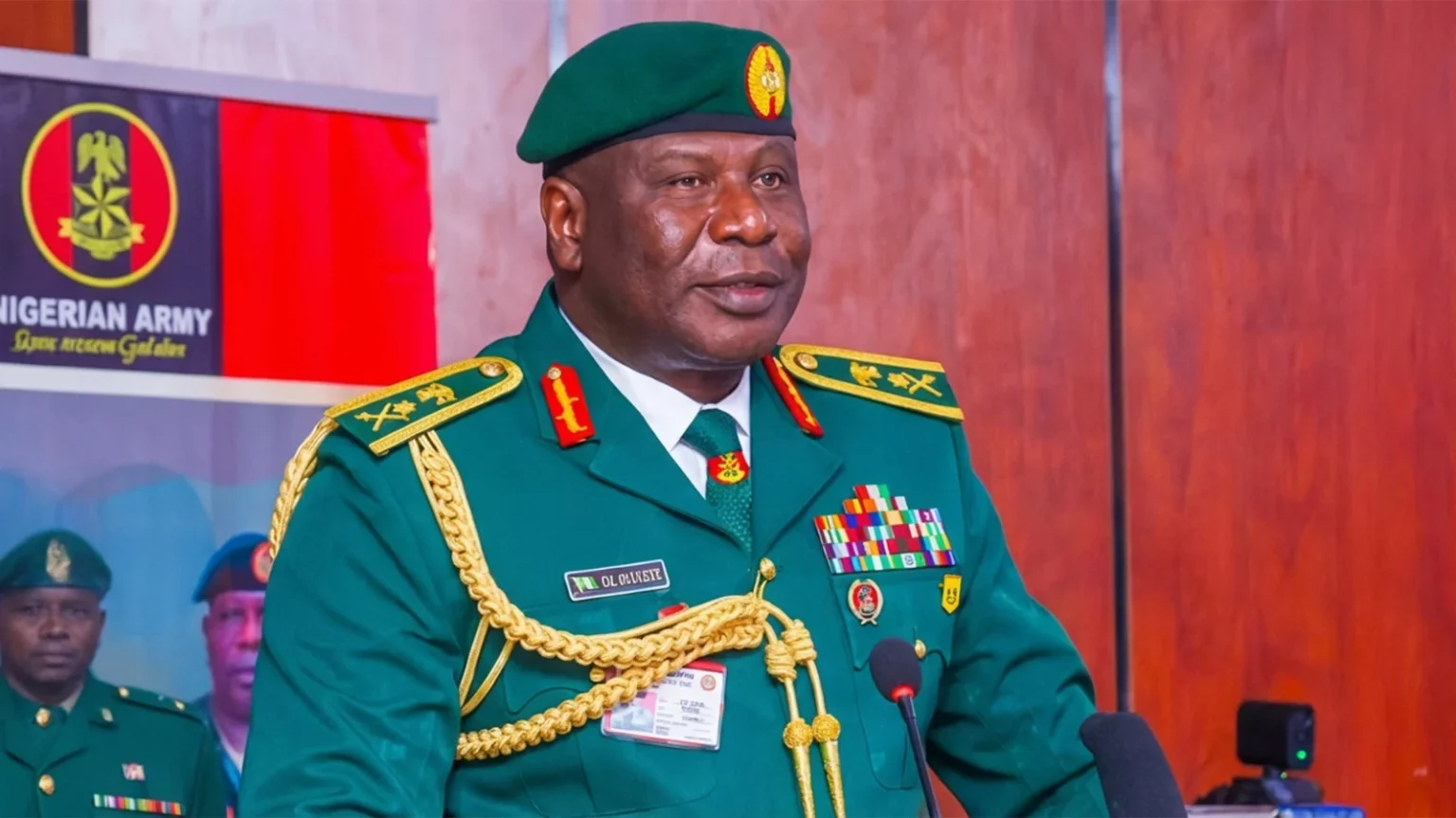
The Federal Government has approved a new pensionable salary structure for personnel of the Nigerian Armed Forces, with Generals, Admirals and Air Chief Marshals topping the scale at an annual gross pensionable salary of N29.75m.
The approval, contained in a September 3, 2026 circular issued by the National Salaries, Incomes and Wages Commission, takes effect from September 1, 2026, and sets out new annual salary figures to be used for pension purposes across the Army, Navy and Air Force.
The circular, obtained by our correspondent, was signed by the Chairman and Chief Executive Officer of the commission, Major General Junaidu S. Bindawa (retd.), and addressed to key government officials, including the Chief of Staff to the President, Deputy Chief of Staff to the President, Minister of Finance and Coordinating Minister of the Economy, Minister of Defence, Secretary to the Government of the Federation, Auditor-General for the Federation, Director-General of the Budget Office of the Federation and Accountant-General of the Federation.
Titled “Review of Gross Consolidated Armed Forces Salary Structure for Pension Purposes,” the circular referenced an earlier communication dated August 28, 2026, which revised the Consolidated Armed Forces Salary Structure.

The commission said the latest review was carried out in accordance with the provisions of the 1999 Constitution and following the approval of President Bola Tinubu, in his capacity as Commander-in-Chief of the Armed Forces.
The circular stated, “I refer to Circular No. SWC/S/04/S.304/III/526 dated 28th August 2026 which revised the Consolidated Armed Forces Salary Structure (CONAFSS), and in line with the provisions of Section 173 (3) of the 1999 Constitution of the Federal Republic of Nigeria (as amended), and hereby convey the approval of the President and Commander-in-Chief of the Armed Forces of Nigeria, for the review of Gross Consolidated Armed Forces Salary Structure for Pension Purposes attached as Annex I.”
The commission consequently attached a new schedule detailing the approved gross annual pensionable salaries for the various ranks and salary steps.
Breakdown of package
For Generals, Admirals and Air Chief Marshals, the highest annual pensionable salary is N29,745,561, while the lowest figure for the rank is N21,898,443, depending on the salary step.
Lieutenant Generals, Vice Admirals and Air Marshals will have annual pensionable salaries ranging from N16,995,355 to N25,908,856.
Major Generals, Rear Admirals and Air Vice Marshals will earn between N14,977,173 and N23,899,084 annually for pension purposes.
For Brigadier Generals, Commodores and Air Commodores, the annual pensionable salary ranges from N13,863,954 to N16,387,106.
Colonels, Captains and Group Captains will have annual pensionable salaries ranging from N8,313,134 to N9,489,244, while Lieutenant Colonels, Commanders and Wing Commanders will earn between N7,552,046 and N8,739,205.
Majors, Lieutenant Commanders and Squadron Leaders will have annual pensionable salaries ranging from N5,987,815 to N7,009,293.
For Captains, Lieutenants and Flight Lieutenants, the annual pensionable salary ranges from N5,277,111 to N6,415,885.
Second Lieutenants, Midshipmen and Pilot Officers will have annual pensionable salaries ranging from N4,924,943 to N5,587,014.
At the warrant-officer level, Army, Navy and Air Force Warrant Officers will have annual pensionable salaries ranging from N4,525,780 to N5,173,449.
Master Warrant Officers will have between N3,935,753 and N4,932,638, while Warrant Officers will have annual pensionable salaries ranging from N3,455,892 to N4,345,165.
Staff Sergeants, Petty Officers and Flight Sergeants will have annual pensionable salaries ranging from N2,976,031 to N3,757,692.
Sergeants and Leading Seamen will have annual figures ranging from N2,808,064 to N3,164,813, while Corporals and Able Seamen will earn between N2,477,709 and N2,734,367.
Lance Corporals and Seamen will have annual pensionable salaries ranging from N2,323,876 to N2,580,533, while Privates, Ordinary Seamen and Aircraftmen will have figures ranging from N2,281,185 to N2,491,623.
The commission, however, made clear that the approved figures are specifically for pension purposes and should not be interpreted as the monthly take-home pay of serving personnel.
The document states, “This approval takes effect from 1st September 2026.”
It further directed government establishments and other concerned parties to refer enquiries on the implementation of the new structure to the commission.
According to the circular, “Please all enquiries concerning this circular should be directed to the National Salaries, Incomes and Wages Commission.”
The latest development comes shortly after the Federal Government approved a separate upward review of the remuneration of Armed Forces personnel. The broader salary review reportedly provided differentiated increases across the ranks, with junior personnel receiving the largest percentage adjustment.
The review was also designed to improve military welfare amid the country’s prolonged security challenges.
The pension review has implications for retired military personnel, as pension benefits are linked to approved pensionable emoluments and periodic adjustments to the salary structure.
Section 173(3) of the 1999 Constitution provides for the review of pensions every five years or alongside any review of the salaries of public servants, whichever is earlier.
Security experts react
A Fellow of the International Institute of Professional Security, Abdullahi Jabi, commended the Federal Government for the review, describing it as a decisive step towards improving the welfare of military personnel.
Jabi said better remuneration was critical to motivating personnel who risk their lives in the service of the country.
“Let me commend Mr. President and the ruling party for taking these bold decisions. I am saying this against the background that it takes a man of courage to want to introduce major reforms that have to motivate, particularly, the men of the Armed Forces that surrender their lives to the state to protect others,” he said.
He, however, said poor compensation and delays in the payment of pensions and gratuities had historically affected military personnel and their families, with broader implications for national security.
“One of their disadvantages over the years, why criminalities have increased, is the fact that if these people die in the line of duty, their pension and gratuity is hardly paid. Besides that, the payment is poor. After their demise in the line of duty, the family are subjected to huge embarrassment, assaults, and above all, disillusion,” Jabi stated.
He said the new package could serve as an incentive for personnel engaged in ongoing operations against insecurity.
“For Mr. President to have come with this pragmatic approach to change their misfortune to fortune, assure them of economic prosperity, and motivate them to be able to do more for the state and curb crimes and criminalities—including kidnappings and insurgencies—it is a welcome development in the right direction,” he said.
Jabi, however, urged the government to go beyond pensions and remuneration by providing a comprehensive welfare package covering housing, healthcare, transportation and education for the children of military personnel.
“It should not stop at that. Housing should be free for them, health services should be free, transportation should be free, and education of their children should be free. That is the right way to go, so that we go into this system of governance where the welfare of the people is the center of development,” he argued.
Similarly, security analyst Chidi Omeje described the review as justified, given the sacrifices required of service members operating in conflict zones.
“Whatever our servicemen are given is just okay. If you compare what they do and the kind of service they render, these are people who put their lives on the line for the country,” Omeje said.
Omeje, who said he had observed military operations in conflict areas, stressed that improved remuneration could strengthen the commitment of troops by assuring them that the country valued their sacrifices.
“Most times when I follow the troops to the theater of operations, I see the nature of their activities and the nature of sacrifice they make. I don’t think what has been announced is out of the world. For me, it is okay if that will make them show more commitment and know that indeed the country cares for them,” he noted.
He also compared the post-service benefits available to military personnel with those enjoyed by political officeholders, arguing that servicemen who risk their lives for the country deserve stronger retirement benefits.
“You see politicians who serve just four or eight years as governor, and you see what they cart away every month—cars, buildings, and so many packages. If these politicians go away with all these kinds of pensions, why wouldn’t servicemen who put their lives on the line for the country have some respite? I support it and I pray that they even give them more,” Omeje said.(Punch)
-

 News23 hours ago
NBA probes mismanagement claims of ₦100m Imo govt gift to Owerri branch
-
Politics24 hours ago
2027: I can bet my life Obi will humiliate Soludo in Anambra – Momodu
-
Metro24 hours ago
Finland appeal court cuts Simon Ekpa’s jail term to four years — Report
-
Politics21 hours ago
‘No vacancy’ — Senators endorse Akpabio for 11th assembly senate presidency
-
News24 hours ago
Nigeria Police Order Officers To Vacate Lagos Alapere Barracks Within 30 Days For Developer
-
News6 hours ago
State Police Bill: Five Assemblies say yes, 31 yet to decide
-
News6 hours ago
Sanwo-Olu orders immediate repairs of Lagos roads
-
Politics23 hours ago
‘70 People Wasted Their Lives For Dancing Clown, Adeleke, In August Poll’ – Adeyanju Tackles Osun Gov Over Support For Tinubu’s Second Term