Politics
2027: ‘You Cannot Wear a Party Jersey Today and Become an Election Referee Tomorrow’ — Atiku Blasts Lecturers for Endorsing Tinubu

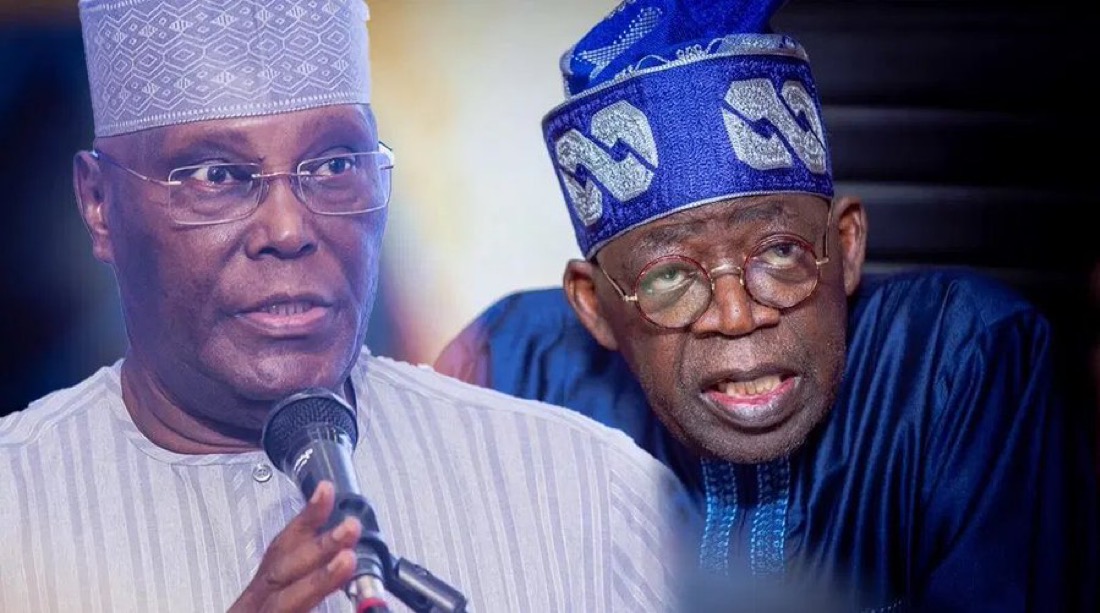
The ADC Presidential Candidate, Atiku Abubakar has criticised the reported endorsement of President Bola Ahmed Tinubu’s 2027 re-election bid by more than 600 lecturers from public universities across Northern Nigeria.
His Senior Special Assistant on Public Communication, Phrank Shaibu, reacting to the development, questioned the propriety of individuals perceived to be taking partisan positions subsequently playing roles in institutions or processes expected to maintain political neutrality.
“You cannot wear a party jersey today and become an election referee tomorrow,” Shaibu said.
His comment came after a meeting of academics in Kaduna, where more than 600 lecturers reportedly endorsed Tinubu for a second term.

The communiqué from the meeting was read by the Vice-Chancellor of Kaduna State University, Prof. Abdullahi Ibrahim Musa. The academics reportedly cited the Tinubu administration’s policies and achievements in areas including education, infrastructure, agriculture, investment and economic reforms as reasons for their support.
However, the endorsement has generated debate over the role of academics and senior university officials in partisan politics, particularly as Nigeria approaches the 2027 general elections.
ASUU distances itself
The development also prompted a response from the Academic Staff Union of Universities (ASUU), which stressed that the endorsement should not be interpreted as an endorsement by the union.
ASUU President, Prof. Chris Piwuna, maintained that the union is apolitical and does not endorse political parties or candidates.
He, however, acknowledged that individual university lecturers are free to participate in political activities in their personal capacities.
Shaibu’s ‘referee’ argument
Shaibu’s statement focuses on the distinction between personal political participation and institutional neutrality.
His football analogy suggests that someone who openly wears the colours of one political team may find it difficult to convince the opposing side that they can subsequently act as an impartial referee.
The issue is particularly sensitive ahead of 2027, when questions surrounding the neutrality of electoral officials, public institutions and influential professional groups are expected to become increasingly prominent.
Supporters of the lecturers’ action could argue that academics, like other Nigerian citizens, have the constitutional right to express political preferences and support candidates of their choice.
Critics, however, may question whether individuals occupying sensitive public or institutional positions should openly campaign for a political candidate while remaining involved in processes where neutrality is expected.
2027 political battle
The controversy comes as political parties and presidential aspirants intensify preparations for the 2027 election.
For Tinubu’s supporters, endorsements from hundreds of academics in the North could be presented as evidence of growing support for the President among influential groups in the region.
For his critics, however, the development raises questions about the boundaries between political support and the independence expected from public institutions.
Shaibu’s remark has therefore added another dimension to the controversy, shifting attention from the endorsement itself to the broader question of who should be allowed to act as an impartial referee in Nigeria’s electoral and political system.
As the 2027 contest draws closer, that question is likely to remain at the centre of debates over the credibility and neutrality of Nigeria’s democratic institutions.
-

 News11 hours ago
Society With More Worship Centres Than Industries Won’t Prosper – Cleric
-
Politics11 hours ago
ASUU Fresh Strike Threat Has Exposed Fraud In Subsidy Removal – Atiku
-
Sports11 hours ago
EPL: Refereeing body admits ‘error of judgement’ in Haaland’s goal to win Manchester derby
-
Entertainment11 hours ago
My mind is pure, I didn’t do it — Poco Lee speaks after UK bail release
-
Metro11 hours ago
End Delay in Awujale Succession – Clerics Tell Abiodun
-
News11 hours ago
B/Haram Destroyed 5000 Schools, Left 2.2m Children Out Of School – Zulum
-
News11 hours ago
Adeleke’s ally shot dead in Osun
-
Business11 hours ago
Manufacturers’ unsold goods rise to N1.7trn