Business
FG raises N729bn bond to settle GenCos’ debts

The Federal Government has raised N728.979bn through the second issuance under its N4tn Power Sector Multi-Instrument Issuance Programme, bringing the value of bonds issued under the first phase of the initiative to approximately N1.23tn.
The latest issuance is aimed at settling verified outstanding debts owed to electricity generation companies, whose unpaid claims have weakened liquidity and constrained investments across the power sector.
The Series 2 bond follows the successful completion of the inaugural N501.021bn Series 1 issuance in January 2026. The first bond recorded 100 per cent subscription, with N300bn raised from the capital market and N201.021bn issued as non-cash bonds to participating generation companies.
The latest transaction comprises N402bn in cash bonds raised from the capital market and N326.979bn in non-cash bonds allotted to participating GenCos under the Presidential Power Sector Debt Reduction Programme.

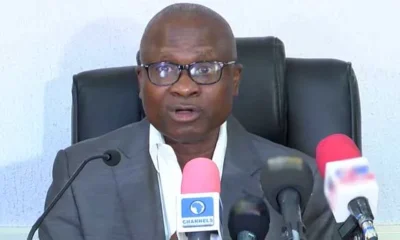
Speaking at the signing ceremony in Abuja on Monday, the Minister of Finance and Coordinating Minister of the Economy, Taiwo Oyedele, said the transaction was designed to address the legacy obligations that had weakened the electricity market.
He said, “This transaction addresses an important challenge in Nigeria’s electricity markets, which is accumulated legacy obligations that have weakened liquidity, constrained investments, and affected confidence across the value chain.
“The federal government’s objective is to resolve legitimate legacy obligations in a structured and transparent manner, while implementing the reforms necessary to prevent their recurrence.”
Oyedele warned that the bond programme must be supported by reforms capable of preventing the accumulation of fresh debts, stressing that the government’s objective was to build a financially sustainable electricity market.
“This means the bond programme cannot stand alone. It must be accompanied by stronger market discipline, improved revenue assurance, reduction in technical and commercial losses, greater efficiency and accountability across the electricity ecosystem.
“It is also important that we are leveraging Nigeria’s domestic capital markets. This demonstrates how the government can use appropriate market instruments to address significant economic challenges, while deepening our financial markets and mobilizing long-term domestic capital,” he said.
The minister added that the success of the programme would not be measured by the amount of money raised, but by its impact on electricity supply and the ability of market participants to meet their obligations.
“Ultimately, the success of this programme will not be measured by the amount or size of the bond that we have issued. It will be measured by whether we achieve a financially sustainable electricity market that can attract investments, meet its obligations and deliver more reliable power to Nigerian households and businesses,” Oyedele stated.
The Chief Executive Officer of the Nigerian Bulk Electricity Trading Plc, Akinola Odeyemi, said the Series 2 bond had an aggregate value of N728.979bn and would be implemented in two tranches, Tranche A and Tranche B.
He disclosed that 11 generation companies were participating in the second phase, compared with eight GenCos under Series 1. Odeyemi said the increased participation reflected growing confidence in the programme and its ability to provide a credible framework for addressing verified outstanding obligations in the electricity sector.
He said, “The increased participation is a positive development and reflects the growing confidence of stakeholders in the programme and its ability to provide a credible framework for addressing verified outstanding obligations to the sector.”
The NBET boss said the accumulation of unpaid obligations had affected the ability of market participants to meet their commitments and constrained the capacity of generation companies to invest in increasing their electricity generation capacity.
“It is therefore important that the Debt Reduction Program is viewed not simply as an initiative for settling historical debt, but also as part of a broader effort to restore financial confidence, liquidity and sustainability to the Nigerian electricity supply industry,” he stated.
The Special Adviser to the President on Energy, Olu Verheijen, said the first issuance had demonstrated the viability of the debt reduction model, while the second was intended to expand its impact.
Verheijen said the first series had resulted in settlement agreements with 11 generation companies representing 21 power plants.
“Now we are moving deeper into implementation with Series 2. As I said at the investor forum in July, Series 1 proved the model, and Series 2 is scaling it. As important as it is, you would agree that scaling is what truly makes the difference,” she said.
She said the two issuances had delivered more than N1.1tn within the N4tn ceiling approved by the Federal Government.
Giving an overview of the programme, Michael Nwezi, of Cardinal Stone, lead issuing house and financial adviser, said that by bringing structured confidence and long-term financing to a complex sectoral challenge, the programme reflects what can be achieved when public sector leadership and private sector capital align behind a shared national objective.
“This is by far the largest fund issuance in the entire history of the Nigerian capital market. Across the two series, the transaction attracted participation across a broad investor base, including pension fund administrators, banks, sovereign wealth funds, asset managers, and other institutional and retail investors,” he added.
The N4tn Power Sector Multi-Instrument Issuance Programme was approved by the Federal Executive Council in August 2025 to address verified legacy obligations owed to power generation companies and gas suppliers.
The programme seeks to improve liquidity, strengthen investor confidence and support sustainable electricity generation by resolving unpaid claims accumulated over several years.
The first phase of the programme comprises the N501.021bn Series 1 bond and the N728.979bn Series 2 bond, bringing the combined issuance value to approximately N1.23tn.
The Federal Government has said the broader objective is to settle legitimate legacy debts while implementing reforms to improve revenue assurance, reduce technical and commercial losses, and prevent the recurrence of unpaid obligations across the electricity value chain.(Punch)
-

 Politics5 hours ago
‘Weapon fashioned against APC’ — outrage as youth leader gifts 2026 Prados to party officials, then deletes post
-
News6 hours ago
Ebola: NCDC to pay contacts N100,000 weekly
-
Politics6 hours ago
We Won’t Allow Repeat Of 2023 Defeat – Lagos APC
-
News5 hours ago
Zamfara Steps Up Ebola Containment Measures After Passenger With 38°C Fever Arrives Airport
-
Politics6 hours ago
We’ll Soon Expose Those Plotting To Scuttle My Guber Ambition – Pantami
-
Metro5 hours ago
Okonjo-Iweala’s mother dies at 96
-
News24 hours ago
Ebola in Nigeria: Fears contacts could test positive mount
-
Politics5 hours ago
FULL LIST: Ibrahim Abdulkarim, ICT strategist, named DG as NDC constitutes 155-member campaign council