Opinion
How Kwara APC crisis became everybody’s political problem

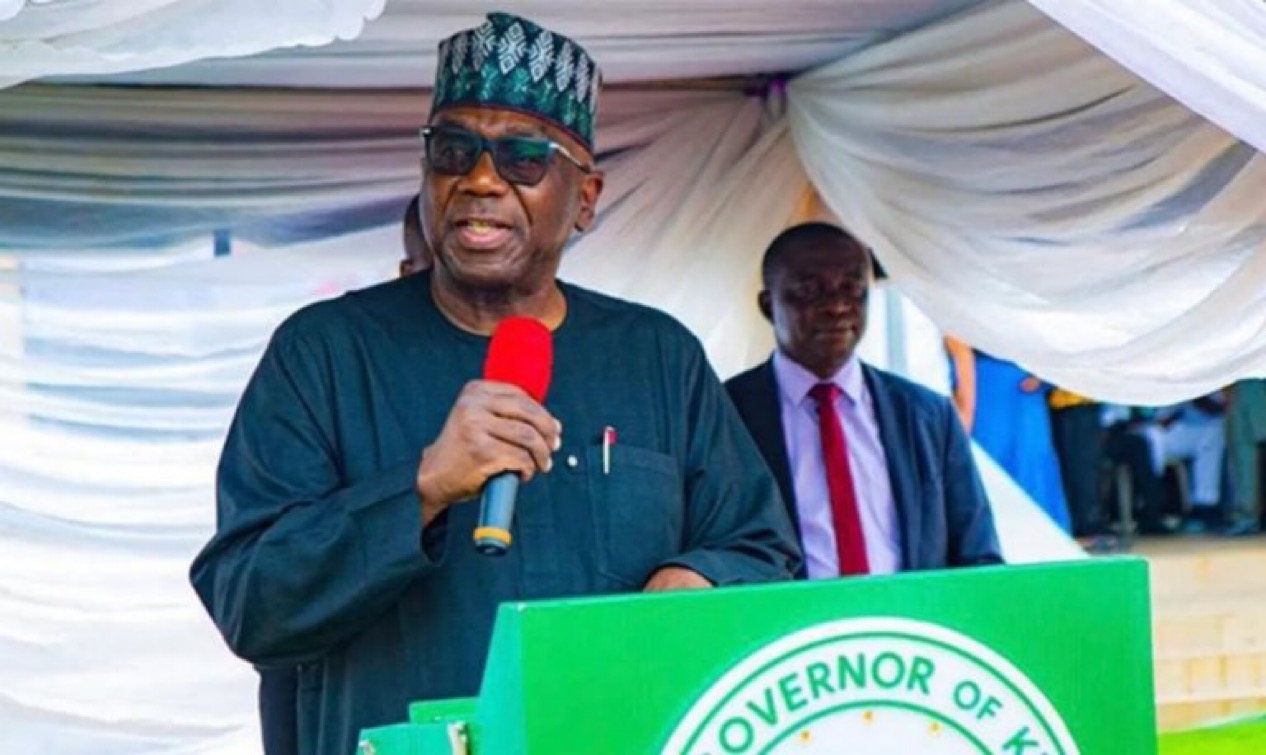
There is a point at which political strategy becomes political chicanery, and another at which political flexibility begins to look suspiciously like political prostitution. The unfolding drama involving the All Progressives Congress (APC), The O-To-Gẹh Progressives (T.O.P) and the People’s Democratic Party (PDP) in Kwara State appears to be approaching that dangerous intersection.
Let us be clear: there is nothing inherently wrong with politicians changing political parties. They can leave when they disagree with the leadership, lose confidence in the party, feel excluded or calculate that another platform offers a better political future. That is politics.
What is difficult to reconcile, however, is the proposition that politicians can seek election on one party’s platform while asking their supporters to vote for another party’s candidate in the same election.
That is where the T.O.P story becomes intriguing.

The group emerged from the internal revolt within the Kwara APC after the party’s primary elections in May this year, preparatory to the 2027 general election. The primary election, supervised by Senator Musiliu Obanikoro on secondment from the national secretariat, threw up the Speaker of the State House of Assembly, Rt. Hon. Salihu Yakubu Danladi, having been adjudged to have scored the highest number of votes. But a considerable number of aspirants rejected the result, claiming the process was fraught with irregularities. The aggrieved aspirants subsequently formed a group that began as the G-10, expanded to the G-15 and later metamorphosed into The O-To-Gẹh Progressives (T.O.P), presenting itself as a defender of the ideals of the 2019 O-To-Gẹh movement — fairness, inclusion, internal democracy and popular participation.
Yet its subsequent political trajectory has produced a paradox.
T.O.P has rejected APC candidates produced in Kwara (especially for the gubernatorial election) while endorsing President Bola Ahmed Tinubu, the APC presidential candidate, for 2027. The group has also maintained, at various stages, that its members remain within the APC while engaging with the PDP and exploring alternative political arrangements, styled, the “Rainbow Coalition”.
That is an extraordinary political arrangement.
Imagine a footballer wearing one team’s jersey, collecting the match bonus from another and telling his supporters to cheer for the first team whenever it suits him.
That is not a formation. That is tactical confusion.
The APC created the monster
Before anyone rushes to condemn T.O.P, however, the APC must first look in the mirror.
The present crisis did not fall from heaven. It is largely the harvest of seeds the party itself planted over the past seven years.
Since the 2019 political earthquake that swept the Saraki political dynasty out of power, the Kwara APC has had repeated opportunities to consolidate its coalition. Instead, it has struggled to manage the very forces that delivered its victory.
Those who fought under the O-To-Gẹh banner did not cease to exist after the election. People like Chief Akogun Iyiola Oyedepo — a battle-tested political warlord and one of the arrowheads of the O-To-Gẹh revolution, are still very much around and about in the political arena. There are others too, whose names I cannot readily recollect.
They had expectations. They expected recognition, participation and consultation, and believed the coalition that defeated the old order would remain broad enough to accommodate its various interests. Many subsequently complained of marginalisation and exclusion.
Some left. Some stayed and grumbled. Some waited. Others reorganised.
Now, years later, some of those political actors are threatening to become the architects of the APC’s next major headache.
This should not surprise anybody.
The division within the party is largely self-inflicted. You cannot spend seven years converting friends into enemies and then complain that your enemies have become organised.
The party at the state level, with the indulgence of the national working committee (NWC), spent the last seven years acquiring and nurturing enemies that ought to have been converted into friends. It ignored the grievances of the O-To-Gẹh leaders. It watched “APC Loyal” defect to the SDP in 2023, without any serious attempt at genuine reconciliation. It allowed allegations of imposition and lack of internal democracy to fester and turned a blind eye to the complaints of those who felt short-changed.
At the national level, the APC also looked away. It treated Kwara as a conquered territory rather than a contested home. It neither intervened decisively to ensure genuine reconciliation, nor insisted on stronger internal democratic processes.
The APC’s problem in Kwara has therefore not merely been opposition from outside. It has been the management of dissent from within.
Its inability to permanently resolve internal disagreements has created a revolving door of grievances from one election cycle to another. The current G-15/T.O.P revolt is simply the latest manifestation.
The irony is almost poetic: the political machine that helped defeat the old Kwara political establishment in 2019 is now producing dissidents who may help the old opposition return to relevance.
Politics has a wicked sense of humour.
But T.O.P has a problem
T.O.P’s grievances may be genuine. Its complaints about internal democracy deserve examination, and its members may indeed have been unfairly treated. But none of these resolves the contradiction in its political strategy.
If APC’s Kwara candidates are unacceptable because the process that produced them was allegedly undemocratic, why is the APC presidential candidate acceptable?
Furthermore, you left the APC for the PDP over what you termed, “imposition of candidates”. Meanwhile, you do not see the transformation of an “Ibrahim Olayinka Otukoko candidacy” to a “Saliu-Mustapha candidacy” for Kwara Central Senatorial district, or the changing of an “Engr. Rotimi Illiyasu candidacy” to that of Kolo Jiya for Kwara North Senatorial district, as imposition.
That could be confusion itself getting confused by Nigerian politicians.
If the party is sufficiently flawed to warrant rejecting its governorship and legislative candidates, what magical transformation occurs when the ballot reaches the presidential column?
Is the APC undemocratic only in Kwara?
If so, T.O.P should explain why.
If the problem is Governor AbdulRahman AbdulRazaq and his political structure rather than the APC as a national party, then the group should say so clearly.
And if that is the argument, another question arises: why use the PDP as the vehicle for defeating an APC structure while simultaneously asking Kwarans to retain the APC at the centre?
This is where political mathematics meets political reality.
The ballot does not understand emotional explanations. The electorate sees party logos.
A voter may be told to vote APC for President, PDP for Governor, PDP for Senate and APC for another office. The strategist sitting in an air-conditioned room may understand the permutations. The voter standing in a polling booth, under scorching sunlight or in the rain, may simply ask: “Which one should I vote?”
Where party identity is strong, voters may follow the party they trust rather than a complicated instruction from political elites. That creates a serious risk for everyone. That is how the T.O.P’s contradictory arrangement becomes a problem for everyone.
T.O.P could discover that voters cannot be micromanaged.
The PDP could discover that politicians it welcomes do not automatically bring their followers.
And the APC could discover that those it alienated still possess enough influence to damage its electoral arithmetic.
Everybody, therefore, is taking a gamble.
But there is a deeper issue here: democracy cannot thrive indefinitely on the assumption that voters are too poor, too busy or too politically unsophisticated to understand what politicians are doing.
They may not understand every political permutation, but they understand betrayal.
They understand inconsistency.
They understand when politicians remember them only during elections — a ritual of a four-year cycle.
And they understand when the political elite is playing three-dimensional chess while asking ordinary citizens to pay the bill.
A politician is not his voters
This leads to another uncomfortable truth Nigerian politicians often avoid: a politician is not the same thing as his voters.
A politician may defect from APC to PDP; his supporters may not. A senator may cross the political aisle; the electorate may simply shrug.
This distinction will be crucial in 2027.
The PDP may be tempted to count every prominent APC defector as an automatic addition to its electoral strength. That would be a mistake.
Likewise, the APC may dismiss every defector as politically irrelevant. That would also be a mistake, a costly one at that.
The truth is somewhere in between.
Some politicians have genuine grassroots structures. Others have impressive titles but surprisingly little electoral weight. Some command loyalty; others command only themselves.
As the old political joke goes, some have plenty of grass but very little root, while some have roots in abundance but very scanty grass. The 2027 election will separate political structure from political decoration.
This is why the PDP, in particular, should be careful about interpreting political defections as automatic electoral transfers.
The APC deserves the headache
If T.O.P’s rebellion eventually hurts the APC electorally, the party would have little moral basis for complaining. Not because political sabotage is desirable, but because political organisations must bear the consequences of how they manage their people — their most prized asset.
A party is not merely an electoral vehicle. It is a coalition, and coalitions require maintenance.
The APC’s strategic error may have been assuming that electoral victory automatically translates into permanent loyalty. It does not.
People who feel used eventually ask questions. People who feel excluded seek alternatives. Those who believe they were instrumental to victory but subsequently forgotten eventually calculate the cost of revenge.
The APC in Kwara State therefore needs to understand that political reconciliation is not charity. It is strategy.
The party could have spent the past several years broadening its tent to accommodate more people. Instead, the tent became shrunken as disagreements appear to have hardened into factions. Now those factions are beginning to find each other, for a unity of purpose.
That is how political crises grow: one grievance, one ignored petition, one controversial primary election, one excluded stakeholder, one defection, one alliance — until what looked like a family disagreement becomes an electoral war.
But T.O.P must also be honest
While the APC bears considerable responsibility for the current situation, T.O.P cannot escape scrutiny over its own political choices.
There is nothing wrong with saying: “We have had enough. We are leaving the APC.”
If T.O.P members decide to contest under the PDP, let them say so. If they believe the PDP offers a better political vehicle (alternative), let them defend that position before the electorate. If they believe the APC has betrayed the O-To-Gẹh ideals, let them make that argument.
Political clarity matters.
You cannot simultaneously present yourself as an APC reformist movement, work with the PDP, reject APC candidates and ask voters to support the APC presidential candidate without expecting people to question the arithmetic.
Perhaps there is a sophisticated strategy behind it. Maybe it is an attempt to punish the Kwara APC leadership while preserving access to the political establishment at the centre.
Perhaps the message to the APC national leadership is: “We remain loyal to Tinubu, but we reject the Kwara structure.”
That is politically understandable.
But understandable is not the same as consistent.
The PDP should beware
The PDP, for its part, must not celebrate too early.
Welcoming disgruntled members of the ruling party is logical politics. But the opposition should remember that the O-To-Gẹh coalition itself was a coalition of strange bedfellows united primarily by a common objective.
Such coalitions can be powerful. They can also be fragile.
Bringing former APC politicians into the PDP may appear to strengthen the opposition numerically, while importing some of the same elite rivalries that weakened the APC. Problem changes name and location. “Wahala be like kẹ̀kẹ́ wey no dey finish.”
The PDP therefore needs more than defectors.
It needs a compelling political proposition. It must tell Kwarans what it intends to do differently on the economy, education, healthcare, agriculture, infrastructure, security, youth unemployment and local government development.
Otherwise, the PDP risks becoming merely a parking lot for disgruntled politicians, like a motel for stranded travellers.
And voters deserve more than that.
The real loser could be democracy
This is ultimately bigger than APC, PDP or T.O.P.
The real danger is the normalisation of political chicanery.
When politicians change parties primarily for electoral convenience, when parties welcome defectors without demanding ideological coherence, and when voters are treated as numbers to be transferred between political platforms, democracy becomes an elaborate marketplace for elite bargaining.
Party manifestoes become decorative literature.
Ideology becomes optional.
Principles become negotiable.
And the electorate becomes the last person consulted about political arrangements being made in its name.
That is dangerous.
Political parties should be more than temporary vehicles for winning elections. They should represent competing visions of society, governance and development. When those distinctions disappear, elections become little more than contests over who occupies political office.
Kwara cannot afford that.
Kwara needs politics beyond vengeance
The 2027 election should not become a referendum on who has defeated whom in the latest round of elite political warfare.
Kwara deserves a contest of ideas.
If the APC believes its record deserves another mandate, it should make that case. If the PDP believes it can govern better, it should make that case. If T.O.P believes it represents the authentic spirit of O-To-Gẹh, it should explain what that means beyond removing particular individuals from office or preventing a candidate from emerging as the winner.
The electorate should be allowed to judge.
Because there is a profound difference between political change and political recycling. Changing the occupants of political offices without changing the culture of governance is not transformation.
It is musical chairs.
And Kwara has played that song for long enough.
The APC should learn that victory does not give a political party the right to humiliate its own coalition.
T.O.P should learn that fighting political injustice does not excuse political inconsistency.
The PDP should learn that receiving defectors is not the same as winning an election.
And the electorate should insist that all three answer one simple question:
“What exactly are you offering Kwara beyond yourselves?”
That is the question that should define 2027.
Not who defected. Not who got a ticket. Not who lost a primary. Not who controls which faction.
The ultimate question is what kind of Kwara these politicians intend to build when the campaign posters have disappeared; when the microphones have been switched off; and the voters have returned home.
Politics may be a game of numbers.
But democracy is ultimately a game of trust.
The APC may have created the crisis. T.O.P may now be exploiting it. The PDP may hope to inherit the spoils.
But the people of Kwara must ensure that they, not the political class, are the ultimate beneficiaries of the 2027 realignment.
Adebayo Abubakar writes from Ilorin, Kwara State. He can be reached via 0805 138 8285 or marxbayour@gmail.com
-

 Business17 hours ago
Petrol Hits ₦1,900/Litre as Depot Prices Surge Despite NNPC Cut
-
Metro18 hours ago
NYSC kidnap: Freed graduates get S’West posting offer
-
News18 hours ago
NAF crash: Wedding plans turn funeral tears as families await remains
-
Metro18 hours ago
Nigerian man’s nudity arrest sparks US political row
-
Politics18 hours ago
2027: Senate rules out fresh review of Electoral Act
-
Metro18 hours ago
Three Nigerian sisters committed suicide – UK coroner
-
African News18 hours ago
Xenophobia: More Nigerians depart S’Africa
-
News8 hours ago
INVESTIGATION: How Anthony Kila falsified all his academic qualifications – from Bachelor’s to Doctorate