Business
Capital, Pipelines Become New Battleground for Nigeria’s Oil Growth

Nigeria’s ambition to increase crude oil production to 3 million barrels per day by 2030 is facing a new set of challenges, with access to capital, pipelines, equipment and infrastructure emerging as critical constraints to further growth.
Energy executives at the Nigeria Energy Leaders Summit 2026 in Lagos said the country’s problem is increasingly less about the availability of oil reserves and more about whether producers can secure the financing and infrastructure required to develop them.
Nigeria currently produces roughly 1.7–1.8 million barrels of oil per day, significantly below the government’s 3 million bpd ambition. However, production has improved substantially. The NUPRC reported average crude oil and condensate production of 1.735 million bpd in June 2026, with crude alone averaging 1.56 million bpd—the highest crude output recorded since April 2020.
Capital gap threatens indigenous producers

One of the major concerns is the financing capacity of indigenous oil companies that have acquired assets previously operated by international oil majors.
Wole Ogunsanya, chairman of the Petroleum Technology Association of Nigeria and chief executive of Geoplex Drillteq, said several local producers could face funding challenges as they attempt to develop the assets they acquired.
He pointed to Seplat Energy, whose London Stock Exchange listing provides access to international capital markets, and Renaissance Africa Energy, which acquired Shell’s former onshore, swamp and shallow-water portfolio and is expanding its drilling operations.
The issue is particularly important because acquiring an oil asset is only the beginning. Significant capital is required to drill new wells, maintain existing infrastructure, replace ageing equipment and expand production.
Pipeline infrastructure is equally critical
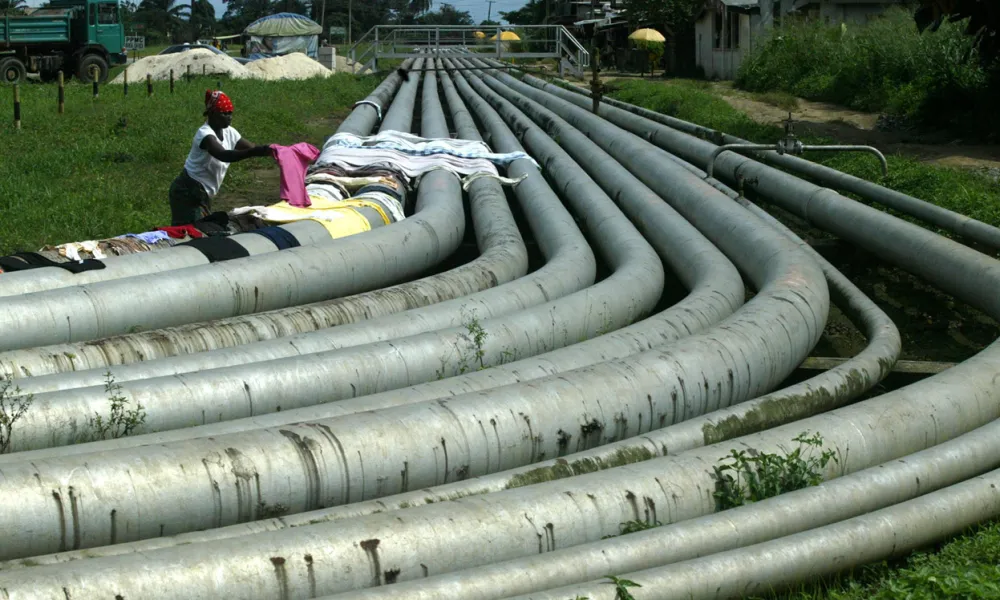
Pipeline reliability has become another major factor in Nigeria’s production recovery.
The NNPC has attributed part of the recent increase in crude production to improved pipeline security. The company said national production rose from about 960,000 barrels per day in 2022 to an average of 1.71 million bpd in 2025, with improved pipeline security contributing to the recovery.
The NUPRC similarly reported that the absence of major pipeline outages helped support Nigeria’s production performance in June 2026.
But industry executives argue that maintaining existing pipelines and expanding evacuation infrastructure will be essential if Nigeria is to move substantially beyond current production levels.
Equipment shortages add another layer
Nigeria also needs more specialised drilling equipment, particularly rigs capable of operating in swamp and deepwater environments.
According to Ogunsanya, major projects involving ExxonMobil, TotalEnergies and Chevron are expected to begin drilling, increasing pressure on the country’s available equipment and services capacity.
The shortage highlights another challenge: even when oil companies have acreage and financing, insufficient local equipment and technical infrastructure can delay production.
Gas development faces infrastructure problems
The infrastructure challenge extends beyond crude oil.
Industry participants say Nigeria lacks sufficient domestic capacity for areas such as gas distribution, precision fabrication and specialised oilfield equipment servicing. Some operators have consequently turned to countries such as Angola for services that could potentially be developed domestically.
Industry stakeholders are calling for stronger cooperation between producers, service companies and regulators, as well as longer-term procurement commitments that would give Nigerian companies enough certainty to invest in new infrastructure.
The bigger question
Nigeria’s recent production recovery demonstrates that higher output is possible. The country has moved considerably above the production levels recorded during the worst years of pipeline disruption and crude theft.
The next stage, however, requires sustained investment.
To reach 3 million barrels per day, Nigeria will need not only to keep existing pipelines secure but also to expand evacuation infrastructure, attract fresh capital, increase drilling capacity and ensure that oil licences are held by companies capable of developing them.
The emerging debate therefore goes beyond how much oil Nigeria has underground. It is increasingly about who can finance its development, who can build and maintain the infrastructure, and whether the investment environment is sufficiently predictable to support projects running for decades.
That makes capital and pipelines the new battleground in Nigeria’s attempt to turn its oil reserves into sustained production and economic growth. (BusinessDay)
-

 Politics24 hours ago
2027: APC unveils online portal for support groups
-
News24 hours ago
5 Security Operatives Killed As B/Haram Attacks Adamawa Communities
-
Politics24 hours ago
Buhari Saw Tinubu As ‘Bad News’, Resisted His Presidency – Baba-Ahmed
-
News23 hours ago
Nnamdi Kanu’s Family Accuses UK Of Failing To Protect Its Citizen, Demands Action To Secure His Freedom
-
News24 hours ago
How Scavengers Stole N3bn Power Line Cables – Zulum
-
Politics23 hours ago
‘Keep El-Rufai In Jail Till You Win 2027 Election’ – Former Kaduna Senator Hunkuyi Tells Gov Uba Sani
-
Politics10 hours ago
If Buhari, A Retired General Could Not Wipe Out Insecurity, What Do You Expect Of Tinubu? – Yari
-
News24 hours ago
Soldiers Killed As Military Van Runs Into ISWAP Landmine In Borno