News
Nigeria cannot achieve $1tn economy with current budget size, Budget minister says

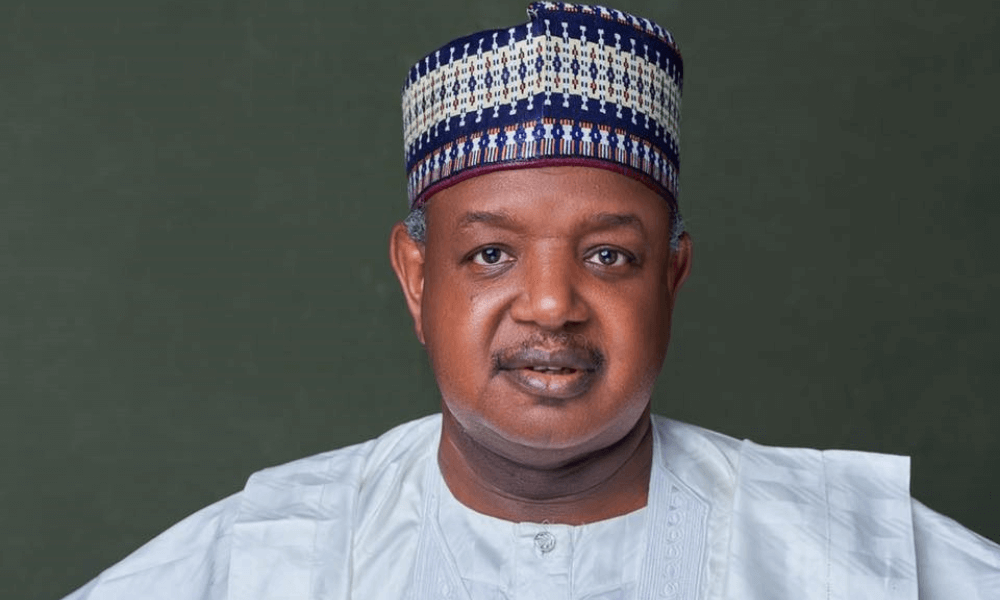
Bagudu said Nigeria’s budget remained one of the smallest among the world’s 10 most populous countries, raising questions about how the country could finance the infrastructure, human capital and other investments required to achieve the target within the next four years.
He made the submission in Abuja at the 2026 Capacity-Building Workshop of the Senate Press Corps, organised with the theme, “Leveraging Legislative Oversight and Media Collaboration to Safeguard the National Budget from Unlawful Insertions.”

According to the minister, the starting point of the national budget conversation should not simply be how much money the government currently has, but how much is required to achieve its development objectives.
His comments come at a time when the National Assembly is expecting both the Medium-Term Expenditure Framework (MTEF) and Fiscal Strategy Paper (FSP), Nigeria’s statutory multi-year economic blueprint that sets macro-fiscal projections, revenue targets, and spending limits before the presentation of the annual national budget.
“Perhaps the starting point for this discussion should be: What should the national budget be? Because without starting from there, maybe we will not reach the right conclusion,” Bagudu said.
He said Nigeria’s budgetary limitations were particularly significant when compared with other populous countries.
“I don’t have one definitive answer, but I would say that of the 10 most populous countries in the world, Nigeria has the smallest national budget,” he said.
Bagudu said the issue was particularly important in view of the Federal Government’s ambition under President Bola Tinubu’s Renewed Hope Agenda and the long-term Agenda 2050.
He asked how Nigeria could grow into a $1 trillion economy within the next four years while ensuring that the benefits of such growth were widely shared.
“How can we, as a step towards that wider dream, generate a $1 trillion economy in the next four years? And not just a $1 trillion economy, but a $1 trillion economy that includes everyone?” he asked.
The minister cautioned against a budgeting approach that simply limits government’s ambitions to its current revenue position.
Using the analogy of making clothes according to one’s present size, Bagudu said such an approach could prevent Nigeria from creating the fiscal capacity required for future growth.
“If I decide to cut my coat according to my size, then I should remain in the same shape. Maybe I will not even have the spare capacity to sew a cloth for another person,” he said.
He consequently urged the media to help drive a wider national conversation around revenue mobilisation and the appropriate size of the national budget.
“Should we continue with a budget that gives our populace one of the smallest budgets among comparable countries? Or should we imagine how we can mobilise more resources?” Bagudu asked.
Bagudu pointed to Brazil as an example of the disparity in fiscal capacity between Nigeria and another large federal country.
He said Brazil’s 2025 budget was at least 25 times larger than Nigeria’s, raising questions about whether Nigeria could expect similar development outcomes with significantly fewer resources.
“But Brazil’s 2025 budget is at least 25 times the size of Nigeria’s budget. So do I expect to achieve the same outcomes as Brazil? Is it that these needs do not exist in Nigeria? I believe they do,” he said.
The minister also defended the constitutional role of the National Assembly in the appropriation process, saying legislative participation in budget-making should not automatically be regarded as improper.
“We chose constitutional democracy, and under constitutional democracy, the National Assembly has a critical role,” he said.
Bagudu said some projects that might appear unnecessary to observers in Abuja could represent genuine needs identified by lawmakers from their constituencies.
He cited cases where communities lacked basic amenities, including access to water, saying such realities could explain why particular interventions found their way into appropriation bills.
“So you see something in the budget, and because it is not a priority in your own area, you wonder why it is in the budget.
“But to that member of the House of Representatives or Senate who was elected from that community, it represents what their constituents consider a priority,” Bagudu said.
He also recalled the controversy over the provision of freezers in an earlier budget, explaining that the equipment was intended for women in fishing communities who lacked facilities to preserve their catch.
“The women there needed freezers because they did not have a way of preserving their fish,” he said.
Addressing allegations of unlawful insertions into the national budget, Bagudu said it was necessary to distinguish between legitimate amendments by lawmakers and genuinely irregular provisions.
He acknowledged that the complexity of the budget process, which involves several institutions and individuals, could create room for mistakes.
“We are dealing with processes, human beings and human errors. Therefore, vigilance is important. The media and legislative oversight should continue to be vigilant,” he said.
Bagudu, however, urged stakeholders to balance the demand for transparency with legitimate national security considerations.
He argued that full disclosure of certain government policies or expenditures could compromise strategic objectives, particularly in security operations.
“I may be fighting a war in the area of security, but how much of my security policy should I make public? Not because I am doing something wrong, but because there are legitimate strategic considerations,” he said.
The minister also challenged the conventional assumption that capital expenditure was automatically more important than recurrent spending.
Using security personnel as an example, he questioned the consequences of failing to fund the personnel responsible for protecting the country.
“If I am fighting a war and I don’t pay security personnel, what happens? So which one is more important?” he asked.
He said the quality of government spending should ultimately be measured by what it delivers to citizens rather than merely by whether an allocation was classified as recurrent or capital expenditure.
“The conversation should be about what we are trying to achieve, what resources are required to achieve it, how we mobilise those resources, and how we maintain public confidence while ensuring accountability and transparency,” Bagudu said.
Godswill Akpabio, president of the Senate, called for stronger collaboration between the National Assembly, the media and civil society organisations to improve scrutiny of the national budget.
Represented by Yemi Adaramodu, chairman of the Senate Committee on Media and Public Affairs, Akpabio urged journalists covering the legislature to deepen their understanding of parliamentary procedures to improve the quality and accuracy of budget reporting.
Adaramodu, who served as chief host of the workshop, said the media remained an important accountability mechanism in monitoring budget implementation.
He urged journalists to investigate public expenditure, expose waste and ensure that reports on budgetary provisions reflected the circumstances surrounding the projects and programmes involved.
Taiye Odewale, Chairman of the Senate Press Corps, said the controversy surrounding an alleged N1.3 billion provision for a purported Presidential Foreign Intervention Promotion Council demonstrated the need for stronger scrutiny of budget documents.
Odewale said investigations by the Senate Press Corps showed that the controversial provision was not part of the N9.853 trillion added by the National Assembly to the N58.47 trillion executive proposal, which brought the 2026 Appropriation Act to N68.32 trillion.
He said the controversy reinforced the need for closer cooperation between journalists and legislative oversight bodies in scrutinising appropriation documents.
According to him, the workshop was also designed to expose journalists to emerging tools, including artificial intelligence, that could assist in examining complex budget documents.
Representing Auwal Rafsanjani, Executive Director of the Civil Society Legislative and Advocacy Centre, Ebu Emmanuel said every budget provision should be justified, properly costed, measurable and linked to identifiable beneficiaries.
He cited findings attributed to the Independent Corrupt Practices and Other Related Offences Commission that 4,508 inserted or padded projects valued at N434.5 billion, as well as 66 duplicated projects worth N6.43 billion, were identified in the 2022 budget.
Emmanuel urged lawmakers to interrogate proposed projects by examining their locations, beneficiaries, costs, purposes and expected outcomes before approving them.
Vahyala Kwaga, country director of BudgIT, representing the organisation’s Director, Oluseun Onigbinde, said public discussion of the budget often focused more on allocations than on the outcomes expected from them.
He identified delayed submission of the Medium-Term Expenditure Framework and Fiscal Strategy Paper as a recurring concern and proposed that the budget should be submitted to the National Assembly at least 90 days before the end of the financial year. (BusinessDay)
-

 News5 hours ago
Abuja Workers Turn To Pick-Up Trucks Amid Rising Transport Costs
-
 Politics10 hours ago
Security Operatives Guard Tinubu’s Billboards Ahead Campaign Launch
-
 News5 hours ago
Ebola patient in Nigeria is Swiss, had not visited DR Congo – Foreign Ministry
-
News23 hours ago
El Niño projected to cause 31,400 deaths in Nigeria
-
Politics5 hours ago
Results With Discrepancies Won’t Be Uploaded On IREV – INEC
-
 News5 hours ago
Zamfara Community Fights Back
-
Politics5 hours ago
South-East has better presidential options than Peter Obi – Umahi
-
Politics5 hours ago
2027: You Can’t Hide Voters’ Register And Expect Trust – Atiku Tells INEC