Business
Refining Battle: Dangote calls for ‘level playing field’ as court deals Lagos refinery a blow

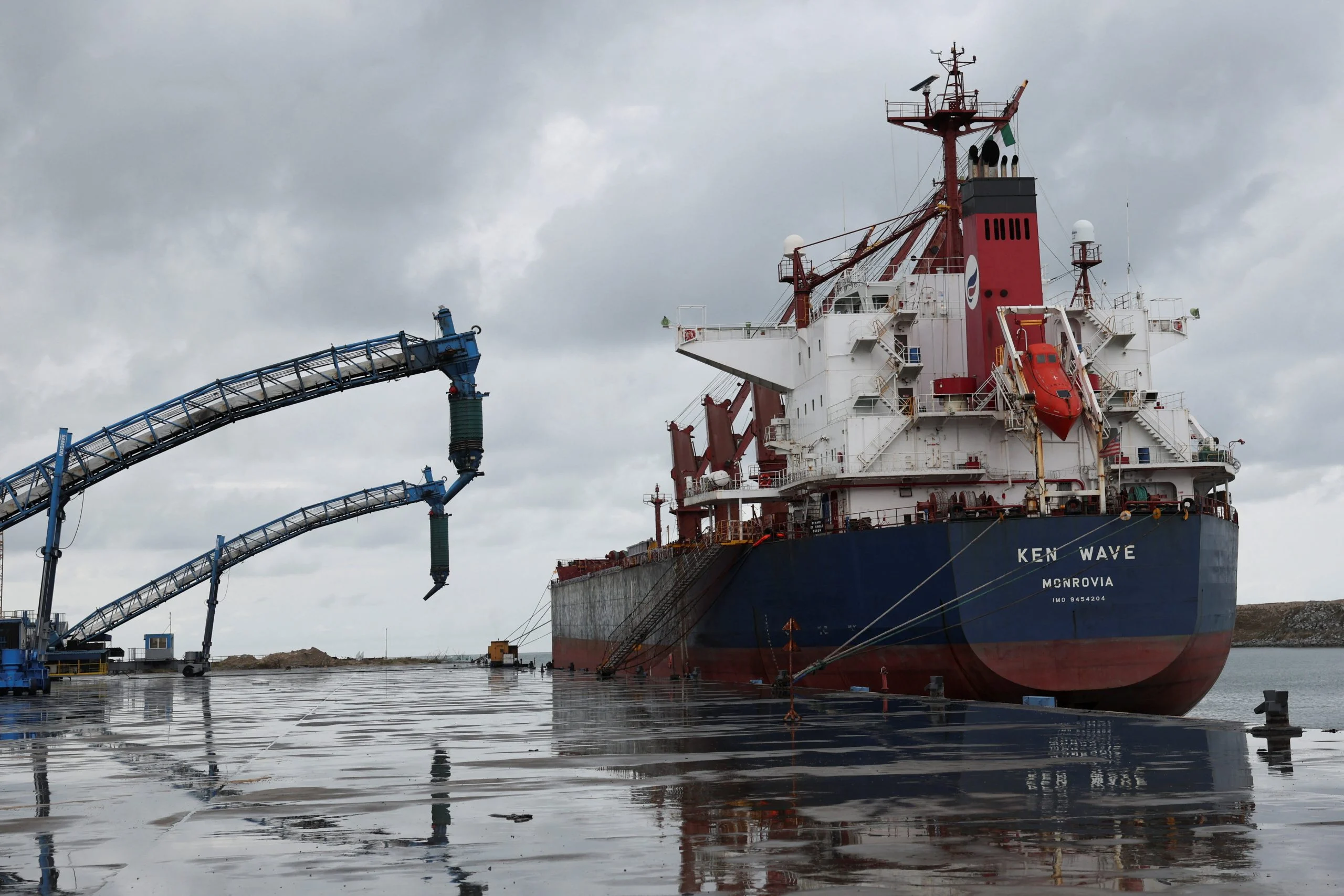
The battle for the soul of Nigeria’s petroleum downstream sector shows no signs of easing. On one side stands Aliko Dangote’s giant refinery, fighting to secure its share of the domestic market; on the other are the state-owned Nigerian National Petroleum Company and independent marketers, fiercely defending their right to import fuel.
On Monday, the Federal High Court in Abuja dealt a blow to Dangote’s efforts to restrict fuel imports. Judge Inyang Ekwo ordered the Nigerian Midstream and Downstream Petroleum Regulatory Authority (NMDPRA) to continue issuing fuel import licences to three major oil marketing firms – Matrix Energy, AA Rano and AYM Shafa.
The court ruled that denying these permits would violate the Petroleum Industry Act (PIA).
The marketers, who filed the suit in June, argued that they have invested over $20bn in infrastructure and retail networks across Nigeria, investments that would be stranded without import capabilities.

On the same day the Abuja court issued its ruling, the Dangote Group firmly rejected the monopoly narrative in Lagos.
Speaking on behalf of the billionaire founder at the Nigeria Oil Refining Summit in Lagos, chief economist Hassan Mahmud addressed the ongoing friction, stressing the need for fair competition in the country’s fuel market.
The 700,000-barrels-per-day refinery in Lagos, which came on stream in 2024, has disrupted the fuel market in Africa’s most populous nation after years of overreliance on fuel imports.
A level playing field vs monopoly fears
At the event, Dangote intensified his campaign for a domestic refining industry that isn’t disadvantaged by imports.
“We do not seek protection from competition, but competition must take place on a level playing field,” Dangote said.
He said imported and locally refined products should compete under equivalent and transparent regulatory, quality, tax and commercial conditions.
“No refinery should survive simply because the government protects it. Equally, no domestic refinery should be disadvantaged by a market structure that inadvertently makes imports more attractive than local production.”
In May this year, Dangote filed a fresh suit in the Federal High Court in Lagos against Nigeria’s Attorney General, seeking to overturn fuel import licences issued to marketers and to NNPC.
The filing asked the court to set aside permits issued or renewed by the NMDPRA, arguing that they breach an earlier order to maintain the status quo. Dangote contended that the licences undermine its operations and contravene the PIA, which, on its reading, permits imports only when domestic supply falls short.
In response, the NNPC and the Depot and Petroleum Products Marketers Association of Nigeria accused Dangote of attempting to establish a domestic fuel monopoly, which could expose Africa’s largest oil producer to supply disruptions and price instability.
The May filing marked a return to a fight Dangote had appeared to abandon. An earlier ₦100bn suit against the NMDPRA, the NNPC and five major fuel marketers – in which the refinery accused the marketers of importing substandard fuel that allowed them to undercut market prices – was withdrawn in July 2025 without explanation.
Crude problem and comparing ‘apples and oranges’
For Dangote’s chief economist, the current market structure gives importers the upper hand.
Mahmud noted a refinery is not an isolated industrial plant but a component of an interconnected value chain. “Weaknesses in any part of this value chain affect competitiveness of the entire industry,” he said. “No industrial operation can be competitive if it cannot reliably access its principal feedstock, which is the crude.”
The PIA sets out a domestic crude supply obligation (DCSO), and he credited recent progress: the upstream regulator reported that roughly 53.7 million barrels were supplied to domestic refineries in the second quarter of 2026, representing 97.4% of the relevant DCSO performance measure.
The naira-for-crude arrangement helps, he said, but supply falls short of requirements, adding that some domestic supply arrives through third-party intermediaries who add a margin embedded in the final cost – meaning crude delivered to Dangote’s single-point mooring is priced differently from product landed by importers.
Mahmud called for “predictability, transparency and commercially workable arrangements between producers and refiners”.
On product quality, he described it as an “apples-and-oranges” comparison. He says the Dangote refinery produces high-grade Euro 5 and Euro 6 products, which are forced to compete with lower-grade imports.
“Dangote should not be given any special advantage, but it should be allowed to operate within a predictable, fair, and productive environment,” he added.
Regulators, he said, “should not change the goalposts in the middle of the game”. (The Africa Report)
-

 World News22 hours ago
Singapore unveils matchmaking service amid falling birth rate
-
 Sports22 hours ago
Everything Guardiola said about Man City’s 115 charges – Report
-
News24 hours ago
FCT Mininister Wike’s son submits American passport in controversial $2.1m land acquisition case
-
Metro22 hours ago
Building collapse kills one in Anambra
-
News6 hours ago
30 states’ debt outpaces half their annual revenue
-
News6 hours ago
Reforms over, we’ve laid foundation for lasting prosperity — Tinubu
-
Politics6 hours ago
2027: If Tinubu Wins, We Are Retired From Politics – Amaechi Tells ADC Leaders
-
News6 hours ago
Tinubu Signs Bill Extending 2025 Budget Implementation To Dec 2026