Business
Transport cost pain bites despite Tinubu’s Oct 1 promise

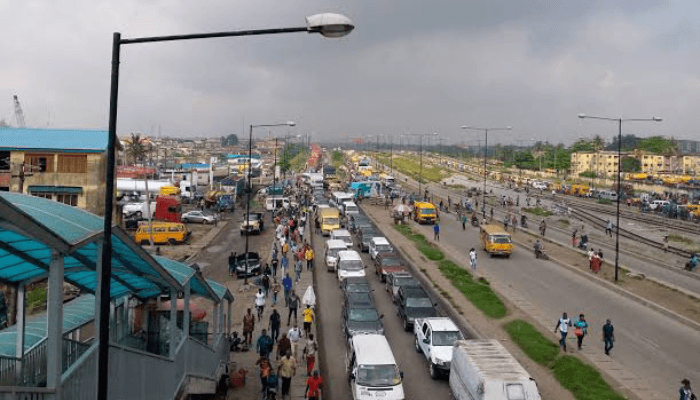
Just before the federal government’s October 1 deadline to deliver cheaper public transport, Nigerians are still paying exorbitant fares as limited CNG availability, inadequate refueling infrastructure, and high operating costs continue to constrain President Bola Tinubu’s relief plan.
In August, Tinubu promised commuters would start seeing significant fare cuts by Independence Day. The strategy hinged on state governments rolling out Compressed Natural Gas (CNG) and electric vehicles to slash operational costs.
“Intra-state transport is where Nigerians feel the cost most directly, and it is where the states hold the levers. From October 1, our goal is that Nigerians begin to partake in those savings through lower transport fares,” the President said.
However, on the eve of the deadline, the reality on the streets tells a different story. In Lagos, a trip from Mile 2 to CMS still costs between N800 and N1,000, a trip that cost less before the surge in fuel prices. Commuters traveling from Ifo in Ogun State to Oshodi are paying up to N1,500, up from N1,000 prior to recent fuel price surges, while the Ikorodu to Obalende route has also climbed to N1,500. It was formerly N1000.

With commuters still paying higher fares and bus operators battling with rising fuel, maintenance, and other operating costs, delivering cheaper transport will require more than the government’s October 1 target.
Petrol vs CNG comparison
BusinessDay findings showed that while CNG is sold by volume at N318 per Standard Cubic Metre (SCM), petrol is sold at almost N1,400 per liter.
On average, a CNG sedan with a capacity of 65 liters can be filled with N20,670, while refueling an ICE sedan with a tank capacity of 65 litres would cost N91,000, reflecting a N70,330 savings.
“The actual saving depends on the vehicle, engine condition, route, driving pattern and current fuel prices. However, CNG can substantially reduce the fuel component of daily operating costs,” Muhammad Sani, CNG engineer and energy consultant, said.
Sani cited an example, using the current industry estimate, which puts the cost of running a CNG vehicle at roughly N5,200–N6,000 per 100 km, compared with about N19,500–N23,400 for petrol.
“So, for a commercial operator covering 150–200 km in a day, the potential fuel-cost difference can be significant,” he said, noting that operators still face other daily expenses that may limit how much of those savings can be passed on to commuters
Anne Obode, team lead, Evrytn CNG, also said that one SCM of CNG can cover roughly the same distance as one litre of petrol.
“So for a driver that spends or that needs to use about 10 litres of petrol in a day, you’ll be spending about N13,500 while somebody running on CNG would be spending about N3,800 in a day,” Obode said.
Despite being cheaper than petrol, CNG adoption is constrained by several infrastructural bottlenecks, hindering the transition for motorists seeking alternatives to fuel to gas-powered mobility in Africa’s most populous country.
Sani added that the main barriers are the cost of CNG conversion, limited access to financing, unreliable refuelling infrastructure, queues and station distances, and maintenance costs.
“This is why simply converting a vehicle to CNG does not automatically mean the operator can immediately reduce fares. The operator needs reliable access to affordable CNG and enough operational efficiency to actually retain the savings,” he said.
Availability of CNG facilities
As of September 2026, Pi-CNG & EV reports over 90 operational CNG refuelling stations across 23 states, alongside more than 400 certified conversion centres.
On September 19, 2026, President Tinubu gave an update on the National Affordable CNG Transit Programme, stating that evidence already exists across the country, as some states, including Borno, are moving commuters at lower prices between N50 and N100 on routes where commercial operators charge between N300 and N600.
“We already have evidence from across Nigeria of what is possible when cheaper energy translates into cheaper transportation.
“In Enugu, where 100 CNG buses have been deployed, the Enugu–Nsukka fare has been reduced from N2,500 to N1,500, and in Kaduna, 100 CNG-powered buses are providing free transportation on major routes across the State. In their first year of operation, the buses carried about 3.2 million passengers, saving commuters more than N3.5 billion in transport costs,” he said.
The President also reported fare reductions on some Abuja routes using CNG-converted commercial vehicles, including Area 1–Gwagwalada from N1,500 to N900 and Nyanya from N700 to N420.
Beyond October 1 promise
The extent to which lower-cost fuels such as CNG can reduce operators’ expenses and translate into lower fares will depend on the availability of converted buses, reliable refuelling infrastructure, and other forms of government support.
For the federal government to meet the October 1 target, experts noted that operators need stations positioned along their actual routes, not simply more stations on the national map.
“The important point is that CNG can significantly reduce the energy cost of commercial transportation, but reducing fares sustainably requires more than conversion.
“We need reliable refuelling infrastructure, accessible financing, properly trained technicians, good maintenance practices and a system that ensures part of the operational savings is actually transferred to commuters,” Sani said.
Obode said lower fuel costs currently translate mainly into higher profits for drivers, rather than lower fares, because operators often work as a group and set prices collectively instead of pricing fares based on the savings from individual CNG conversions. (BusinessDay)
-

 News16 hours ago
Ebola: Don’t panic – FG tells Nigerians
-
News16 hours ago
Gas leak: Ogun schools shut, over 100 pupils hospitalised
-
News16 hours ago
Italy rejects 2,220 Nigerians seeking asylum
-
News16 hours ago
State Police: Ekiti, Kebbi endorse bill, tally hits 15
-
 Politics16 hours ago
Imam Removed After Campaigning For Tinubu At Bauchi Mosque
-
Sports16 hours ago
Como Humiliates Manchester United 4-1, Osimhen Scores In Galatasaray UCL Win
-
Business16 hours ago
Guinness Nigeria profit jumps 53% to N40.69bn
-
Business16 hours ago
Nigerian billionaire Aliko Dangote eyes Egypt oil refining in $15 billion plan