Opinion
Tinubu’s extended absence

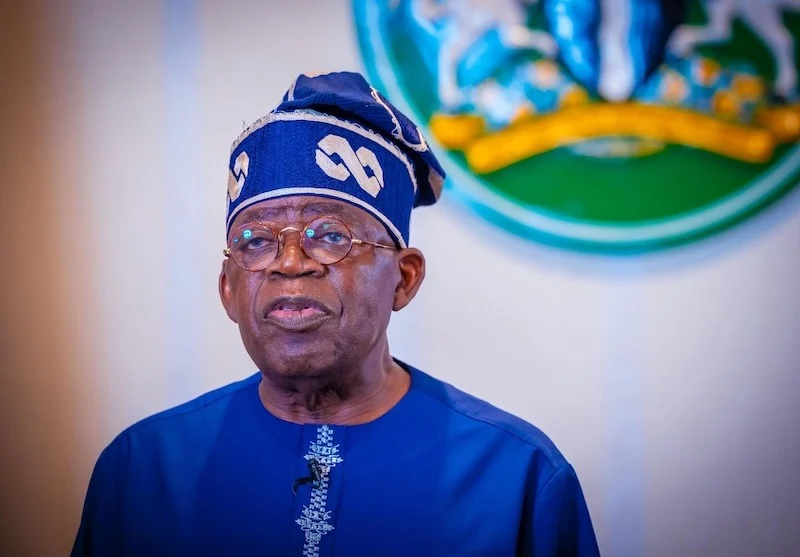
NIGERIA has a disturbing habit of allowing those in power to treat constitutional restraints as inconveniences rather than obligations. Once again, the country is confronted with questions over presidential absence, constitutional compliance and the willingness of its institutions to hold the powerful to account.
At some point in September, President Bola Tinubu, Vice-President Kashim Shettima and Senate President Godswill Akpabio were all out of the country. That unusual coincidence alone should have triggered serious questions about constitutional responsibility and the functioning of government.
Instead, Nigerians were left with familiar explanations and little sense of urgency.
Tinubu embarked on a three-week European trip on August 30 and was expected to return on September 21. He did not. He extended his stay in France by another week, turning what was announced as a working vacation into a prolonged absence.

That immediately raises an important constitutional question: when a President is away for an extended period, what formal arrangements are made for the exercise of presidential authority?
The Presidency has previously argued that the President can perform his duties from anywhere in the world. That argument, however, does not answer the specific requirements of Section 145 of the 1999 Constitution.
Section 145(1) provides that whenever the President proceeds on vacation or is otherwise unable to discharge the functions of his office, he shall transmit a written declaration to the President of the Senate and the Speaker of the House of Representatives. Until he transmits a declaration to the contrary, the Vice-President is to perform the functions of President as Acting President.
That provision is not ornamental. It exists to guarantee continuity, certainty and constitutional order whenever the President is away or unable to perform his functions.
Nigeria has painfully experienced the consequences of ignoring that principle.
During the prolonged medical absence of the late President Umaru Yar’Adua in 2009 and 2010, power was not formally transferred to his deputy, Goodluck Jonathan. Then Attorney-General and Minister of Justice, Michael Aondoakaa, similarly argued that the President could perform his duties from anywhere in the world. That is blatantly absurd.
The result was a constitutional crisis that eventually forced the National Assembly to invoke the Doctrine of Necessity in February 2010, allowing Jonathan to assume the functions of Acting President.
The Buhari administration followed a similar pattern. In 2019, when President Muhammadu Buhari travelled to London on a “private visit” without formally transferring power to Vice-President Yemi Osinbajo, his spokesman, Garba Shehu, maintained that Buhari could exercise his authority from wherever he was.
Seven years later, Nigeria should not still be having this argument.
The Constitution provides a mechanism for dealing with presidential absence. Section 145(2) further provides for action by the National Assembly where a President fails to transmit the required declaration and remains away beyond the stipulated period.
The National Assembly therefore has a constitutional responsibility in such circumstances. It cannot simply look away because the occupant of the Presidency is politically powerful.
Unfortunately, Nigeria’s political class has repeatedly demonstrated an unhealthy reluctance to enforce constitutional restraints against those in power.
That is wrong.
A Constitution that is enforced only when convenient is not really a Constitution; it becomes a suggestion.
There is also the question of Section 143, which provides the constitutional procedure for the removal of a President or Vice-President for gross misconduct.
It should not be casually claimed that a presidential absence automatically amounts to an impeachable offence. But neither should the National Assembly behave as though constitutional breaches, where established, are beyond scrutiny.
The issue is accountability.
Presidents are not monarchs. They do not possess unlimited discretion. They hold office under a Constitution, and the powers they exercise belong to the Nigerian state, not to them personally.
That principle becomes even more important when presidential travel involves enormous public expenditure.
Why should a Nigerian President routinely spend extended periods on “working vacations” or “private visits” abroad when Nigeria has official facilities for presidential retreats and government work?
What exactly is a “private visit” when the traveller is the President of Nigeria, accompanied by security personnel, officials and other members of the presidential entourage, with public resources inevitably involved?
Nigerians deserve answers.
Parking the presidential aircraft at a European airport for weeks does not come free. Neither do the security arrangements, logistics and other costs associated with maintaining the President and his entourage abroad.
This is happening in a country struggling to fund essential public services and where the government repeatedly pleads fiscal constraints.
There is nothing wrong with a President travelling. International diplomacy requires it. So do bilateral meetings, multilateral engagements and other legitimate state functions.
But a vacation is a different matter.
There is a reason responsible governments make clear arrangements for the temporary transfer of authority when their leaders are unavailable. Constitutional certainty is more important than personal convenience.
The United States provides a useful illustration. On November 19, 2021, President Joe Biden invoked Section 3 of the 25th Amendment to temporarily transfer presidential powers to Vice-President Kamala Harris while he underwent anaesthesia for a routine colonoscopy. Harris exercised the presidential powers for about 85 minutes before they were returned to Biden.
This demonstrates that constitutional clarity does not become less important because the period involved is short.
Nigeria should understand that lesson.
There have also been persistent public speculations about whether some of Tinubu’s foreign trips have had medical considerations. Such speculation should not be presented as fact without evidence. But neither can the Presidency reasonably expect Nigerians to ignore questions surrounding prolonged presidential absences.
The health and availability of a sitting President inevitably have a public dimension because the office carries enormous constitutional, security and economic responsibilities.
The Presidency therefore owes Nigerians clear and factual communication. Its media managers should stop treating legitimate questions as hostile attacks and start treating transparency as part of their responsibility to the public.
The taxpayers who finance the Presidency have a right to know why their President is away for extended periods, what official business is being conducted and what constitutional arrangements are in place.
More importantly, the National Assembly must remember that it is a constitutional institution, not an appendage of the executive.
Its members swear allegiance to the Constitution, not to the President.
If the National Assembly cannot insist on compliance when constitutional provisions are being tested by the executive, who will?
Nigeria has spent decades paying lip service to the rule of law while allowing political power to determine the practical limits of accountability.
That culture must change.
The President must respect the Constitution. The Vice-President must respect it. The National Assembly must enforce it. And the citizens must insist that they do.
Nigeria does not need more presidential explanations after the fact. It needs institutions strong enough to prevent constitutional ambiguity in the first place.
A President’s vacation cannot become a constitutional vacation.
No officeholder, however powerful, should be allowed to behave as though the Constitution is suspended whenever it becomes inconvenient.
Until Nigeria learns that lesson, democracy will remain less about the rule of law than about the discretion of those who happen to hold power.
•Editorial By Punch Newspaper
-

 Politics21 hours ago
2027: I’ll bring petrol price down to ₦300 — Donald Duke
-
News21 hours ago
Fuel price to slow Nigeria’s poverty reduction – World bank
-
Metro21 hours ago
Murder suspect slumps, dies inside courtroom
-
African News21 hours ago
Ebola: NCDC warns of importation risk after Kenya confirms first case
-
Business3 hours ago
NNPC cuts customer debts by N11.7tn, reduces unpaid bills
-
Politics21 hours ago
Ogun governorship: APC’s Adeola affirms origin, blames ‘jesters’ for controversy
-
Sports3 hours ago
Infantino, FIFA crisis intensifies as Nigeria ponder suing, compensation
-
News20 hours ago
Ondo Crash: ADC Questions Why Civilians, Children Were On Board Air Force ‘Routine Mission’