Business
Politics crack Tinubu as discounted petrol returns

…Opposition accuses FG of subsidy revival from backdoor
…This is neither subsidy nor price control – Oyedele
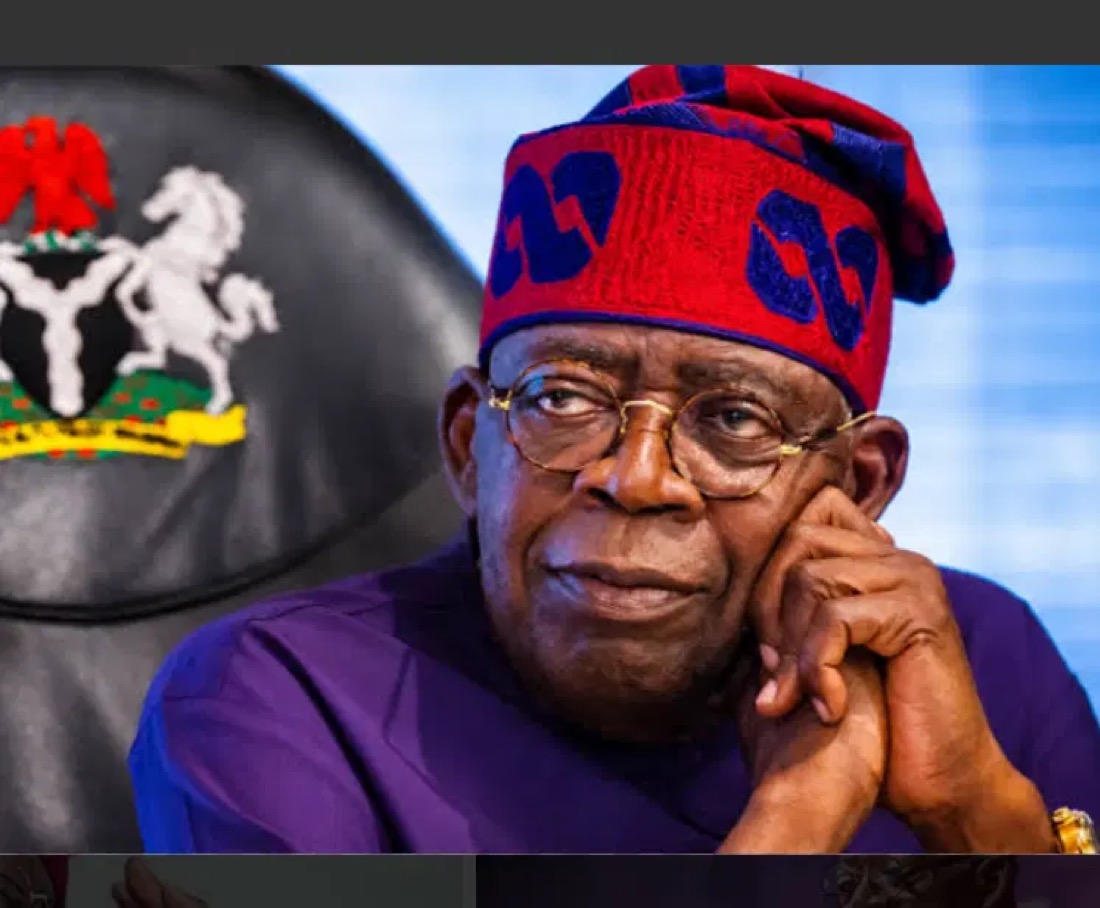
The Federal Government is rolling out a package of measures to ease petrol prices and transport costs, including a 30-day discount at Nigerian National Petroleum Company Limited filling stations and a proposed ceiling on the landing cost of petrol.

The measures have triggered a political backlash, with opposition figures describing the package as a return to subsidy-style intervention after President Bola Tinubu’s administration made petrol subsidy removal a cornerstone of its economic reforms.
In Africa’s biggest oil-producing economy, ending the fuel subsidy was among the defining decisions of Tinubu’s administration, and his government has long argued it was necessary to stabilise public finances.
However, the price of that decision has fallen on households and transporters, but the forthcoming 2027 election has sharpened the political cost.
To ease the effects, Taiwo Oyedele, Minister of Finance and coordinating minister of the economy, announced the measures on Thursday, saying the government recognised that previous interventions had not sufficiently eased pressure on households.
The government declared an offer of a 30-day discount on petrol sold at NNPC retail stations, with priority given to public transport operators nationwide. It is also negotiating a ceiling of N1,350 per litre on the ex-gantry or landing cost of petrol.
Oyedele rejected the description of the measures as a return to subsidy or price controls.
“To be clear, none of these measures restores a blanket subsidy,” he said. “To do so would amount to creating longer-term harm for a short-term cure.” “To be clear, none of these measures restores a blanket subsidy,” he said. “To do so would amount to creating longer-term harm for a short-term cure.”
What the government is offering
The package combines temporary petrol-price relief with measures aimed at reducing transport and logistics costs.
The government will offer a 30-day discount on petrol at NNPC retail stations, with priority for public transport operators. It is also negotiating a N1,350-per-litre ceiling on the ex-gantry or landing cost of petrol.
Under the proposed mechanism, refiners and importers would defer costs above the ceiling and recover them when crude prices or exchange rates become more favourable. The ceiling would be reviewed monthly and published.
Oyedele said the government would also use forward crude sales to domestic refineries to reduce their exposure to international price swings as domestic production increases.
Other measures include faster deployment of compressed natural gas, reduced state-level road taxes and levies, increased cash transfers to vulnerable households and subsidised credit for small businesses and consumers.
Transport operators will be encouraged to pass lower fuel and operating costs to passengers, while traffic-management agencies will be tasked with improving traffic flow to reduce fuel consumption.
The government is also considering an excess-profit tax on companies deemed to be taking “undue advantage of consumers” along the energy value chain. Oyedele said proceeds would be used for transport support or vouchers for urban minimum-wage earners.
The government will work with the National Assembly on additional tax relief for low-income earners under the 2027 Finance Bill.
It is also investing in a National Strategic Fuel Reserve, which would allow refined products to be released during supply disruptions or periods of hoarding that threaten price stability.
Oyedele said the measures were intended to smooth price volatility rather than restore a blanket petrol subsidy or impose permanent price controls.
“This is neither a subsidy nor a price control, it is designed to smooth prices over time rather than suppressing them,” he said.
Oppositions attack initiative
Within hours, opposition leaders and political parties have criticised the federal government over the relief package, calling it a panic-driven initiative.
Atiku Abubakar, former vice president and the African Democratic Congress’s presidential candidate, dismissed the discount as a “panic-driven publicity stunt.”
In a statement issued by Phrank Shaibu, his director of strategic communication, he said he “totally rejects this calendar-scheduled, election-laced subsidy package.”
“Nigerians are not fools to be offered a month of discounted fuel after years of punishing prices and then expected to forget the hardship when the discount expires,” the statement said.
He pressed the point on timing. “What happens on Day 31? Nigerians wake up to the same brutal prices, the same punishing transport fares and the same rising cost of food,” the statement said.
Atiku also questioned the scope of the plan. The discount applies only at NNPC stations, he noted, and the government has yet to say how much motorists will save per litre. He asked whether any savings for transport operators would reach passengers as lower fares.
The intervention, he argued, shows that action in the petrol market was possible despite earlier arguments against subsidy-style measures.
“This volte-face proves that the production-support proposal I have advanced is workable, achievable and not complicated,” he said.
“The Tinubu government and its spin doctors have tried to make it sound impossible, yet they are now reaching for a temporary subsidy-style intervention because the pain has become impossible to ignore,” he added.
Atiku reiterated his own plan, which includes capped and budgeted production support tied to petrol refined in Nigeria, with safeguards so the benefit reaches consumers and supports domestic refining.
“Nigerians need lasting relief, not a countdown to the return of hardship,” he said.
30-day fuel discount is deceitful – Makinde camp
The campaign group of the Allied Peoples Movement (APM) presidential candidate, Seyi Makinde, governor of Oyo State, also known as the Makinde/Daura Presidential Campaign Organisation (MDPCO), rejected the proposed 30-day petrol discount, describing the measure as a “deceitful and failed media stunt.”
The organisation said the measure amounted to a “slap in the face” of Nigerians who were expecting an impactful reduction in petrol prices.
“The fact that the minuscule reduction will only be on scantly located NNPC-owned retail filling stations and for a period of one month clearly shows that the Tinubu administration has come to its wits’ end and become bereft of solutions,” the organisation said in a statement signed by Richard Ihediwa, its director of strategic communications,
The campaign organisation also faulted the Federal Government’s proposal to sell crude oil to domestic refineries at a dollar-denominated rate, describing the arrangement as “distasteful and offensive to our status as an oil-producing nation”.
The Nigeria Democratic Congress also rejected the 30-day discount, describing it as “tokenism and deceit” and accusing the Federal Government of attempting to restore petrol subsidy “through the backdoor”. The party also warned that restricting the discounted fuel to NNPC stations could trigger long queues and safety risks at filling stations.
Osa, Director, National Publicity Secretary of the party, said in a statement that the opposition group said the temporary price cut at NNPC Limited retail stations was an inadequate response to the hardship triggered by fuel subsidy removal.
“It is clear that President Bola Tinubu and the APC government are desperate, and Nigerians must not be deceived. Emilokanomics has failed woefully,” the statement read. (BusinessDay)
-

 Metro23 hours ago
Police arrest prophet’s son over alleged ₦18m Facebook fraud
-
Sports24 hours ago
Guardiola set for Man City return first time since guilty verdict
-
Politics10 hours ago
‘Tinubu Will Do Anything To Win This Election’ – Nigerians React To FG’s Fresh Moves
-
Business24 hours ago
JUST IN: Moove shuts down Nigeria operations, transfers vehicle ownership to customers
-
Politics10 hours ago
2027: Only mad people will vote for Tinubu – Amaechi
-
News10 hours ago
Nigeria’s Economy Now On Stronger Footing – FG
-
World News24 hours ago
FBI arrests 130 over Ghana scam-centre operation
-
Business23 hours ago
Lagos Life game is valued at $1bn — Creator, Shalom Rayhamen