Opinion
Did Obi actually win in 2023?

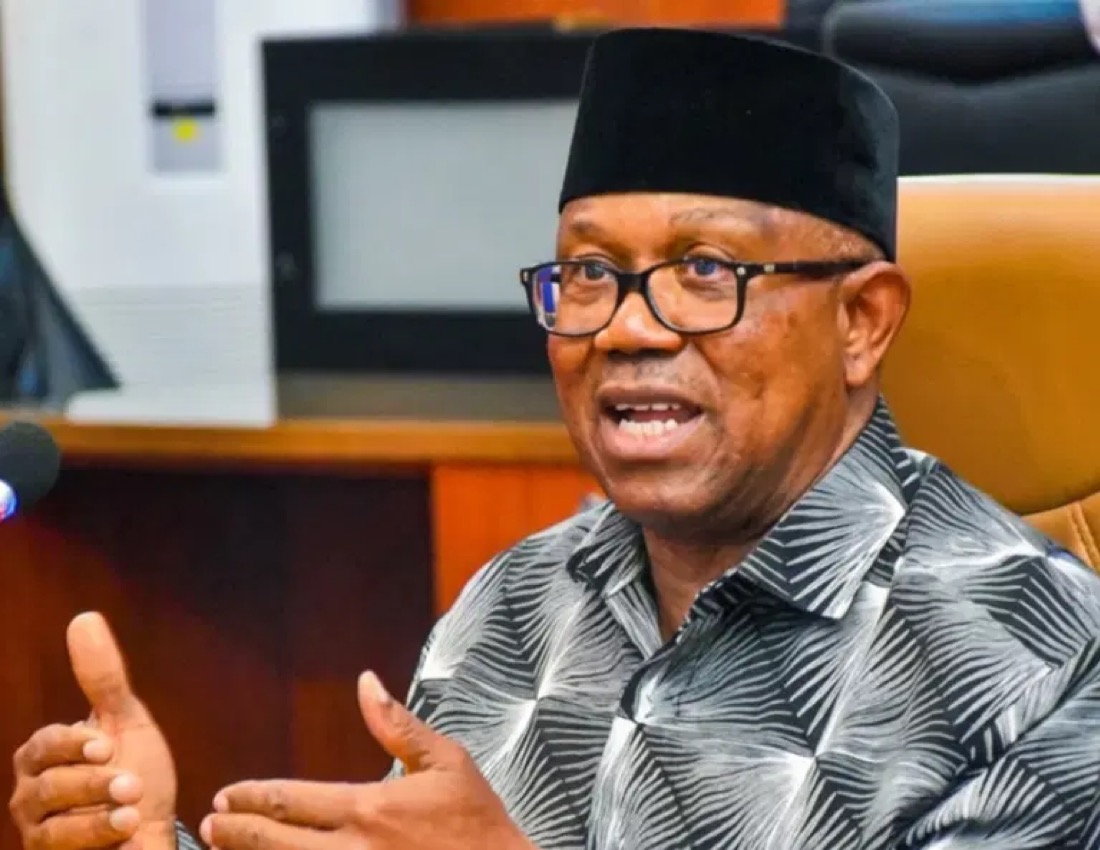
Obama inspired an army of young volunteers. Obi also energised an extraordinary movement that brought young Nigerians, professionals and first-time political enthusiasts into the arena. Beyond Obi’s ethnic background, many of his supporters genuinely saw him as the one to lead Nigeria to the Promised Land. It was not a case of: “Are you the one who is to come or shall we look for another?” It was more like: “Behold a Nigerian politician indeed, in whom is no guile!” Arguably only one other Nigerian politician had enjoyed such an organic, wildfire-like following since 1999 — and that was Muhammadu Buhari up north. Obi’s supporters were convinced that history was waiting to be made.
But the anticipated inauguration of Obi never happened. The Independent National Electoral Commission (INEC) declared Asiwaju Bola Ahmed Tinubu winner of the 2023 presidential election with 8,794,726 votes. Alhaji Atiku Abubakar followed with 6,984,520, while Obi came third with 6,101,533. These were the official figures. Obi rejected them. Atiku rejected them too. Both went to court, claiming they had won and asking to be declared president. Ordinarily, only one defeated candidate claims victory. We had one election and three men laying claim to the prize, yet there could only be one winner. The tribunal dismissed all the petitions and the Supreme Court concurred.
Obi told ARISE TV in September 2026 he had proof that former INEC chairman, Prof Mahmood Yakubu, worked against him, but in an interview with the BBC a few days ago, he said: “There’s no evidence. Everything is not based on evidence… I won the election and that’s where I will end. I don’t like going back to the past.” Responding, Mr Dele Alake, minister of solid minerals and spokesman of the 2027 APC campaign council, maintained that Obi “placed a distant third” and asked, sarcastically: “Where is Obi sourcing his facts? Could it be from his infamous adviser [the mad man] at Upper Iweka Junction or one Obidient punching the laptop for the next post from California or Dallas?”

Nevertheless, did Obi actually win the election?
That is one of the questions I explore in my upcoming book, ‘Winning Formula: The Inside Story of Nigeria’s 2023 Presidential Election’, set for release in a few weeks’ time. I spent months poring over electoral returns, voting patterns, court filings, and the many claims that have refused to die. A few puzzles are worth sharing here. The first is the power of conviction. Many Obidients genuinely believe Obi won. I do not question their sincerity. The award-winning novelist Chimamanda Ngozi Adichie, introducing him at Princeton University in October 2023, referred to him as the man “many of us know won the election in Nigeria”. She previously said everyone she knew voted for him.
The second puzzle is Lagos. Obi officially defeated Tinubu there, but by just 9,848 votes: 582,454 to 572,606. This was the biggest upset in the election. The late Chief Ayo Adebanjo said Obi actually won more than one million votes in the state. Chief Akin Osuntokun, who headed the Labour Party presidential campaign, went a step further: he said Obi defeated Tinubu by a margin of more than one million votes. Both allegations deserve to be examined, not waved away. But they also raise an elementary question: where are the corresponding polling-unit figures? How many votes were omitted, transferred or manufactured? Political certainty is one thing; arithmetic is another.
Then there is the elephant in the room: the INEC Result Viewing (IReV) portal. The failure to upload presidential polling-unit results promptly — as consistently promised by the electoral umpire — was a monumental own goal. It fuelled suspicion of manipulation and gave the opposition a powerful rallying cry. But a failure to display results when promised and proof that a particular candidate won are not necessarily the same thing. If results were altered, what did the original polling-unit sheets say? What did the party agents sign? Where do the figures diverge, and by how much? Those, as I contend, are questions that should interest every observer, whoever their preferred candidate was.
The story becomes even more intriguing when the results uploaded to IReV are subjected to alternative counting. A group of Obi supporters led by software developer Mark Essien tried to reconstruct the uploaded figures. The exercise ran into technical problems and controversy — and was abandoned. Later, data scientist Joachim Oye MacEbong applied electoral-forensics techniques — Benford’s Law, last-digit analysis, turnout-vote share correlations — to a large sample of polling-unit results. His findings generated another storm. Statistical anomalies can be illuminating, but they do not automatically tell us who won an election. But what exactly did these exercises establish?
There is yet another fascinating test: history. From 1979 to 2023, Nigeria’s presidential and National Assembly contests have displayed a striking relationship. Parties that win the presidency have also tended to win the largest number of legislative seats. In 2023, the Labour Party made notable gains but remained a distant third in both chambers. Could Obi have been the first to break this pattern — since there is always a first time? Certainly, patterns are not constitutional laws. They are clues, not verdicts. But clues ought to be examined before being dismissed. In the book, I break down these figures so that we can weigh the conflicting claims rather than simply accept or dismiss them.
None of this means there were no irregularities. If we are being honest, Nigerian elections have a long and unhappy history of malpractice, although it is not always one-sided. Equally, the presence of malpractice does not, by itself, establish the winner of a disputed election. We still need to know its scale, direction and effect on the count. If I say a candidate’s votes were stolen, the next question should be: how many, from where, and where did they go? Many found Obi’s response in the BBC interview intriguing, particularly in a dispute that ultimately turns on verifiable votes. His supporters may interpret his words differently. The central question remains the same: can the claim be proved?
The historic significance of Obi’s performance is not in any doubt. He changed the shape of the presidential contest, won Lagos state and the FCT, and gave an established political order a serious fright. But there is a difference between an extraordinary performance, a disputed declaration and a demonstrable alternative result. We all have our answers to the question: did Obi win? We are not going to arrive at the same conclusion. But in ‘Winning Formula’, I lay bare the anatomy of the 2023 election and make a full argument, based on the evidence I could lay my hands upon. One thing for sure: there will never be a consensus on what happened, but a reasonable guess is not impossible.
AND FOUR OTHER THINGS…
CRASH CONUNDRUM
In whatever you do, please remember to say a prayer for those who lost loved ones in the NAF 931 crash in Igbokoda, Ondo state. In yet another military aircraft mishap, 25 people died in what was described as a “routine mission”. Spare a thought for Flight Lieutenant Damilola Adekunle, who lost her father 20 years ago in the crash that claimed 10 army generals, a lieutenant-colonel, and two wing commanders; she has now lost her husband, Squadron Leader Ahamefule Man-Ugwueje, less than a month after their wedding. We need to get to the root of the tragedy, but we must also ask questions on the state of our military aircraft. Too many mishaps in the last 10 years. Disturbing.
CNG CRAZE
Mr Ismaeel Ahmed, chairman of the Presidential Initiative on Compressed Natural Gas and Electric Vehicles (PI-CNG&EV), has had a brainwave: a compulsory transition from petrol and diesel to CNG for commercial vehicles. “We need to move to a point where we are going to mandate, as a government, that all commercial vehicles must run away from fuel, from PMS and diesel,” he told ARISE TV. Give someone a position and suddenly they think they own the world. Is it so easy or cheap to buy CNG-powered vehicles or convert those running on petrol and diesel? Imagine the mayhem if such a deadline is imposed. What next? Force us to use CNG-powered generators? Ridiculous.
RIP, PROF SOBOWALE
Professor Idowu Sobowale, journalism teacher and opinion polling expert, has died at the age of 85, leaving behind an enviable legacy in the field of communication research. He was once commissioner of education in Lagos state. He taught me two courses in mass communication at University of Lagos: foundations of communication research and data analysis in communication research. He was a guru in that field and was widely respected among experts. It was from him I learnt concepts such as random sampling and data analysis. I recall he was a deacon at the Shepherdhill Baptist Church, Obanikoro, Lagos, where I worshipped occasionally. May his memory be blessed forever. Amen.
NO COMMENT
Since Alhaji Atiku Abubakar, the ADC presidential candidate, threatened to restore subsidy, he has sent his opponents scrambling. Mr Peter Obi, the NDC candidate, first said rather than restore subsidy, he would spend the benefits judiciously. He has now said he will restore subsidy then fight subsidy scam. Mr Taiwo Oyedele, minister of finance, suddenly announced on behalf of marketers that they would be selling petrol at a discounted price of N1,350. Quite bemusing. As a friend quipped on Friday, “Taiwo N1,350, Atiku N500, Donald Duke N300, the SDP fellow N200. I wish all these people could open their own filling stations and sell to Nigerians at these prices.” Hahahaha…
-

 News19 hours ago
INVESTIGATION: How Anthony Kila falsified all his academic qualifications – from Bachelor’s to Doctorate
-
News4 hours ago
Benue: Suspected herdsmen kill nine in fresh Ukum attacks
-
News4 hours ago
UK universities withdraw admission offers to Nigerians over visa crackdown
-
News4 hours ago
Why kidnappers target NYSC members — Security experts
-
Politics4 hours ago
2027: Protest, relief as INEC releases final candidates’ list
-
Politics4 hours ago
2027: Opposition, APC clash over campaign funding
-
World News4 hours ago
US gunman shoots dead 7 relatives, family friend
-
Business4 hours ago
Fitch revises Nigeria’s outlook to positive, affirms ‘B’ rating