
Business
This Is the Wrong Time to Impose New Taxes – Oyedele

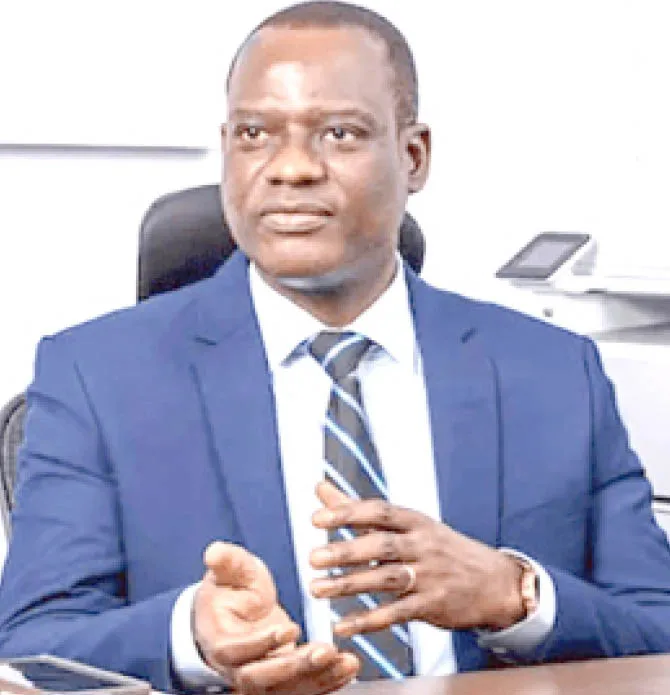
Minister of Finance and Coordinating Minister of the Economy, Taiwo Oyedele, has declared that this is the wrong time for governments to impose new taxes or increase the tax burden on vulnerable people and productive sectors of the economy.
Oyedele spoke on the sidelines of the 2026 annual meetings of the International Monetary Fund (IMF) and the World Bank in Bangkok, Thailand, where he presented the communiqué of the Intergovernmental Group of Twenty-Four (G24).
According to him, governments should balance revenue mobilisation with the need to protect vulnerable populations from additional financial pressure.
“This is the wrong time to impose new taxes or increase the tax burden, particularly on vulnerable populations and productive sectors of the economy,” Oyedele said.

Responding to a question on how developing countries could reduce debt-servicing costs without cutting essential public spending, the minister said governments should look inward for savings and improve revenue mobilisation without imposing additional burdens on citizens and businesses.
“The measures, as you asked, would first involve every country looking inward to identify areas for savings and revenue mobilisation, while bearing in mind that this is the wrong time to impose new taxes or increase the tax burden, particularly on vulnerable populations and productive sectors of the economy,” he said.
Oyedele said borrowing remained necessary for economic growth but stressed that it should be used to support job creation and inclusive development.
“Borrowing and debt financing are necessary conditions for growth, and every emerging and developing country must be able to use debt financing in a way that has an overall positive impact, particularly by stimulating job-rich and inclusive growth,” he said.
He also said public financing, which is often constrained, should be directed towards essential services such as healthcare and education, while private capital could help meet other investment needs.
On the balance between taxation and borrowing, Oyedele said neither option should be considered in isolation.
“If you collect taxes, you raise the money now, and that itself has a lot of trade-offs. What taxes are you collecting? If you collect taxes from the most vulnerable, you deprive them of money to provide food, healthcare and education,” he said.
According to Oyedele, “debt is future taxes, so it’s not one or the other. It’s about striking a balance, bearing in mind that, ultimately, the purpose of taxation and borrowing is to cater for the people.”
Daily Trust reports that the meeting is holding from October 12 to October 18, 2026. It is being attended by delegations from over 190 countries.
The Nigeria delegation include Chief Executive Officers of financial institutions, representatives of the private sector, Civil Society Organisations, Non-Governmental Organisations and other stakeholders.
The meeting, aimed at promoting global macro-economic financial stability along IMF’s long-standing mission, provides policy advice, surveillance of member countries’ economies, and financial assistance to countries facing balance-of-payments issues.
-

 News16 hours ago
N267bn in education funds lie idle as 70% of Nigerian children can’t read
-
Sports14 hours ago
Celebrity boxing: Boom for entertainers, bane of professional boxers?
-
News16 hours ago
Child soldier: US threatens to cut military aid to Nigeria
-
News16 hours ago
Obasanjo urges increase in 13% derivation for oil-producing states
-
Metro16 hours ago
Hardship: Jigawa almajiri pupils lament decline in free food
-
Business14 hours ago
Power plants record zero output amid grid instability
-
Business23 hours ago
Nigerian Govt can no longer cover electricity tariff shortfalls — Power Minister
-
Politics16 hours ago
Tinubu’s re-election crucial to Nigeria’s prosperity – Hamzat