
World News
US Considers Using ‘Mother of All Bombs’ Against Iran – Report

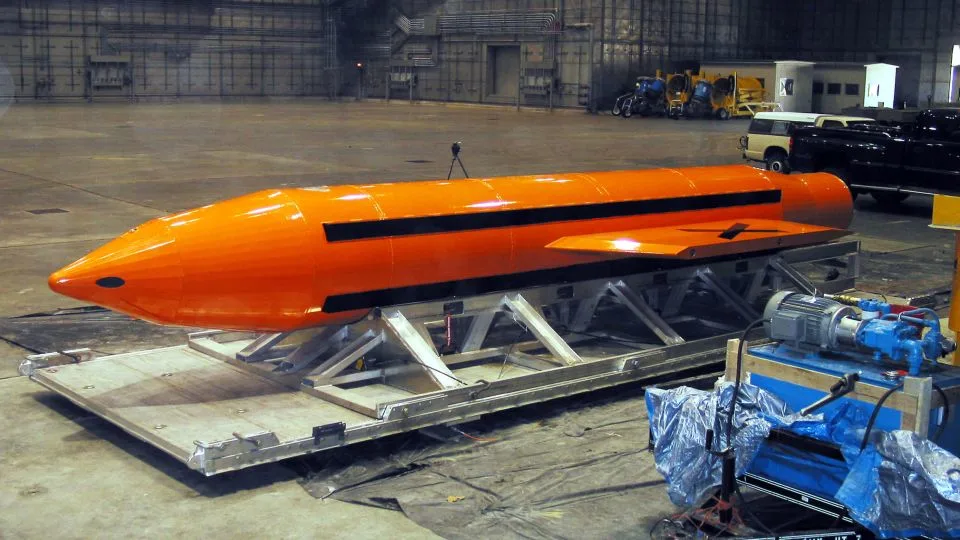
The United States is reportedly considering deploying its most powerful conventional bomb, popularly known as the “Mother of All Bombs”, against targets in Iran as Washington weighs its military options amid escalating tensions with Tehran.
According to a report by CNN, citing US officials familiar with the discussions, American military planners have considered the use of the GBU-43/B Massive Ordnance Air Blast (MOAB) bomb in a potential renewed offensive against Iran.
The reported plans could involve strikes against Iranian energy infrastructure and nuclear-related facilities, although it remains unclear whether President Donald Trump will authorise such an operation.
Reuters also reported the development but said it could not independently verify CNN’s account.

What Is the ‘Mother of All Bombs’?
The GBU-43/B MOAB is one of the largest conventional weapons in the US military’s arsenal. Weighing approximately 9,800 kilogrammes, or 21,600 pounds, the weapon is designed to produce an enormous blast capable of causing extensive destruction across a wide area.
Despite its nickname, the bomb is not nuclear. It relies on conventional explosives to generate a powerful blast wave.
The United States first used the weapon in combat in April 2017, when it was deployed in Afghanistan against Islamic State-linked militants operating in a network of caves and tunnels.
Its potential use against Iran would represent a significant development in any renewed American military campaign.
Iranian Energy and Nuclear Facilities Could Be Targets
According to the reported military discussions, potential targets include Iranian energy infrastructure and facilities associated with the country’s nuclear programme.
Energy infrastructure is strategically important because damage to oil, gas and electricity facilities could disrupt economic activity and place additional pressure on the Iranian government.
However, attacks on such infrastructure could also have serious consequences for civilians, particularly if they affect electricity supplies, essential services or industrial facilities supporting civilian life.
The reported plans also raise questions about the effectiveness of the MOAB against Iran’s most heavily fortified nuclear installations.
Some of Iran’s nuclear-related facilities are believed to be located deep underground or protected by substantial layers of rock and reinforced structures.
Military planners reportedly recognise that the MOAB may not be capable of destroying facilities buried deep beneath the ground. Its enormous explosive force does not necessarily translate into the ability to penetrate heavily fortified underground installations.
Trump Yet to Confirm Any Decision
The reported consideration of the weapon does not mean an attack has been approved.
The decision would ultimately depend on the US administration’s military and political calculations, including its objectives in Iran, the potential effectiveness of the proposed strikes and the risks of Iranian retaliation.
A White House response to questions about sensitive military planning did not publicly confirm that the weapon would be used.
The distinction between preparing military options and authorising an operation is significant. Governments routinely develop contingency plans without necessarily implementing them.
Risk of Wider Regional Conflict
Any renewed US offensive against Iran could trigger retaliation and increase instability across the Middle East.
Iran could respond through direct military action or attacks by allied armed groups in the region. Such developments could threaten US personnel and regional allies, while raising the risk of further escalation.
The conflict could also affect global energy markets, particularly if military operations threaten oil infrastructure or shipping routes around the Persian Gulf and the Strait of Hormuz, a critical passage for international oil and gas supplies.
Higher energy prices could have consequences far beyond the Middle East, affecting transportation costs, inflation and the finances of oil-importing countries.
For oil-producing countries such as Nigeria, higher international crude prices could potentially increase export earnings. However, the benefits would depend on domestic production, export volumes, exchange rates and the wider economic effects of an international energy shock.
A Potential Turning Point in US-Iran Tensions
The reported consideration of the MOAB underscores the seriousness of the military options being examined by Washington.
Nevertheless, the weapon’s inclusion in contingency planning does not establish that an attack is imminent, nor does it demonstrate that the United States has decided to abandon diplomatic efforts.
The immediate questions are whether President Trump will authorise further military action, which targets would be selected and how Iran might respond.
Until the US government confirms its intentions, the reported plan remains a possible military option rather than an announced operation. (CNN)
-

 News9 hours ago
Experts caution as IMF offers fresh advice on subsidy
-
Politics9 hours ago
2027: Nigerians Won’t Renew A Mandate Of Hardship – Atiku Tells Tinubu
-
Sports9 hours ago
CAF Hands NFF, Other Member Federations $175,000 Boost In Annual Subvention
-
Politics9 hours ago
Stop Eyeing A Position That Is Not Available – Akpabio Warns APC Govs
-
Politics8 hours ago
2027: We know how to stop Tinubu from getting second term - Momodu
-
News9 hours ago
Many soldiers feared killed as terrorists attack military post in Borno
-
Politics9 hours ago
No one owns voters – Obidients tell Wike
-
Politics8 hours ago
Nigerians better off under Tinubu – APC spokesman insists