
Opinion
The president, the errand man and the frequent flyer miles

BY OLU ALLEN
My people, gather here. We need to discuss a matter of national importance. Not the price of food. Not the cost of petrol. Not even the small matter of how Nigerians are expected to survive until payday. Today, we are discussing presidential mileage.
Because apparently, governing Nigeria is so demanding that the president may not be able to attend every campaign rally. Fair enough. The office is serious business.
But international travel? Ah! That one has become a subject of national accounting.

According to media reports based on GovSpend expenditure records, the Presidency spent approximately ₦37.64 billion on presidential travel, associated logistics and related expenses between June 2023 and April 2026.
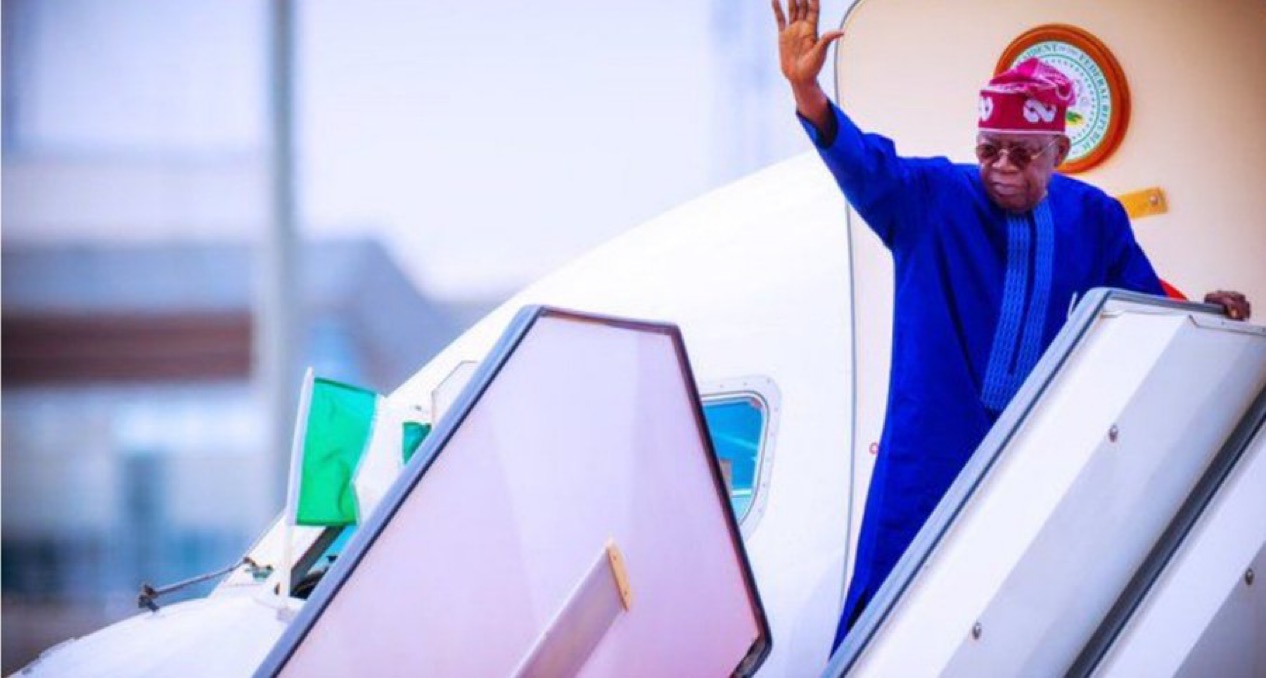
Other reports put President Bola Ahmed Tinubu’s foreign travel record at approximately 52 trips and 261 days abroad since he assumed office in May 2023.
My people, two hundred and sixty-one days!
That is a substantial amount of time outside the country, even for a man whose job description includes representing Nigeria to the world. Before somebody accuses me of hating international exposure, let me quickly state the obvious.
Presidential trips are not automatically holidays. They can involve diplomatic engagements, investment meetings, international summits and negotiations that may benefit Nigeria.
We understand. But when public expenditure reaches billions of naira, Nigerians are entitled to ask a few small questions.
What investments were secured? What agreements have produced measurable benefits? What economic opportunities have reached Nigerian businesses? And how do we measure the value of these trips against their cost?
These are not enemy questions. They are taxpayer questions. And every responsible government should be able to answer them.
Now, let us bring in the campaign.
On October 14, President Tinubu addressed the inauguration of the APC presidential campaign council ahead of the 2027 election. His message was that he would not necessarily accompany the campaign team everywhere because his responsibilities as president would continue. He wanted campaign officials to take the message across states and local government areas while he concentrated on governance.
Then came the line that deserves to be framed and hung somewhere in the Villa. “The responsibility of this office does not pause.”
Correct, Mr President. The responsibility does not pause. But neither does the responsibility to explain your priorities to the people whose taxes sustain the office. And that, my people, is where the matter becomes interesting.
THE PRESIDENTIAL ERRAND MAN
The president has described himself as his party’s “errand man.”
An errand man! My people, please, somebody should check whether the office has a staff bus. Because the ordinary Nigerian errand man is sent to buy bread, returns with the bread, and must still explain why the price has increased.
If he returns without the bread, wahala. If he returns with the wrong bread, bigger wahala. And if he spends money meant for two loaves to buy one loaf, his explanation must be ready before he enters the compound.
But our presidential errand man has national responsibilities, international engagements and an election campaign waiting in the wings.
This is not your regular neighbourhood errand. This one requires a passport, a security detail, an official itinerary and, apparently, billions of naira in travel-related expenditure.
Before you accuse me of mocking the president’s office, calm down. I am mocking no office. I am asking a question about accountability.
If an ordinary Nigerian must account for the money entrusted to him, why should the expenditure associated with the highest office in the land escape serious public scrutiny?
Perhaps we should establish a presidential errands monitoring unit. Its first assignment would be simple. Track the errand. Record the cost. Publish the result. No witch-hunting. No political vendetta. Just accountability.
The unit’s first question would be: What did the trip deliver?
The second: Can Nigerians see the results?
And the third might require a calculator, a spreadsheet and an accountant who has not travelled with the delegation. Because ₦37.64 billion is not pocket change.
Let me be clear, though. The reported figure covers presidential travel-related expenditure over a specified period. It should not automatically be presented as the cost of the president’s personal holidays alone.
We must get our facts right even when the satire is sweet. But the fundamental question remains: what value has Nigeria received from this expenditure? That question is not disrespectful. It is responsible citizenship.
WHEN GOVERNANCE MEETS CAMPAIGNING
Now, let us look at the president’s argument. Is it wrong for Tinubu to delegate some campaign rallies to party officials? Not necessarily.
Nigeria is a large country. The Presidency has responsibilities that cannot be abandoned simply because an election is approaching. A president cannot attend every rally, every meeting, every ceremony and every political gathering. Even the most energetic politician needs time to govern.
But here is the other side of the matter. A campaign is not just a parade of party officials wearing matching caps and dancing to campaign songs. It is an opportunity to defend a record, explain policies, acknowledge shortcomings and present a plan for the future.
The APC is asking Nigerians for another four years. Four years! That is not a small request. It is another four years of people’s lives, expectations, sacrifices and hopes.
So, Nigerians have every right to ask what the first four years have delivered and what the next four are expected to bring.
If the president delegates some rallies, fine. Let the campaign team explain the record. Let the party present its programme. Let the president demonstrate what he is doing with the time saved from those rallies.
Because the argument cannot simply be that governance is too important for campaigning.
The next question is obvious: What exactly is the governance producing that makes the president’s absence from those rallies worthwhile?
That is where the conversation should be. Not whether Tinubu must dance at every rally. Not whether he must travel from state to state like a musician on a national tour. The question is whether the time, money and attention devoted to governing Nigeria are producing results that ordinary Nigerians can feel.
After all, a government can be busy without being effective. An itinerary can be full without a people’s lives being better. And a calendar packed with engagements is not the same thing as a country making measurable progress.
AND WHAT ABOUT THE MEDIA?
While we are counting presidential miles, let us also count the distance between the Presidency and difficult questions. Tinubu’s first presidential media chat took place in December 2024, approximately 19 months after he assumed office.
Nineteen months!
In a country where something dramatic can happen between breakfast and dinner, that was a considerable wait for a major presidential media engagement. Of course, the president does not owe every journalist an interview whenever they demand one. But regular engagement with the media is part of democratic accountability.
A press statement has its place. A carefully prepared speech has its place. A presidential broadcast has its place. But none entirely replaces the value of a journalist asking an uncomfortable question and waiting for an answer.
That is the beauty of a free press. The journalist asks. The president answers. Nigerians listen, examine the response and decide whether it makes sense. Sometimes the answer satisfies people. Sometimes it creates five new questions.
Welcome to democracy.
And as the 2027 election approaches, Nigerians will need more opportunities to hear directly from the man seeking another mandate. Not because the president must personally explain every government decision, but because the person at the top must ultimately account for the direction of the government.
You cannot ask Nigerians to renew your mandate and then treat their questions as though they are disturbing your afternoon nap.
THE FREQUENT FLYER MILES AND THE PEOPLE’S MILES
Here is where the joke becomes serious.
While presidential travel is being discussed in billions of naira and hundreds of days abroad, millions of Nigerians are measuring their own journeys differently.
The trader measures the distance between the shop and the customer’s pocket. The transport operator measures the cost of petrol against the money left after a day’s work. The civil servant measures the days remaining before payday. The parent measures the school fees against the money available in the bank account.
And the unemployed graduate measures time in applications, unanswered emails and promises that never seem to arrive.
Everybody is travelling somewhere in this country. Some are travelling internationally. Others are travelling from one filling station to another, looking for a price they can afford. Some are travelling to conferences. Others are travelling to hospitals, hoping they can afford treatment.
And some are simply travelling through life, trying to make sure that the money in their pockets survives until the end of the week.
These are different experiences, and I will not pretend that presidential travel alone explains the difficulties Nigerians face.
But public leadership requires an understanding of the distance between official activity and ordinary people’s realities.
When the government spends billions on official engagements, citizens should be able to ask how those engagements contribute to the country’s progress.
When the president says he must focus on governance, citizens should be able to identify the results of that focus.
And when the government asks for another mandate, it should be prepared to explain what it has done with the mandate already entrusted to it.
That is not asking too much. It is asking the right questions.
SO, WHAT IS THE REAL MATTER OF STATE?
Let us be fair to the president. He does not have to attend every campaign rally. Foreign trips are not automatically wasteful.
And remaining inside Nigeria does not automatically make a president effective. We should not confuse movement with achievement, whether that movement takes place on a campaign trail or across international borders.
The real issue is accountability.
If presidential trips have secured investments, let the results be documented. If international engagements have strengthened diplomatic relationships, explain the benefits.
If agreements have been signed, tell Nigerians what has been implemented. If the president must delegate campaign appearances to concentrate on governance, show the people what that concentration is producing.
And if the campaign team is expected to do the travelling, let it explain the record and present a credible programme for the future.
Nobody is asking the president to govern from a campaign podium. We are asking that governance be visible in the lives of the people. Because, my people, a president can travel around the world and still owe his citizens an explanation at home.
And a president can remain in Abuja and still fail to govern effectively.
The real measure is not the passport stamp. It is the result.
So, perhaps it is time we established our own national mileage calculator. Not the kind that counts kilometres, flight hours or countries visited.
The kind that measures how far Nigerians have moved from hardship to relief, from uncertainty to security, from unemployment to opportunity, and from promises to results.
That is the mileage that matters. The president says the responsibility of office does not pause. Nigerians agree. But they also want to know whether the benefits of that responsibility are reaching them quickly enough. As for the presidential errand man, we wish him safe travels, successful engagements and productive meetings.
But when he returns, Nigerians should not have to search for the results with a magnifying glass.
Let the investments speak. Let the agreements produce. Let the policies deliver. And let the people feel the difference.
Because in the final analysis, Mr President, the question is not how many frequent-flyer miles you have accumulated. It is how many miles Nigeria has travelled under your watch.
That, my people, is the matter of state.
Olu Allen writes on public affairs and good governance
-
Politics16 hours ago
2027: Opposition to name single presidential candidate before polls – Lukman
-

 Politics4 hours ago
2027: Northern govs pledge total support for Tinubu
-
Business7 hours ago
Petrol: Transporters raise fares, commuters groan
-
Metro8 hours ago
Man Drowned Trying To Rescue Suspect On Suicide Mission
-
News23 hours ago
Military kills 11 terrorists, arrests 22, rescues 25 kidnapped victims in one week
-
Opinion4 hours ago
Nigeria’s jobless growth: The 800m job deficit warning
-
Politics4 hours ago
APC’s internal contradictions scare me more than Atiku, Obi – Shettima
-
Sports23 hours ago
Westerhof diagnosed with colon cancer, critical