Business
Roadside Food Is Getting Smaller And Nigerians Are Paying More For It

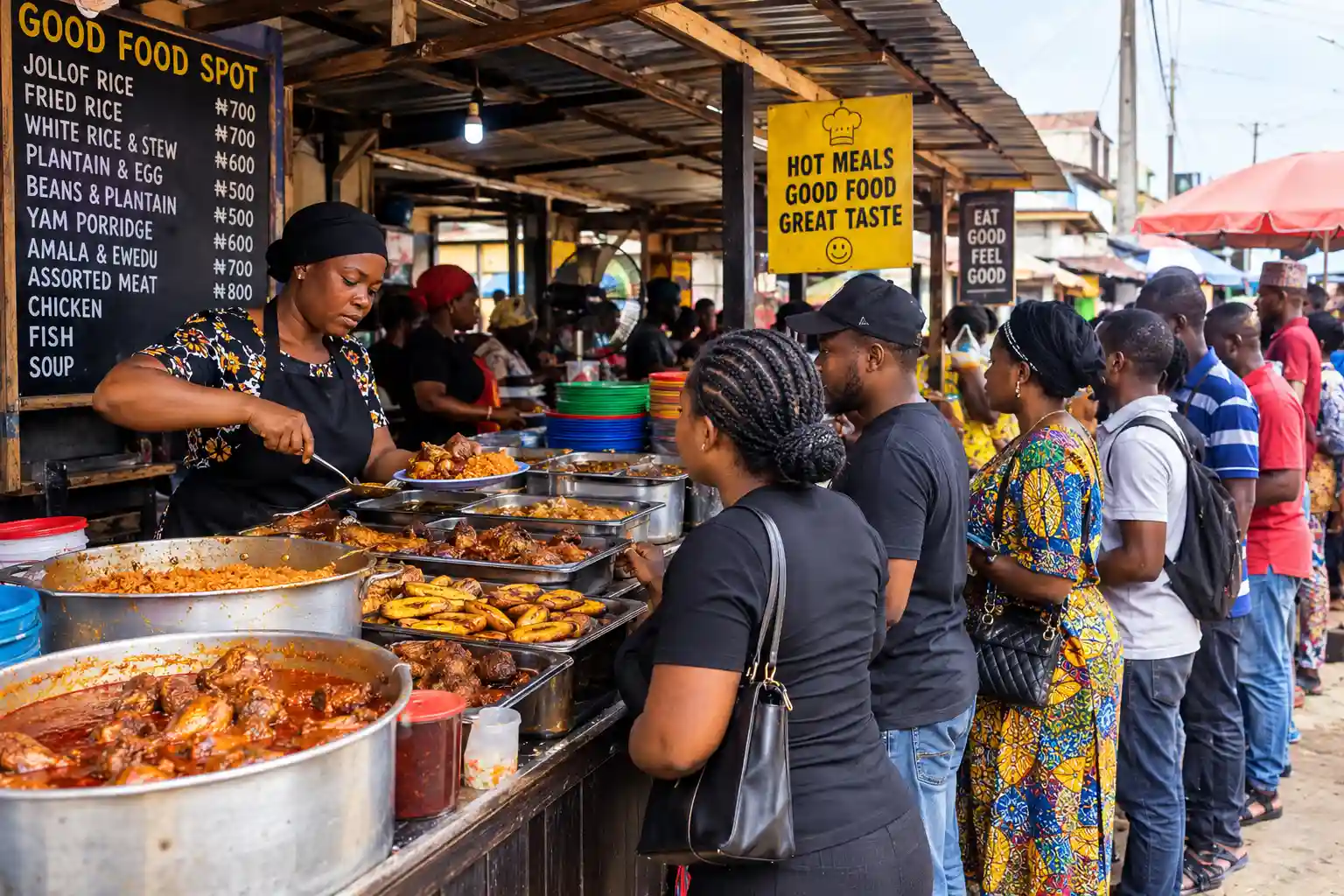
Walk through any busy area in Nigeria and you will still smell jollof rice and pepper soup. But look at the plate, and you will see the problem. The food is smaller, and the price is higher.
Prices of everything have gone up. Fuel subsidy is gone, the naira has lost value, and transport costs a lot more. So the small food joints, the “buka” and “mama put” that workers depend on, are struggling. To survive, they are giving customers less food for more money.
Emmanuel Osarumwense, a structural technician, said N1,000 used to fill his stomach at Mama Rukayat’s place. Now he pays N1,500 and still feels hungry. He drinks two sachets of water after eating just to feel full. In his words, “We are no longer eating to enjoy; we are eating so we don’t collapse.”
Sunday Agbonkhese, a bricklayer, said N700 used to buy ewa agoyin and bread that would fill him up. Now N700 can hardly buy a loaf of bread. To get full, he needs up to N3,000. Even then, the portion is small, so he eats only twice a day to save money. “It is only God that is feeding me,” he said.

Kudirat Adeyemi has run her food canteen for over 12 years. A year ago, one scoop of rice with a piece of beef sold for N800. Today, the same food would cost her N2,000 to make. But her customers, mostly okada riders and traders, cannot pay that.
So she chose a middle path. The price is now N1,200, but the portion is almost half of what it was. The meat is smaller and the rice is no longer heaped. She also cooks far less. She now cooks about 5kg of rice, where she used to cook 25kg. “The market is hot,” she said.
Musa Ibrahim, a food truck owner, said cutting portions is not greed, it is desperation. Ingredient prices change every morning. A basket of pepper that cost N25,000 last week can cost N35,000 this week. If he does not reduce the food on the plate, he will cook at a loss and have no money to buy ingredients the next day.
Economists say the problem comes from deeper money trouble in the country. A bag of rice now costs between N60,000 and N100,000. Cooking gas, tomatoes, onions and vegetable oil have also gone up. Salaries have not moved, so people have less money to spend.
Many food sellers have closed shop because they cannot afford to restock. Those still in business are cutting portions to avoid going bankrupt.
Until things improve in areas like farming and security, both sellers and buyers are stuck. For now, plates at Nigeria’s roadside food stalls will likely stay small, and they remind us daily of the pressure on the nation’s tables. (Apples’s Bite)
-

 Politics16 hours ago
Presidency denies withholding ₦250bn NLNG dividends from states
-
Politics15 hours ago
2027: APC unveils online portal for support groups
-
News16 hours ago
FG disagrees with World Bank over H1 124% debt servicing/revenue ratio
-
News15 hours ago
5 Security Operatives Killed As B/Haram Attacks Adamawa Communities
-
Metro16 hours ago
Kidnapped Catholic Priest, three others rescued in Benue
-
Politics15 hours ago
Buhari Saw Tinubu As ‘Bad News’, Resisted His Presidency – Baba-Ahmed
-
News15 hours ago
Nnamdi Kanu’s Family Accuses UK Of Failing To Protect Its Citizen, Demands Action To Secure His Freedom
-
News15 hours ago
How Scavengers Stole N3bn Power Line Cables – Zulum