
News
Economy Not Improving Under Tinubu, Says Obasanjo

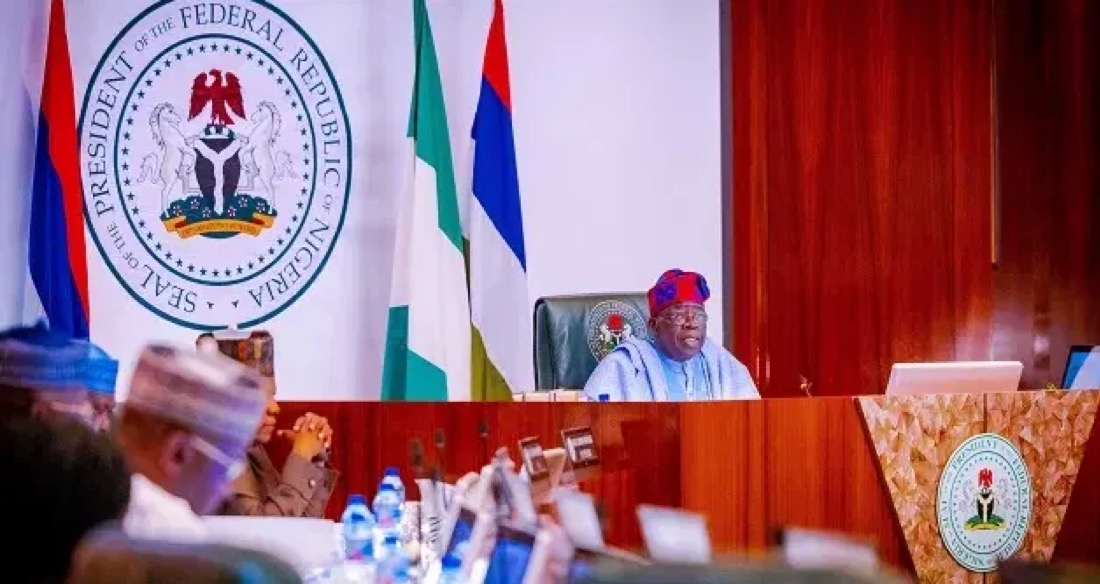
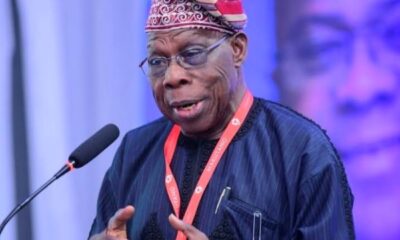
Former President Olusegun Obasanjo has criticised President Bola Tinubu’s handling of Nigeria’s economy, arguing that the administration’s economic reforms have worsened poverty and reduced Nigerians’ purchasing power.
Speaking at the Financial Times Africa Summit 2026 in London on Wednesday, October 21, Obasanjo questioned the impact of the government’s economic policies, particularly the sharp depreciation of the naira.
According to reports, Obasanjo argued that the fall in the naira’s value had made Nigerians poorer by increasing the cost of imported goods and reducing the purchasing power of households.
He specifically criticised the movement of the exchange rate from around ₦500 to the US dollar to approximately ₦1,500, arguing that the resulting depreciation had imposed a heavy burden on citizens.

“You cannot say to me that that is good for Nigeria,” Obasanjo said, expressing his opposition to the economic consequences of the reforms.
Obasanjo questions Tinubu’s second-term bid
Obasanjo also challenged the argument that Tinubu should be given another four years to consolidate his economic policies, questioning what gains Nigerians were expected to consolidate when many were still struggling with rising living costs.
He maintained that his criticism was directed at the administration’s economic programmes rather than simply at Tinubu as an individual.
The former president also questioned the removal of petrol subsidy, arguing that corruption accounted for a substantial portion of the subsidy burden and that tackling corruption could reduce the need for such payments.
What Obasanjo says Nigeria must do
Obasanjo identified the following priorities for improving Nigeria’s economic prospects:
Fight corruption: Reduce financial leakages and wasteful government spending.
Control public expenditure: Avoid unnecessary luxury and excessive spending.
Increase domestic production: Produce more goods locally to reduce dependence on imports.
Improve citizens’ welfare: Ensure economic policies translate into better living conditions for Nigerians.
The bigger picture
Obasanjo’s criticism comes amid a mixed picture of Nigeria’s economy. Nigeria recorded real GDP growth of 4.43% year-on-year in the second quarter of 2026, while inflation eased to 14.63% in September. However, food inflation remained elevated at 19.59%, highlighting the continuing pressure on household budgets.
This distinction matters: economic growth and falling inflation do not automatically mean that Nigerians can afford more goods and services. Prices may still be high even when inflation slows, and households may take time to recover lost purchasing power.
Obasanjo’s remarks therefore raise a central question for the Tinubu administration: whether its reforms are delivering tangible improvements in the everyday lives of Nigerians, beyond improvements in selected economic indicators.
-

 News13 hours ago
LG autonomy: EFCC probes 774 chairmen’s spending
-
News13 hours ago
418 killed, 227 kidnapped in eight weeks – Police
-
Politics13 hours ago
2027: APC targets Obi’s stronghold in Lagos
-
Politics13 hours ago
INEC Removes 1.6m Records From Voters’ Register, Identify Officials Responsible
-
News13 hours ago
‘Your entire generation will pay’ — Obasanjo fumes over Nigeria’s increasing debt
-
 News13 hours ago
Rising food prices: Workers turn to ‘mama put’ restaurants for affordable meals
-
Politics12 hours ago
Betara’s N1bn for Borno APC legislators
-
Metro13 hours ago
UK man convicted of fraud for secretly working five government jobs at once