
Politics
1,117 Muslim clerics in Katsina endorse Tinubu’s 2027 re-election bid

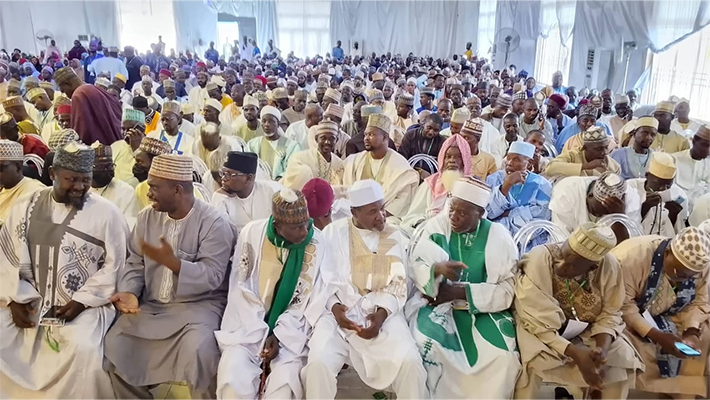
Thousands of Islamic clerics from the Izala and Tijjaniyya groups in Katsina State have endorsed President Bola Tinubu’s 2027 re-election bid.
The clerics, 1,117 of them, comprising scholars, imams, male and female preachers, and teachers, declared their support on Sunday at a gathering organised by Ibrahim Masari, presidential adviser on political matters.
Mr Masari conveyed Tinubu’s appreciation to the clerics, assuring them that the President and his administration would not betray the confidence Katsina residents have placed in them.
He urged the religious leaders to mobilise their followers to support the All Progressives Congress (APC) at all levels ahead of the 2027 elections.

Mr Masari also emphasised the importance of trust, integrity and accountability in leadership, urging Islamic scholars to uphold truthfulness and responsible conduct in religious and public engagements.
The Minister of Housing and Urban Development, Muttaqa Rabe-Darma, urged the clerics to use their community influence to explain the administration’s policies and political agenda.
Mr Rabe-Darma described Islamic scholars as influential figures whose sermons and regular interactions with worshippers could shape public understanding of political issues and leadership choices.
He noted that politicians across party lines frequently sought religious leaders’ blessings and support, underscoring their influence in society.
The minister encouraged the clerics to use their platforms, particularly Friday sermons and community engagements, to explain their support for Mr Tinubu’s second-term bid.
According to him, religious leaders play an important role in political mobilisation because many communities trust their guidance on religious, social, and public affairs.
Sheikh Aminu Usman, aka Abu Ammar, the state’s immediate past Hisbah commander, urged Islamic scholars not to remain silent on political matters. He said their responsibilities extended beyond religious activities to include enlightening the public on leadership and governance.
Mr Usman cited Islamic teachings on the relationship between religious scholarship and leadership, urging clerics to educate followers about political candidates.
He encouraged citizens to assess leaders based on their records and performance, stressing the need for religious leaders to speak truthfully about political developments.
Mr Usman said clerics should help citizens make informed choices as political activities ahead of the 2027 elections gathered momentum.
(NAN)
-

 News10 hours ago
Ebola: NCDC to pay contacts N100,000 weekly
-
Politics10 hours ago
‘Weapon fashioned against APC’ — outrage as youth leader gifts 2026 Prados to party officials, then deletes post
-
Politics10 hours ago
We’ll Soon Expose Those Plotting To Scuttle My Guber Ambition – Pantami
-
Politics10 hours ago
We Won’t Allow Repeat Of 2023 Defeat – Lagos APC
-
News10 hours ago
Zamfara Steps Up Ebola Containment Measures After Passenger With 38°C Fever Arrives Airport
-
Metro10 hours ago
Okonjo-Iweala’s mother dies at 96
-
News10 hours ago
States’ six-month debt servicing bill hits N800bn
-
Politics10 hours ago
2027: NDC slams Tinubu, APC over ₦1bn worth of Prado SUVs for youth leaders