Politics
APC defends Tinubu’s poverty claim, blames PDP’s 16 years in power

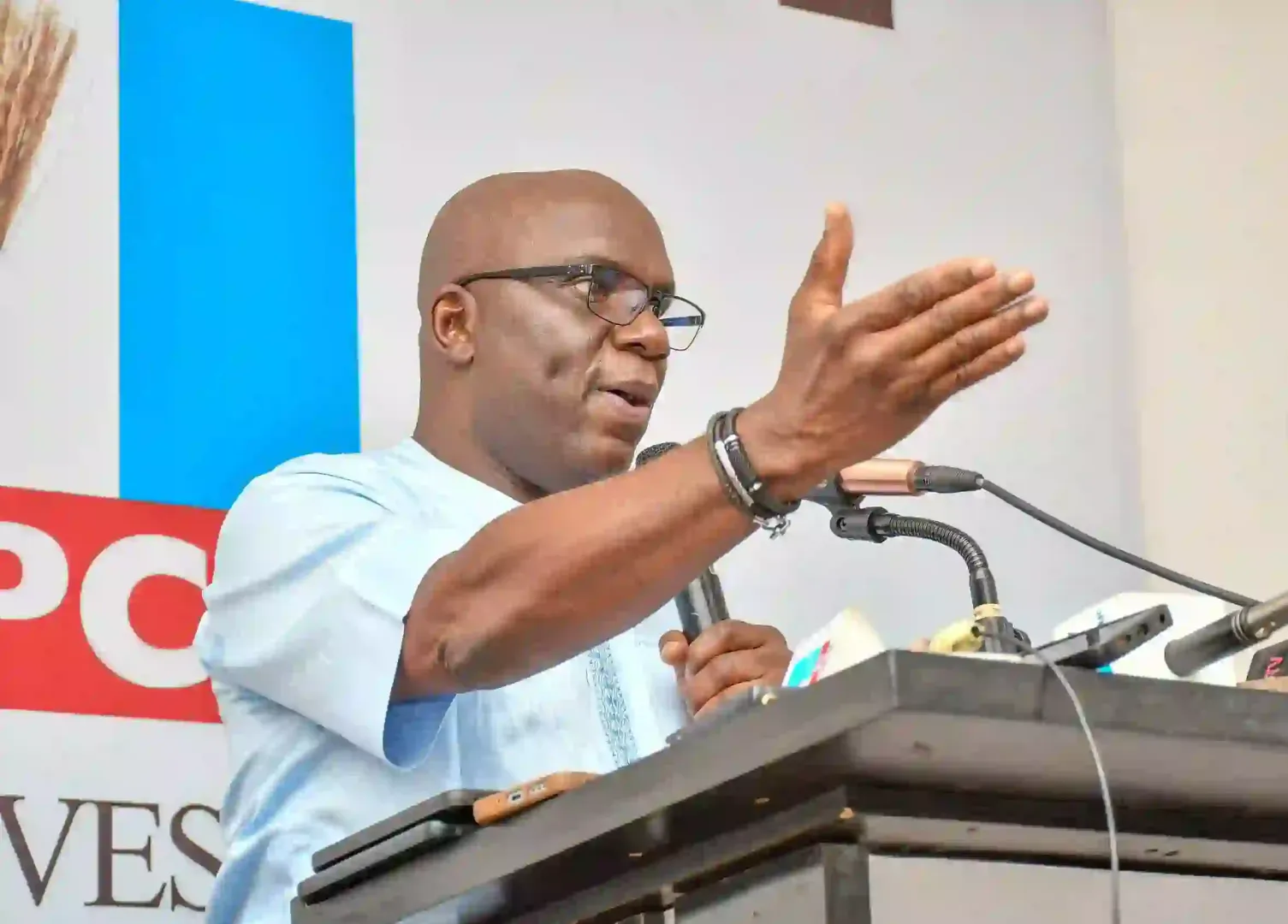
The All Progressives Congress (APC) has defended President Bola Tinubu’s claim that opposition politicians caused the hunger and poverty confronting Nigerians, blaming previous administrations, particularly the Peoples Democratic Party (PDP), for failing to address the country’s longstanding economic problems.
The party’s National Publicity Secretary, Felix Morka, said the foundations of Nigeria’s current poverty crisis were laid before Mr Tinubu assumed office in May 2023, arguing that former leaders should not portray the hardship as a problem that emerged under the current administration.
Mr Morka spoke on Monday during an appearance on News Central Television’s Breakfast Central programme, where he responded to questions about Mr Tinubu’s remarks at the APC’s 2027 presidential campaign flag-off in Kaduna on Saturday.
At the rally, Mr Tinubu accused opposition politicians of creating hunger and poverty, insisting that his administration was working to eradicate both problems.

“I have heard the opposition talking about hunger and poverty. Who created them? They did. They created the hunger; they created the poverty. We are trying to eradicate it,” the president said.
Defending the statement, Mr Morka said former Vice President Atiku Abubakar, now an opposition figure, had been part of a political establishment that governed Nigeria for 16 years under the PDP between 1999 and 2015 but failed to eliminate poverty.
“Poverty has been with us. As a matter of fact, the foundations for the endemic poverty we’re dealing with today were laid in that era,” he said.
He argued that Atiku, who served as vice president from 1999 to 2007, should explain why successive administrations failed to address poverty before criticising the current government over the economic hardship Nigerians are experiencing.
Mr Morka maintained that Mr Tinubu was referring to the historical roots of poverty rather than suggesting that the current administration had no responsibility for the conditions Nigerians face today.
However, the defence comes amid persistent concerns about the cost of living, declining purchasing power and the impact of the Tinubu administration’s economic reforms on households.
The World Bank estimated that 69.6 per cent of Nigerians lived below the lower-middle-income poverty line of $4.20 a day in 2025, while 50.8 per cent, or about 123 million people, were living in extreme poverty. The figures underscore the scale of the challenge facing the government, even as it argues that its reforms are necessary to stabilise the economy.
Mr Morka disputed the way poverty figures are sometimes presented in public discussions, arguing that currency depreciation and changes in the exchange-rate system must be considered when assessing incomes and living standards.
He said the government’s decision to harmonise the exchange rate was intended to correct distortions in the economy and that assessing the policy only through its immediate effects on purchasing power would give an incomplete picture.
The APC spokesperson acknowledged that the reforms had reduced Nigerians’ purchasing power and contributed to the high cost of living but argued that the government had little alternative to addressing what he described as deep-rooted economic distortions.
He also defended the removal of petrol subsidy, saying the policy was necessary to reduce the burden on public finances and end a system that successive governments had struggled to reform.
Mr Morka argued that the government should be assessed not only by whether Nigerians have immediately felt improvements in their living conditions but also by whether its policies are producing measurable progress towards economic recovery.
He said economic transformation could not be achieved overnight, citing countries such as China, Malaysia and Singapore as examples of economies whose development took time.
“We didn’t tell you we had a magic wand to correct Nigeria’s generational problems in one day or in two weeks or in one year,” he said.
According to him, the Tinubu administration has introduced several measures to cushion the effects of its reforms, including cash transfers to vulnerable households and initiatives aimed at reducing transportation costs and improving access to financing.
He said the government was not denying the hardship caused by the reforms but argued that the effects of removing long-standing economic support systems would inevitably be felt by households.
Mr Morka also defended the administration’s electricity-sector reforms, saying the changes had empowered states and other actors to develop power-generation capacity, although the results would take time to materialise.
He maintained that the reforms would eventually improve electricity supply and support economic growth.
The APC’s defence comes as Mr Tinubu begins his campaign for a second term amid public concerns over the cost of living and the effects of his administration’s economic policies.
While the government argues that the reforms are necessary to restore economic stability, the immediate impact on household incomes and the persistence of widespread poverty remain central issues in the debate over its economic record.
Morka defends vehicles for campaign mobilisation
Mr Morka also defended the provision of vehicles for political campaigns by First Lady Remi Tinubu, amid the controversy surrounding the presentation of seven new Toyota Land Cruiser Prado sport utility vehicles (SUVs) to selected APC youth leaders.
The party’s National Youth Leader, Dayo Israel, had said the vehicles were intended to support election mobilisation ahead of the 2027 general elections, prompting criticism over the reported cost of the fleet amid the economic hardship facing Nigerians.
Responding to questions about campaign vehicles, Mr Morka argued that such provisions were part of the logistics required for electioneering and should not be interpreted as rewards for party loyalists.
“During the campaign, every campaign season, people brand vehicles to move because it’s an activity. It’s not as if they were given as a reward,” he said.
He added that vehicles provided for campaign purposes should be understood within the context of preparations for the 2027 elections.
-

 Politics10 hours ago
‘Weapon fashioned against APC’ — outrage as youth leader gifts 2026 Prados to party officials, then deletes post
-
News10 hours ago
Ebola: NCDC to pay contacts N100,000 weekly
-
Politics10 hours ago
We’ll Soon Expose Those Plotting To Scuttle My Guber Ambition – Pantami
-
Metro10 hours ago
Okonjo-Iweala’s mother dies at 96
-
Politics10 hours ago
We Won’t Allow Repeat Of 2023 Defeat – Lagos APC
-
News10 hours ago
Zamfara Steps Up Ebola Containment Measures After Passenger With 38°C Fever Arrives Airport
-
News10 hours ago
States’ six-month debt servicing bill hits N800bn
-
Politics10 hours ago
2027: NDC slams Tinubu, APC over ₦1bn worth of Prado SUVs for youth leaders