Business
Nigeria’s portfolio investment inflows surge to $7.09 billion as direct investment lags

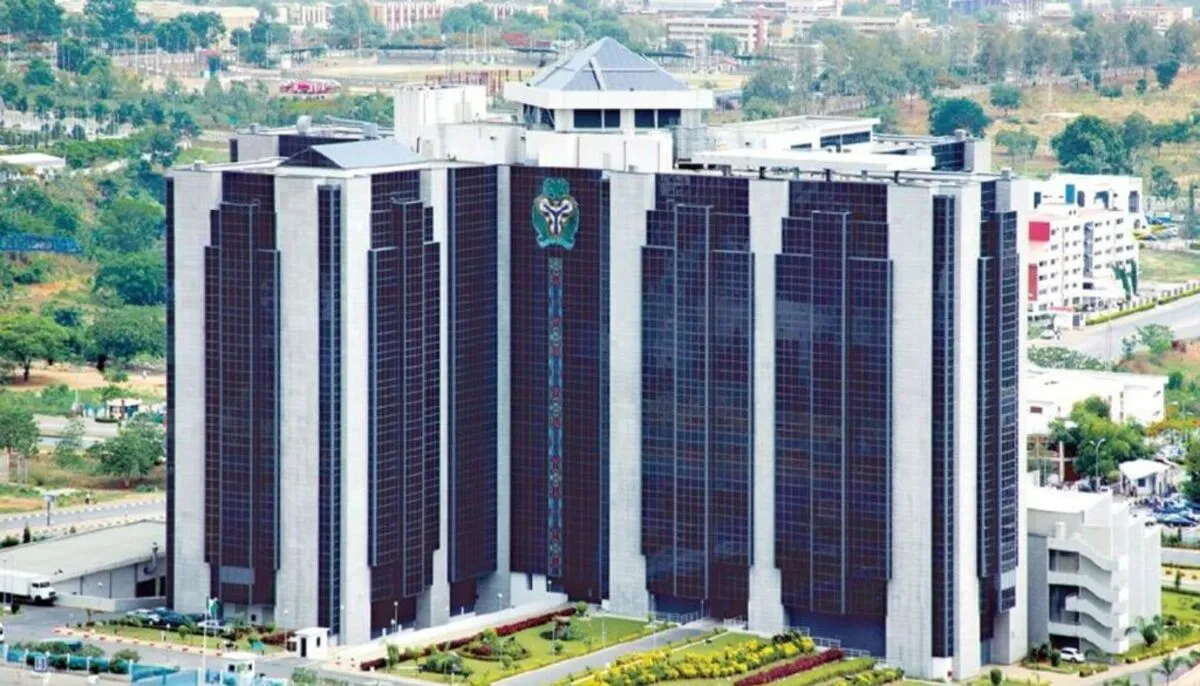
Nigeria’s portfolio investment inflows rose 17.6% quarter-on-quarter to $7.09 billion in the second quarter of 2026, up from $6.03 billion in the first quarter (Q1), according to the Central Bank of Nigeria (CBN).
The CBN attributed the $1.06 billion increase to higher inflows into long-term general government debt securities in its Q2 2026 Economic Reportpublished on Monday, October 26.
The figures indicate that portfolio investment remained the largest component of new financial liabilities recorded in the quarter, outpacing direct investment liabilities as other investment liabilities also increased.
Portfolio inflows rise to $7.09 billion
The CBN’s financial-account data showed that portfolio investment inflows increased faster than direct investment liabilities between the first and second quarters of 2026.

The increase was driven by higher inflows into long-term general government debt securities, according to the report.
- Portfolio investment inflows rose to $7.09 billion from $6.03 billion in Q1, an increase of $1.06 billion, or 17.6%.
- Direct investment liabilities increased to $1.15 billion from $1.03 billion, representing a rise of $120 million, or approximately 11.7%, driven by higher reinvested earnings.
- Other investment liabilities climbed to $2.75 billion from $1.36 billion, reflecting higher loan drawdowns by government and other sectors, alongside increased currency and deposit liabilities of deposit-taking corporations.
- Net incurrence of financial liabilities increased to $10.84 billion from $8.36 billion in the preceding quarter.
Portfolio investment inflows were approximately six times the size of direct investment liabilities in Q2. Based on these figures, portfolio inflows accounted for about 65% of net liabilities incurred during the quarter, compared with roughly 72% in Q1, as other investment liabilities grew faster.
Nigeria’s FX inflows fall in Q2
The increase in portfolio investment occurred alongside a decline in aggregate foreign exchange inflows during the quarter, according to the CBN report.
Total FX inflows fell 4.24% to $30.03 billion from $31.36 billion in Q1, reflecting different movements in autonomous inflows and receipts through the central bank.
- Autonomous FX inflows rose 3.59% to $21.91 billion.
- Inflows through the CBN declined 20.47% to $8.12 billion.
- Nigeria’s financial account recorded net lending of $1.74 billion, compared with net borrowing of $2.03 billion in Q1, a shift the CBN linked mainly to increased acquisition of other investment and reserve assets.
- External reserves rose to $51.39 billion at the end of June from $48.35 billion at the end of March.
The average Nigerian Foreign Exchange Market (NFEM) rate also strengthened to N1,365.95 per dollar from N1,384.48 per dollar in the preceding quarter.
Nigeria’s net international investment liability narrowed to $92.94 billion from $94.68 billion, although total financial liabilities increased by $9.71 billion to $238.66 billion.
Portfolio inflows outpace direct investment
The Q2 figures reinforce the importance of portfolio investment in Nigeria’s recorded financial-account flows, while highlighting the smaller contribution from direct investment liabilities.
- Portfolio investments generally involve securities such as government debt instruments, while direct investment measures a different category of cross-border investment.
- The two figures should therefore not be treated as interchangeable measures of foreign capital entering the economy.
- The CBN’s balance-of-payments figures are also distinct from the National Bureau of Statistics’ (NBS) capital importation data and should not be interpreted as total capital importation.
- While portfolio inflows can support demand for government securities and foreign exchange liquidity, their increase does not necessarily translate into equivalent long-term capital formation.
The composition of inflows, particularly the balance between portfolio and direct investment, remains important when assessing the nature of foreign capital entering Nigeria.(Nairametrics)
-

 Business21 hours ago
Why J.P. Morgan picked five Nigerians to lead its merchant bank
-
News19 hours ago
Nigeria no longer has Ebola, says WHO
-
Politics19 hours ago
2027: Oluremi Tinubu confirms vehicle donation to APC youth leaders
-
News19 hours ago
Court rules El-Rufai has case to answer in phone-tapping trial
-
Metro18 hours ago
Pastor marries 2nd wife, says ‘monogamy is unbiblical’
-
Metro3 hours ago
Man threatens to release Kano governor’s nude videos, photographs
-
News21 hours ago
OAU under fire over alleged ethnic agenda in cut-off marks
-
Metro18 hours ago
Nine suspects arrested in FBI’s latest operation against Yahoo Boys in Nigeria