Politics
Lagos emerges key battleground in 2027 elections

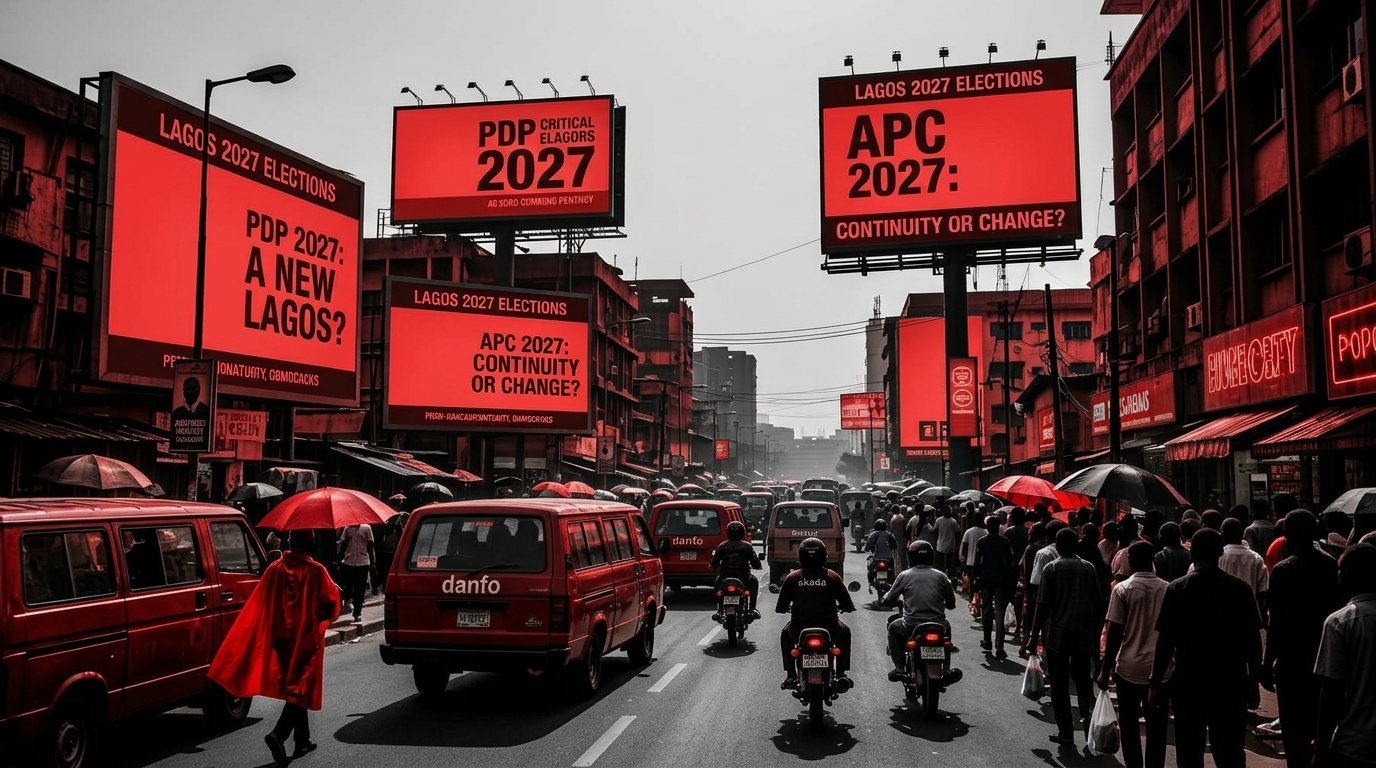
Lagos State is emerging as a major battleground ahead of the 2027 general election. The political twist from the 2023 elections, deepening economic hardship, growing youth-led opposition and concerns over the shrinking democratic space are putting pressure on the ruling party’s once-formidable grip on Lagos.
The state, which has remained President Bola Tinubu’s political stronghold for decades, now faces a more competitive political landscape as opposition forces seek to convert growing public discontent into electoral gains ahead of 2027.
The ruling party, the All Progressives Congress (APC), which lost Lagos to Peter Obi of the Labour Party (LP) in the 2023 presidential election by 9,848 votes, is responding with a restructured campaign operation, more grassroots offices and a membership drive that it says has registered about one million members.
But analysts and residents say the conditions that contributed to the APC’s defeat in 2023 remain in place, with the rising cost of living following a series of economic reforms initiated by the current administration adding to public discontent.

Marcus Eyarhono, a Lagos resident, said Tinubu’s standing among voters had weakened since the last election.
“His (Tinubu) credibility and popularity level as at 2023 was better than it is now, and he didn’t win Lagos, I don’t think he will win now that the government has failed woefully.”
The stakes are high for the APC in Lagos, where Tinubu served as governor from 1999 to 2007 after his Senate stint and built a political network that helped propel the party and its predecessor coalitions to national power.
The state remains Nigeria’s largest electorate, with 7,488,633 registered voters for the 2027 elections.
However, the 2023 presidential election exposed the limits of the party’s traditional dominance. Obi polled 582,454 votes, representing 45.81 percent, against the APC’s 572,606 votes, or 45.04 percent.
The result marked a reversal of the APC’s victories in the state in the 2015 and 2019 presidential elections and raised questions about whether its political machinery could still deliver Lagos for Tinubu.
“Lagos will be a major battleground in the 2027 elections because of its political history, economic importance and entrenched party structures,” said Okoi Obono-Obla, a lawyer and activist.
Shrinking margins, low turnout
Electoral figures show that the APC’s winning margin in Lagos narrowed over the past three presidential elections before the party lost the state in 2023.
In 2015, the APC won 792,460 votes against the Peoples Democratic Party’s 632,327, giving it a margin of 160,133 votes. In 2019, the party secured 580,825 votes against the PDP’s 448,015, reducing its margin to 132,810 votes.
In 2023, the APC’s vote total fell to 572,606, while the LP polled 582,454 to win by 9,848 votes.
The shift occurred despite an increase in registered voters from 5.83 million in 2015 to 7.06 million in 2023. Yet voter turnout remained low, falling from 28.8 percent in 2015 to 18.95 percent in 2019 and 19.08 percent in 2023.
Low participation means that the mobilisation of relatively small groups of voters can influence the outcome, particularly in densely populated urban constituencies where political loyalties are changing.
The factors behind voter abstention include concerns about intimidation, delays in the electoral process, difficulties associated with Permanent Voters’ Card collection and distrust in the electoral system. These factors, alongside the size of the registered electorate, make voter mobilisation a critical test for all parties in 2027.
“The experience of the 2023 election still lingers in my mind. Thugs stopped many people from voting at my polling unit in Isolo,” said Michael Olatunji, a young voter.
Economic hardship and changing voter attitudes
The economic environment is another challenge for the ruling party. The 2023 election took place amid cash shortages and rising living costs, while subsequent reforms initiated by Tinubu have added to the pressure on household budgets.
For voters in Lagos, a major commercial centre where many households depend on daily earnings and small businesses, the effects of inflation and higher transport costs could influence electoral choices.
The question for the APC is whether its campaign organisation can overcome dissatisfaction with the federal government’s economic record or whether voters will again use the presidential election to register their discontent.
Olatunji said he did not vote for the APC in 2023 and remained unconvinced that the party could win his support in 2027, citing economic hardship as a major reason for his opposition.
“Economic hardship alone will not automatically translate into electoral gains for the opposition,” Kemi Okenyodo, executive director of the Rule of Law and Empowerment Initiative, said.
“Voters may be dissatisfied with prevailing economic conditions, but opposition parties must demonstrate that they have credible candidates, a clear alternative and the capacity to mobilise voters at the grassroots.”
Demographic changes may further complicate the party’s efforts. Lagos has a large population of young voters, professionals and residents from different parts of the country. The political consciousness that followed the 2020 #EndSARS protests has also contributed to greater youth engagement with governance and elections.
In 2023, the LP drew support from young voters and diverse communities, winning nine of Lagos State’s 20 local government areas.
Commercial and residential areas such as Amuwo-Odofin, Ojo, Oshodi-Isolo and Ajeromi-Ifelodun contain diverse populations whose voting patterns can shape the contest. The extent to which these voters maintain their political preferences in 2027 will be important for both the APC and its challengers.
Beyond economic conditions and voter demographics, concerns about the political environment in Lagos could influence the contest.
Obi Anuonye, a legal practitioner, said opposition parties faced challenges competing in the state. “Lagos State, a supposedly cosmopolitan state, plays the politics of a shrunken democratic space where the opposition is denied a level playing field.”
Such concerns place the conduct of the campaign and the credibility of the electoral process among the issues likely to shape public confidence ahead of the election.
For the opposition, the task is to convert discontent into votes and sustain the mobilisation that helped it secure a historic victory in 2023.
“The challenge for the opposition in 2027 is whether the different platforms can coordinate their campaigns and mobilise voters around a common strategy,” Obono-Obla, earlier quoted, said. (BusinessDay)
-

 Politics17 hours ago
‘₦70,000 Can Just Buy 50 Litres Of Fuel’ – Atiku Mocks Tinubu’s Relief To Workers
-
News5 hours ago
Tinubu Addressing Longstanding Challenges – Barau Replies Osinbajo
-
News5 hours ago
States hold N264bn UBEC funds as schools struggle
-
Politics5 hours ago
Omission: INEC decides Pantami, Adebutu’s fate today
-
News5 hours ago
TUC Rejects N70,000 Transport Allowance For Workers
-
News4 hours ago
FG defends $21bn borrowing plan, cites infrastructure needs
-
Politics4 hours ago
No ministers paid billions for appointments – APC insists
-
News4 hours ago
Yoruba Group demands Oduduwa Republic, restrictions on non-indigenes