

Business
Chinese car boom puts Nigeria’s repair shops to the test

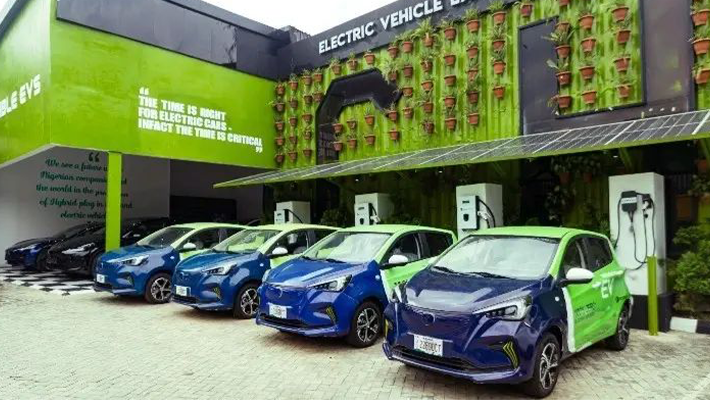
Nigeria’s rapidly expanding market for Chinese-made vehicles is creating new opportunities for car buyers but exposing serious weaknesses in the country’s automotive repair industry, where many mechanics are struggling to keep pace with increasingly sophisticated vehicle technology.
Brands such as Chery, Jetour, Changan, GAC, Geely and BYD are gaining popularity among Nigerian motorists, attracted by their modern designs, advanced features and relatively competitive prices compared with traditional European, Japanese and American brands.
However, the growing popularity of these vehicles is raising concerns about whether Nigeria’s largely informal network of automobile workshops has the technical capacity, diagnostic equipment and spare-parts infrastructure required to maintain them.
According to data from automotive market tracker Focus2Move, Jetour recorded a 340.5 per cent year-on-year increase in sales in the first nine months of 2026. GAC sales grew by 247.2 per cent, while Changan recorded growth of 216.7 per cent. These figures significantly outpaced the overall Nigerian vehicle market, which expanded by 66.8 per cent during the same period.

The rapid expansion is also reflected in Nigeria’s growing dependence on China for automotive components. The country imported $180.34 million worth of motor vehicle parts and accessories from China in 2024, compared with $61.12 million from Japan.
A growing technology gap
Despite the increasing presence of Chinese vehicles, many independent mechanics remain inadequately equipped to handle their sophisticated electronic systems.
Modern Chinese vehicles increasingly rely on computerised control systems, advanced sensors, electronic components and specialised software. Consequently, diagnosing faults is becoming more complicated than traditional mechanical repairs.
Oloruntoba Anate, chief executive officer and co-founder of Automat Hub Limited, told BusinessDay that Nigeria’s repair industry is only partly prepared for the growing number of Chinese vehicles.
He identified limited access to diagnostic equipment, manufacturer-specific software and technical documentation as major obstacles confronting independent workshops.
The situation leaves many mechanics learning through trial and error, increasing the possibility of incorrect diagnoses, expensive repairs and prolonged vehicle downtime.
Spare-parts shortages compound the problem
Beyond technical expertise, the availability of genuine replacement parts remains another major challenge.
Unlike established Japanese brands with extensive spare-parts distribution networks in Nigeria, supply chains for several Chinese automotive brands are still developing.
Mechanics and vehicle owners often face delays sourcing specific components, forcing some to rely on cross-border imports, improvised repairs or potentially substandard replacement parts.
For motorists who have invested millions of naira in these vehicles, the consequences could include higher maintenance costs and extended periods without access to their cars.
Dealerships face pressure to improve after-sales support
Car distributors are increasingly recognising that selling vehicles is only one part of building a sustainable automotive business in Nigeria.
Carloha Nigeria, a distributor of Chery vehicles, says it is investing in local technical expertise, diagnostic capabilities and after-sales infrastructure.
The company disclosed that 85 per cent of its technical workforce are Nigerians, with practical training and support from international engineers.
It also says it maintains three spare units for every routine service item and commonly replaced component for every Chery vehicle on the road.
However, concerns remain about whether manufacturer-backed service networks can expand quickly enough to accommodate the growing number of Chinese vehicles across the country.
A turning point for Nigerian mechanics
The changing automotive landscape presents both a threat and an opportunity for Nigeria’s automobile repair industry.
Mechanics who invest in modern diagnostic equipment, technical training and specialised knowledge could position themselves to benefit from the growing market.
The National Automotive Design and Development Council (NADDC) has identified technical capacity development, mechatronics training and modern diagnostic infrastructure as important parts of its automotive industry development agenda.
The government, vehicle manufacturers and distributors will therefore need to work together to make technical training, genuine spare parts and manufacturer-specific repair information more accessible.
Ultimately, Nigeria’s Chinese car boom will not be measured by how many vehicles enter the market, but by how effectively the country develops the infrastructure and technical expertise required to keep them running.
For Nigeria’s mechanics, the message is becoming increasingly clear: adapting to the new generation of vehicles is no longer optional. It may determine who survives in the country’s changing automobile repair industry. (BusinessDay)
-

 Business6 hours ago
Solar uptake tests DisCos’ revenue model as grid supply falters
-
Business6 hours ago
$19.7b hot money dominates inflows to Nigeria as FDI remains below $1b
-
News5 hours ago
FG tightens payroll checks as salaries gulp N1.96tn
-
News6 hours ago
EFCC disputes claims its lawyer linked Iseghoi-Edwards to fraud
-
Politics6 hours ago
Makinde faults Tinubu’s economic claims in Mecca, says 140m Nigerians live in poverty
-
News3 hours ago
Osborne Foreshore drama: Lagos dep gov locked out by developer
-
News22 hours ago
BREAKING: Court Orders Arrest Of Lagos NURTW Chairman, Mustapha Sego
-
Politics6 hours ago
Oyebamiji leads Osun APC parallel presidential campaign council