Opinion
Billions for Power, Darkness for Nigerians: Tinubu Must Account

By Kehinde Adeleye
In his famous book, The Trouble with Nigeria, the late literary icon Chinua Achebe made an observation that continues to resonate with Nigeria’s development challenges.
He wrote: “The trouble with Nigeria is simply and squarely a failure of leadership.” It is a statement worth remembering when examining the country’s electricity crisis.
In 2023, President Bola Ahmed Tinubu made a bold promise to Nigerians. He said electricity would be provided “by all means necessary”, estimated billing would become a thing of the past, and Nigerians should not give him a second term if he failed to deliver, unless he could provide adequate reasons for his inability to do so.

It was a strong political commitment, not an ordinary campaign soundbite. Tinubu was asking Nigerians to judge his leadership by his performance in one of the country’s most critical sectors.

Almost four years into his administration, however, Nigerians are still waiting for the transformation that accompanied those words.
The All Progressives Congress Presidential Campaign Council, through its spokesperson, Dele Alake, has now argued that the president’s statement had been taken out of context. Alake insisted that Tinubu’s qualification about providing reasons for any failure should also be considered. He pointed to the Electricity Act 2023, metering initiatives, transmission investments and the settlement of legacy debts as evidence of the administration’s efforts.
Those interventions deserve examination. But they do not answer the central question: has electricity supply improved sufficiently to match the confidence of the president’s campaign promise?
Political defenders may interpret the statement in whichever way they consider convenient. They may explain the difficulties, highlight policies and point to inherited problems. But Nigerians are entitled to assess the government by its results.

A campaign promise should not require political interpreters every time citizens demand accountability.
THE BILLIONS AND THE RESULTS
The scale of public expenditure on the power sector makes the question even more important.
A BudgIT analysis put the 2024 allocation to the Ministry of Power and its relevant budget structure at approximately ₦418.37 billion. Its analysis of the 2025 budget placed allocations across the Ministry of Power and related agencies at about ₦1.896 trillion. For 2026, The EaglesPath reported a proposed allocation of approximately ₦1.107 trillion for the ministry and its agencies.
Nigerians deserve to know what these commitments have achieved. How much has been invested in strengthening transmission infrastructure? Which substations have been upgraded? What measurable improvement has been recorded in generation and distribution? How many consumers have received functional meters?
The government cannot expect citizens to be impressed by budget figures without demonstrating the improvements those figures have produced.
Public expenditure must deliver public value. That is the standard by which the administration should be judged.

A GRID THAT KEEPS FAILING
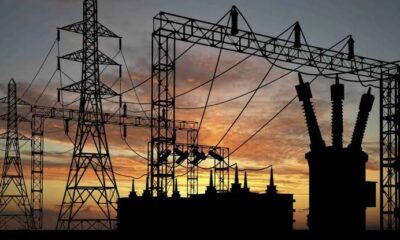
The national grid’s instability remains one of the clearest measures of the country’s electricity challenge.
In 2024, Nigeria reportedly experienced 12 national grid collapses, with incidents recorded in February, March, April, July, August, October, November and December.
In January 2026, the grid suffered two further reported collapses within four days, on January 23 and January 27.
There have also been serious system disturbances. On October 19, 2026, the Nigerian Independent System Operator reported multiple trippings on the 330kV transmission network, with electricity generation falling from approximately 3,840MW to 477MW. NISO clarified that the incident was a partial disturbance, not a nationwide collapse.
The distinction matters. Not every disturbance should be described as a total grid collapse. But the wider concern remains: the country’s electricity infrastructure continues to struggle with reliability.
Nigerians have become familiar with the language of the power sector: system failure, generation shortfall, transmission fault and grid disturbance. What they want is much simpler: electricity they can depend on.
For many households and businesses, the generator is no longer a backup appliance. It is practically a permanent member of the family, with petrol as its feeding allowance.
The joke, however, becomes less amusing when the cost of fuel, maintenance and electricity bills is considered. Businesses are forced to spend more to remain operational, while households carry the burden of paying for a service they cannot reliably enjoy.
ASO ROCK’S SOLAR ESCAPE
The Federal Government’s decision to solarise the Presidential Villa presents another uncomfortable question.
Reports indicated that the State House completed its solar installation towards the end of 2025, as part of efforts to reduce its dependence on the national grid. The project attracted ₦10 billion in the 2025 budget, while a further ₦7 billion was provided for it in the 2026 budget proposal.
The Director-General of the Energy Commission of Nigeria, Mustapha Abdullahi, defended the investment, reportedly citing an estimated annual electricity bill of ₦47 billion for the Presidential Villa.
There is nothing wrong with adopting solar energy. It is a viable alternative that government institutions and households should be encouraged to explore.
The irony, however, is difficult to ignore. While the government is investing billions to guarantee a more reliable electricity arrangement for the Presidential Villa, millions of Nigerians remain dependent on an unstable national grid.
If Aso Rock considers an independent power arrangement necessary, what confidence should ordinary citizens have in the reliability of the national system?

The Presidential Villa deserves uninterrupted electricity. So do public hospitals, schools, factories, small businesses and ordinary homes. Reliable power should not become a privilege reserved for institutions with the resources to provide their own alternatives.
ACHEBE’S QUESTION OF LEADERSHIP
It would be unfair to suggest that Tinubu created Nigeria’s electricity crisis. The sector’s problems predate his administration and include decades of inadequate investment, weak infrastructure, gas supply constraints and institutional failures.
But inheriting a problem does not absolve a president of responsibility for addressing it.
The Electricity Act 2023 opened the door for states to establish their own electricity markets and attract investment. The administration’s metering and transmission initiatives are also relevant. However, policies must ultimately be assessed by their impact on people’s lives.
As William Shakespeare wrote in The Tempest, “What’s past is prologue.”
Nigeria’s history of electricity failures should inform the present administration’s response, not become a permanent excuse for the absence of meaningful progress.
Leadership requires more than identifying inherited problems. It demands the ability to confront them, demonstrate results and accept responsibility when commitments are not met.
WHAT WILL ANOTHER FOUR YEARS CHANGE?
As the 2027 general election approaches, Tinubu’s electricity promise should remain part of the national political debate.
The question is straightforward: if the administration has spent almost four years in office without delivering the level of improvement Nigerians expected, what should convince voters that another four years will produce a substantially different outcome?
A second term cannot simply become an extension of explanations offered during the first. Nigerians need evidence of progress, measurable targets and a credible plan for the problems that remain.
The president himself invited citizens to judge his performance against his electricity commitment. That invitation should not be forgotten or reinterpreted out of existence.

The President and it’s handler must understand that an explanation is not electricity. A policy announcement does not power a factory, illuminate a classroom or reduce the cost of running a business.
Tinubu is entitled to defend his record, just as his political opponents are entitled to criticise it. Ultimately, however, voters must make their judgment based on performance, not political loyalty.
The president made a promise. Nigerians remember it.
At this point, Nigeria does not need another electricity campaign slogan. It needs reliable power, fair billing and a government prepared to account for the billions committed to the sector.
The darkness is real. So must be the accountability.
-

 News11 hours ago
₦70,000 Transport Allowance Shows Tinubu Cares About Workers – Oshiomhole
-
News11 hours ago
We’re Being Harassed Over Yahaya Bello’s Case – EFCC
-
News11 hours ago
Coup: Court rejects suspects’ torture claims, admits statements
-
Business11 hours ago
Lagos summons power operators over erratic electricity supply
-
Business11 hours ago
Power outage, low credit slow businesses — NESG
-
Politics11 hours ago
2027: INEC Chair Raises Alarm Over Voter Apathy, Says Poll Will Hold As Scheduled
-
Politics11 hours ago
Despite Court’s Ruling, Crowd Flood Birnin Kebbi Rally For Atiku
-
News11 hours ago
South Africans Leading Drug Trafficking Cartel In Nigeria – NDLEA