Business
Households to pay more for cooking gas as gantry price hits N1000/kg

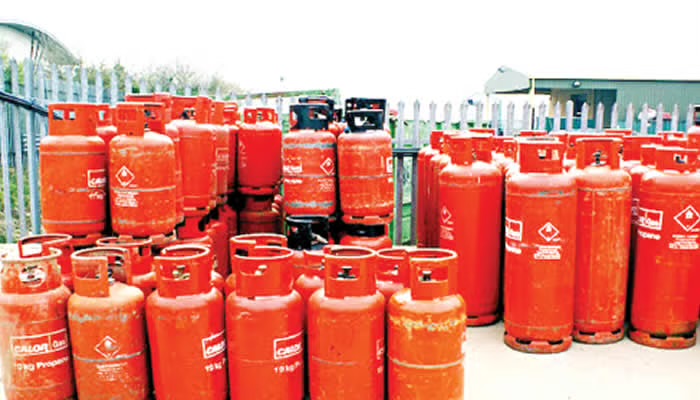
Nigerian households, restaurants and small businesses face fresh pressure on cooking costs after Dangote Refinery increased its liquefied petroleum gas (LPG) gantry price by 8.1 percent to N1,000 per kilogram from N925.
The N75 increase raises the prospect of further retail price adjustments in an already expensive household energy market.
The N75 increase comes as wholesale prices across major Lagos depots remain elevated, creating conditions for further retail price adjustments and pushing up Nigerian’s financial burden.
Latest price checks by BusinessDay showed that all five monitored Lagos depots, Navgas, 11Plc, Nipco, Techno Oil and Rain Oil, were selling LPG at N1,450 per kilogram as of November 5.

The depot price is N450 above Dangote’s new gantry price. However, the two prices are not directly comparable, as depots source products through imports and other supply channels and incur additional handling, storage and financing costs.
At N1,450 per kilogram, refilling a 12.5-kilogram cylinder would cost about N18,125 at the depot price alone, excluding transportation, retailer margins and other charges. A five-kilogram cylinder would cost approximately N7,250 on the same basis.
Dangote’s latest adjustment is significant given the refinery’s growing influence on Nigeria’s domestic petroleum products market. An increase in its supply price could feed into distributors’ and retailers’ cost structures, particularly when competing wholesale suppliers are already charging elevated prices.
For millions of households that have switched to LPG as an alternative to firewood, charcoal and kerosene, further price increases could undermine efforts to expand access to cleaner cooking fuels.
The development also shows the disconnect between rising domestic LPG production and the persistence of high consumer prices.
Data from the Nigerian Midstream and Downstream Petroleum Regulatory Authority (NMDPRA) showed that domestic LPG supply increased by 17.78 percent to 4.5 million litres daily in September 2026, from 3.7 million litres in the corresponding period of 2025.
Supply also rose from 3.375 million litres daily in August to 4.5 million litres in September, suggesting improved availability of locally produced cooking gas.
However, the increase in domestic supply has yet to translate into lower wholesale prices, leaving households exposed to the effects of higher supply costs and distribution expenses.
Oladapo Olatunbosun, former national president of the Nigerian Association of Liquefied Petroleum Gas Marketers, attributed the improvement in domestic supply to increased local production but stressed the importance of sustained investment and government support to prevent shortages.
“Production is improving, but affordability remains a challenge,” Olatunbosun said.
Industry operators said the refinery’s adjustment is only one part of the cost pressures confronting the LPG market, with transportation, loading charges, financing and distribution expenses also influencing the final price paid by consumers.
Inyang Edu, national president of the Nigerian Association of Liquefied Petroleum Gas Marketers (NALPGM), previously identified international energy prices, shipping and insurance costs, foreign-exchange exposure and domestic logistics as major factors influencing cooking gas prices.
He explained that rising replacement costs at depots leave marketers with little room to maintain existing retail prices without incurring losses.
“When the replacement cost of LPG rises at the depot, the marketer cannot continue selling at the previous price without making a loss,” Edu said in September.
He added that transportation, loading, financing, plant operations, personnel and maintenance costs must be recovered before the product reaches consumers.
Edu also warned that the consequences extend beyond household budgets, noting that restaurants, bakeries, food vendors, schools and hotels increasingly depend on LPG for their daily operations.
The warning is particularly relevant as Nigerian businesses continue to grapple with higher operating expenses, including electricity, transportation and food inputs.
Emmanuel Omuojine, managing director of Rainoil, also identified international supply disruptions, freight expenses and domestic market constraints as important drivers of LPG price volatility.
He explained that Nigeria’s cooking gas market has historically relied on a combination of local production and imports, leaving domestic prices exposed to international supply movements.
Nigeria consumes approximately 1.6 million metric tonnes of LPG annually, with imports historically accounting for about 40 percent of demand, according to Omuojine.
Cooking gas has become an important component of household expenditure, particularly in urban centres where families increasingly depend on LPG rather than traditional fuels.
NALPGM has repeatedly warned that persistent price increases could reverse progress in the country’s clean cooking transition.(BusinessDay)
-

 News8 hours ago
₦70,000 Transport Allowance Shows Tinubu Cares About Workers – Oshiomhole
-
Sports24 hours ago
Ronaldo retires from Portugal national team
-
Metro22 hours ago
Residents Petition Lagos Govt, Police Over Killings In Oko-Agbon, Iwaya, Demand Arrest Of Alleged Masterminds
-
Politics8 hours ago
Despite Court’s Ruling, Crowd Flood Birnin Kebbi Rally For Atiku
-
News7 hours ago
South Africans Leading Drug Trafficking Cartel In Nigeria – NDLEA
-
Business7 hours ago
Lagos summons power operators over erratic electricity supply
-
News7 hours ago
Coup: Court rejects suspects’ torture claims, admits statements
-
Business8 hours ago
Power outage, low credit slow businesses — NESG