
Politics
US Midterms Show Why Nigeria’s 2027 Elections Could Hinge on Economic Hardship

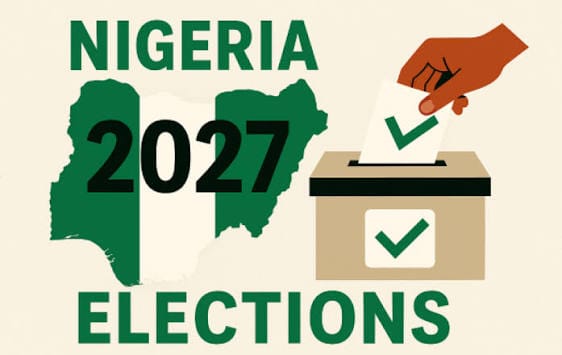
The outcome of the 2026 United States midterm elections offers an important political lesson for Nigeria as the country moves towards its 2027 general elections: economic performance can become a decisive factor in determining the political fortunes of an incumbent government.
The Democratic Party’s victory in the US midterms, in which it secured control of both the House of Representatives and the Senate, represented a significant setback for President Donald Trump and the Republican Party. Among the major issues shaping the outcome was widespread voter dissatisfaction with the cost of living, inflation and the direction of the American economy.
Although the election was influenced by several political and social issues, economic dissatisfaction featured prominently. According to an Associated Press voter poll, nearly nine in 10 voters considered the cost of living a major or crucial factor in their voting decisions. Many also expressed dissatisfaction with Trump’s economic policies, particularly their perceived contribution to rising prices.
The message from American voters is one that Nigeria’s political class cannot afford to ignore.

With Nigeria approaching another presidential election in 2027, President Bola Tinubu’s administration faces a similar political challenge: convincing citizens that its economic reforms are improving their lives, rather than merely producing better figures on government balance sheets.
Since assuming office in May 2023, Tinubu has implemented far-reaching economic reforms, including the removal of petrol subsidies and the unification of the foreign exchange market. The government has consistently defended these policies as necessary measures to correct structural weaknesses, improve government revenue, attract investment and stabilise the economy.
There have been improvements in some macroeconomic indicators, including foreign reserves, economic growth and inflation trends. However, the central political question remains whether these improvements are translating into better living conditions for ordinary Nigerians.
For millions of households, the immediate economic realities remain difficult. High food prices, expensive transportation, rising energy costs, weak purchasing power and the struggle to meet basic household expenses continue to shape public perceptions of the economy.
This creates a significant political challenge for the ruling All Progressives Congress (APC).
The Nigerian electorate may not necessarily judge the administration solely by GDP growth, foreign exchange stability or increased government revenue. Voters are more likely to consider what they can afford, how much they earn, the cost of feeding their families and whether their standard of living has improved.
In other words, economic statistics may provide the government with evidence of progress, but household experiences will influence how that progress is received.
The danger of confusing economic recovery with improved living standards
One of the important lessons from the American midterms is that a government can defend its economic policies with impressive arguments and still face voter dissatisfaction when citizens do not feel the benefits.
Nigeria’s situation presents a similar dilemma.
The Tinubu administration argues that its reforms are laying the foundation for a stronger and more sustainable economy. Supporters maintain that the country cannot continue postponing difficult decisions and that the benefits of the reforms require time to become fully visible.
Critics, however, argue that the social cost of the reforms has been excessive and that government interventions have not sufficiently protected vulnerable households.
Both arguments will become increasingly important as political campaigns intensify.
For the opposition, economic hardship provides an opportunity to question the government’s priorities, demand accountability and present alternative economic policies.
For the APC, the challenge is to demonstrate measurable improvements in household incomes, food affordability, employment opportunities and the general cost of living before voters return to the polling stations.
2027 could become a referendum on the economy
Nigeria’s political environment is different from that of the United States. Ethnicity, religion, regional calculations, party structures, candidate popularity, insecurity and political alliances all influence electoral outcomes.
Consequently, economic hardship alone will not determine the outcome of the 2027 elections.
However, it could become a powerful issue cutting across these traditional political divisions.
A struggling household in Lagos, a trader in Kano, a farmer in Benue and a civil servant in Abuja may have different political preferences, but the cost of food, transportation, housing and electricity represents a common concern.
The opposition will likely attempt to turn these shared frustrations into a broader argument about governance and economic priorities. The ruling party, meanwhile, will have to explain why the sacrifices Nigerians have endured should translate into continued political support.
The stakes are particularly high because the administration’s economic reforms have become closely associated with Tinubu’s presidency. The president cannot entirely separate his political fortunes from the public’s assessment of their consequences.
Ultimately, the American midterm experience demonstrates that electoral loyalty is not necessarily permanent. Political parties can lose support when voters believe their economic circumstances have deteriorated or that government priorities are disconnected from their everyday struggles.
For Nigeria, the lesson ahead of 2027 is clear: economic reforms may be necessary, but their political sustainability will depend significantly on whether ordinary citizens begin to experience tangible improvements.
The question facing Tinubu is no longer simply whether his reforms are producing better economic indicators. It is whether Nigerians will feel sufficiently better off to believe that the sacrifices were worth it when they vote in 2027.(BusinessDay)
-

 Politics23 hours ago
BREAKING: Court sacks Mark-led ADC NWC, nullifies Atiku’s candidacy
-
News5 hours ago
₦70,000 Transport Allowance Shows Tinubu Cares About Workers – Oshiomhole
-
News22 hours ago
Kidnappers demand N25m for nine corps members, driver abducted in Ogun
-
Metro20 hours ago
Residents Petition Lagos Govt, Police Over Killings In Oko-Agbon, Iwaya, Demand Arrest Of Alleged Masterminds
-
Politics22 hours ago
2027: APC taking Nigeria backwards – Utomi tells voters
-
Metro22 hours ago
Judge recuses self from Lagos Country Club leadership suit
-
Politics21 hours ago
BREAKING: ADC rejects judgment nullifying Atiku’s candidacy, accuses APC of plotting to destabilise Nigeria
-
Sports21 hours ago
Ronaldo retires from Portugal national team