
Business
BUA Cement, Nigerian Breweries Retreat From National Grid as Nigeria’s Electricity Crisis Deepens

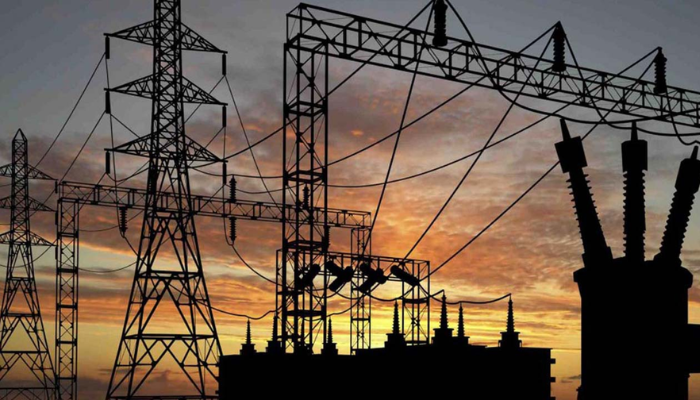
Nigeria’s worsening electricity crisis is increasingly forcing some of the country’s biggest industrial companies to seek alternatives to the national electricity grid, with BUA Cement and Nigerian Breweries Plc among the latest companies investing in independent power generation.
The development highlights the growing frustration among manufacturers over unreliable electricity supply, rising energy costs and the difficulty of sustaining large-scale industrial operations with inconsistent power.
BUA Cement secured a 12-megawatt (MW) captive power generation permit for its Sokoto operations, while Nigerian Breweries obtained approval for an 8.02MW captive power facility for its Kaduna operations.
The approvals were granted by the Nigerian Electricity Regulatory Commission (NERC) as part of a wider increase in independent electricity generation among Nigerian businesses.

According to reports on the regulatory approvals, 10 companies and institutions obtained captive generation permits between January and June 2026, with a combined approved capacity of 54.94MW.
Why BUA Cement and Nigerian Breweries are turning away from the grid
For companies operating in energy-intensive industries, uninterrupted electricity is critical to production.
BUA Cement requires substantial electricity to operate its manufacturing equipment, grinding mills and other industrial machinery. Similarly, Nigerian Breweries depends on reliable electricity to sustain brewing, refrigeration, packaging and distribution operations.
Frequent power interruptions can disrupt production, increase operating costs and affect the competitiveness of locally manufactured products.
By investing in captive power generation, both companies can exercise greater control over their electricity supply and reduce their dependence on the national grid.
However, obtaining captive generation permits does not necessarily mean that either company has completely disconnected from the national grid. Rather, it allows them to generate electricity for their own consumption.
Nigerian Breweries’ growing investment in independent power
Nigerian Breweries has previously invested in alternative electricity generation across its operations.
Reports in January 2025 indicated that the company’s captive power generation capacity across four stations had reached approximately 41MW.
Its latest 8.02MW approval for Kaduna further illustrates the company’s strategy of strengthening independent energy supply for its manufacturing operations.
For a major beverage manufacturer, energy reliability is essential to maintaining production efficiency, protecting inventory and meeting consumer demand.
A costly alternative for manufacturers
The increasing movement towards independent power generation comes at a significant financial cost.
Nigeria’s manufacturers are already spending enormous amounts on diesel, gas and other alternative energy sources to keep their factories running.
The Manufacturers Association of Nigeria reported that its members spent approximately N1.34 trillion on alternative energy in 2025, compared with N1.11 trillion in 2024.
This represents a 20.72 per cent increase in just one year.
The implication is that Nigerian manufacturers are increasingly carrying the additional financial burden of providing electricity that should ordinarily be available through the national power market.
These costs ultimately affect production expenses, investment decisions and potentially the prices consumers pay.
What happens to Nigeria’s national grid?
Perhaps the most troubling aspect of this development is what it means for the long-term sustainability of Nigeria’s electricity market.
Large industrial consumers are important customers for electricity distribution companies because of their relatively high and consistent consumption.
When major manufacturers increasingly generate their own electricity, distribution companies risk losing valuable customers and revenue.
This could worsen the financial difficulties confronting distribution companies and place additional pressure on the electricity market.
It also raises concerns about the ability of the national grid to attract the investment required to improve electricity supply.
A failure of electricity reform?
Nigeria privatised its electricity distribution and generation companies in November 2013, with the expectation that private-sector investment would improve efficiency, expand infrastructure and deliver more reliable electricity.
More than a decade later, businesses and households continue to grapple with unreliable supply.
The growing investment in captive power generation by major companies suggests that, for some manufacturers, generating electricity independently is becoming a more dependable business strategy than relying entirely on the national grid.
The Tinubu administration and electricity regulators therefore face a major challenge: rebuilding confidence in a power sector that continues to struggle to provide reliable electricity to the productive economy.
The bigger question
BUA Cement and Nigerian Breweries are not isolated cases. Their decisions reflect a wider trend in which Nigerian businesses are increasingly taking responsibility for their own electricity needs.
While independent generation may protect individual companies from the consequences of an unreliable grid, it does not solve Nigeria’s underlying electricity problem.
Indeed, a country where major manufacturers must invest heavily in their own power infrastructure to remain competitive faces a serious economic challenge.
The fundamental question is no longer simply why Nigerian businesses are generating their own electricity. It is why, after years of electricity-sector reforms, the national grid is still unable to provide the dependable power required to sustain Nigeria’s industrial economy.
-

 Metro9 hours ago
Court scolds EFCC, discharges Mompha over alleged N6 billion money laundering
-
Metro23 hours ago
Madonna University: 15 nursing students beg for expulsion, suspension reversal over TikTok video
-
Politics9 hours ago
Manifesto: Tinubu reforms will be difficult to reverse by 2031 – APC
-
Business9 hours ago
NERC Approves N30bn To Meter Band A, B Customers
-
News9 hours ago
FG raises the alarm over carbide-ripened fruits, paracetamol-treated meat in markets
-
Politics9 hours ago
Tinubu Can Go To Sleep, 2nd Term A Done Deal In North – Yari
-
Politics9 hours ago
2027: ‘A Lie’ – Lamido Shoots Down Shettima’s Claim Of Backing APC
-
News9 hours ago
Mambila, 21 dams to drive Nigeria’s 20,000MW power target – Minister