Business
Digital Economy: 15% Of Young Nigerians Are Online App Workers – Report

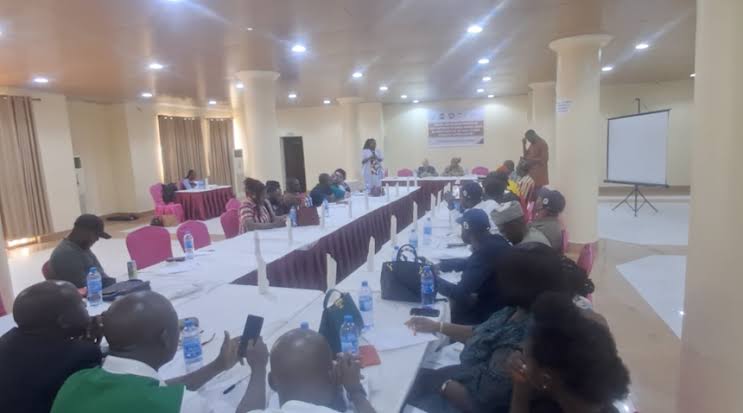
latest report by the German international agency, GIZ, the International Trade Unions Confederation, ITUC African Regional Office and the Nigeria Labour Congress, NLC say over 15% of active young Nigerians are currently engaged in one form of platform economy work or the other.
This was made known in Abuja, the nation’s capital at a crucial roundtable on the future of app-based and platform work in Nigeria, which focused on the rights, pay and safety of hundreds of thousands of Nigerians who earn a living through apps.
Every day in Lagos, Abuja, Port Harcourt, Kano, Enugu and other major cities in Nigeria, hundreds of thousands of Nigerians log into an app to drive passengers, ride motorcycles, deliver food and parcels, and do digital tasks.
But behind the screen and the steering wheel, many of them still cannot answer basic questions: Who is my employer? How is my pay set? Why was I deactivated? Who do I speak to when something goes wrong? Why was i harassed by the police and many more?

It was to answer these questions that the NLC in partnership with the International Trade Union Confederation (ITUC-Africa), ILO, GIZ and other development partners, convened the Sectoral Roundtable with Platform and Digital Workers in Abuja
First, to listen and document the real concerns of app-based workers, their earnings, long hours, road safety, insurance, health, and the fear of sudden account suspension.
Second, to debate responsibilities; what platforms owe, what workers can organise to secure, and what government must provide and enforce.
And third, to use the new international standard, the ILO Decent Work in the Platform Economy Convention Number 193, as a guide.
Adopted in June, 2026 the new convention 193 recognises that work organised through platforms is work, and it speaks to algorithmic management, classification and protection of workers.
However, what became clear to this gathering was that the Convention only binds a country after ratification, and Nigeria has not yet taken that step. The Nigerian government gives further clarification over the delay.
By the end of the roundtable, organisers hope to produce two things: A worker-owned statement of priority demands, written in the voice of platform workers themselves.
And where consensus permits, a joint Abuja Common Position, with specific, time-bound follow-up actions that name who will do what.(Ait)
-

 Business14 hours ago
Food inflation exceeds 20% in 19 Nigerian states
-
Politics14 hours ago
2027: Outrage over widespread billboard attacks
-
Politics14 hours ago
Rarara: APC youth group urges calm, demands justice
-
Politics14 hours ago
‘Obi is my candidate’ — Omo-Agege dismisses ‘old’ video endorsing Tinubu
-
News14 hours ago
FG may raise N20,000 NELFUND student allowance — Official
-
Politics14 hours ago
North-West commission urges Nigerians to consider Tinubu’s projects ahead of 2027 elections
-
Politics14 hours ago
Attack on Rarara could trigger voter apathy, says APC chieftain
-
Business14 hours ago
Dangote IPO is a chance to rethink financial inclusion