
Opinion
Six questions seeking answers in 2027 presidential election

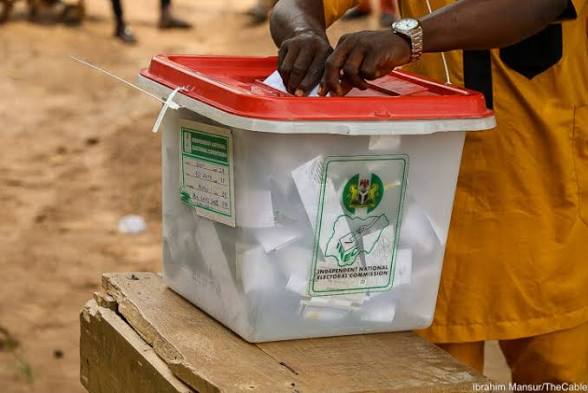
Having studied the voting patterns in Nigeria’s presidential elections from 1979 to 2023, I am intensely interested in the 2027 contest. I confess that my interest is mainly academic: I want to get answers to the six questions below to enrich my knowledge of our electoral politics. I desire to gain more insight into the political behaviour of the electorate. In my newly released book, ‘Winning Formula’, I devote considerable space to analysing the voting blocs, the motivations behind the choices of voters, and the electoral arithmetic. I expect the race to test my postulations about whether or not the outcomes of presidential elections are fairly predictable based on precedence.
Question No. 1: Can the north alone determine who will be president?
One common assertion is that if the north does not give a majority of its votes to a candidate, then he or she can never win. This may be true or false, depending on how the north is defined. If the entire northern region is taken as one, that statement will most likely be true. For practical purposes, though, it is the core north — dominated by the Hausa-Fulani and sometimes extended to the Kanuri — that is usually referred to as “the north” in this assertion. States like Kwara, Kogi, Benue, Plateau, Nasarawa and Taraba are viewed differently as they sometimes deviate from the dominant northern voting pattern.
And this is where the assertion breaks down.

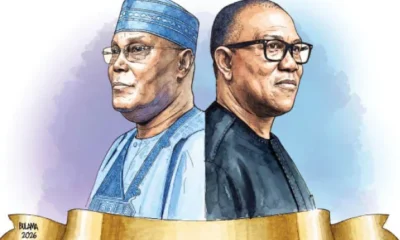
Since 1999, successful candidates have always won substantial votes in at least two of the Big Three: the core north, the south-east (Igbo-dominated) and the south-west (Yoruba-dominated). The core north backed Muhammadu Buhari in 2003 and 2011. He polled roughly 10 million votes there each time but still failed to get elected as president. He needed one more tripod bloc to augment the core north. Alhaji Atiku Abubakar, the ADC candidate, is again relying heavily on the core north in 2027, even though the bloc alone could not carry the vote-winning machine known as Buhari until he finally made inroads into the south in 2015. Can Atiku buck the trend? We will find out in January.
Question No. 2: Will Nigerians re-elect President Bola Tinubu in spite of the economic hardship?
The dominant issue in this election, as we can see, is the economic hardship aggravated by Tinubu’s signature reforms that ended petrol and forex subsidies. The ensuing cost-of-living crisis has been felt disproportionately by millions of poor Nigerians, who constitute the bulk of those who will vote on January 16, 2027. Atiku promised to introduce a “targeted” petrol subsidy, and it has become a major campaign refrain. Mr Peter Obi, the NDC candidate, also promised to restore the subsidy, vowing to tackle the scam involved thereafter. Tinubu, meanwhile, is firmly standing his ground on the policy.
To the people on the street, petrol subsidy is a key measure of their economic well-being and a gauge of how much the government cares about them. Will they revolt with their votes? In ‘Winning Formula’, my take is that party affiliation and primordial emotions have the biggest impact on Nigerian voters. I further argue that manifestoes, economic policies and “stomach infrastructure” are not as influential at the ballot as we suppose. President Goodluck Jonathan even reduced the price of petrol before the 2015 election but still lost. In 2019, Nigerians cried over inflation, recession and insecurity but Buhari still got re-elected. I really want to learn more about this mystery in 2027.
Question No. 3: Can a party with 31 governors lose the presidential election?
One noteworthy thing Tinubu did on assuming office in 2023 was to consolidate his hold on power by expanding the grip of the APC. From having 20 governors in 2023, the APC now controls 31 states, mostly via defections. This, we may wish to admit, looks intimidating. But, as some politicians and analysts have warned, it was the governors, not the people, that defected. In the final analysis, it is said, the governor has only one vote. Still, Tinubu will be optimistic of finishing first or second in those 31 states, as well as secure a minimum of 25 percent each of them. In Nigerian elections, governors are the field officers.
There is a bit of good news for the ADC and the NDC: before the 2015 presidential election, the PDP controlled most of the states, yet the APC came from behind to displace the party from federal power. Perhaps 2027 will offer an opportunity for a repeat of the 2015 feat. The bad news, though, is that as of today, the ADC and the NDC — the leading opposition parties — do not control any state. No party has won the presidential election without controlling a single state. A governor seeking re-election is not just campaigning for his party to win the presidency but is also fighting for his own life. If another party wins the presidency, the bandwagon can sweep the governor out three weeks later.
Question No. 4: Can a divided opposition unseat an incumbent?
I have been arguing since 2007 that the ruling party could only be unseated by a united opposition. When Nigeria broke away from a two-horse race in 2003, several opposition parties cropped up and what this did was to give the PDP, the ruling party, an easy ride. The 2007 election was basically a walkover for the PDP but it was so badly managed by INEC that many came away with the impression that it was all about rigging. Many of us who covered the election would say even in a properly conducted poll, it would have been extremely difficult for any other candidate to defeat Alhaji Umaru Musa Yar’Adua, the PDP flagbearer.
Yar’Adua’s strongest opponent was Buhari. Atiku, who had been practically pushed out of the PDP by President Olusegun Obasanjo, flew the flag of Tinubu’s Action Congress (AC), a party that was mostly limited to Lagos at the time. In 2011, a fractured opposition faced the PDP again. The ruling party won another term, making it 16 unbroken years. In 2015, the biggest opposition parties finally united under the APC flag, and, joined by a faction of the PDP, defeated a sitting president. That was a first. But the PDP, as the new opposition, became fractured before 2023 and the APC retained power. Will the outcome be different in 2027 with the opposition divided again? I am eager to learn something.
Question No. 5: Will the north-central be a bellwether for the eighth consecutive time?
Every winner of the presidential election has also always topped the poll in the north-central. Do not misread that: it does not mean a candidate must win the zone to be president. Mathematically, most winners would still have been top if their votes in the zone had been chalked off. It just happens that all successful candidates since 1999 have always won the zone: Obasanjo in 1999 and 2003, Jonathan in 2011, Buhari in 2015 and 2019, and Tinubu in 2023. I am sure Yar’Adua won big in the north-central zone in 2007 because the PDP owned the zone, but INEC did not break down the result.
The north-central is an interesting zone. It is often confused with the Christian north, otherwise known as the “Middle Belt”. However, the Christian north cuts across the entire northern region. The north-central zone cannot be classified as Muslim or Christian. Only Plateau and Benue are Christian-dominated. Kwara and Niger are predominantly Muslim. Kogi and Nasarawa are mixed. Moreover, there are several ethnic groups in the zone. Its diversity perhaps positions it as a strategic zone but this still does not explain why every successful presidential candidate has won there. Buhari beating Jonathan in the north-central in 2015 was one of the overlooked highlights of the zone’s peculiarity.
Question No. 6: Will a presidential election finally go into a run-off?
Since we started this system in 1979, no election has gone into a run-off. The winner has always been determined at the first attempt under the constitutional requirements. That is, scoring the highest number of valid votes and getting a national spread: at least 25 percent of the votes in at least two-thirds of the 36 states (and the FCT). If no one meets these two conditions, a run-off will be held between two candidates as determined by the constitution. If the spread requirement is still not met, a second run-off will be conducted and the candidate with the simple majority of the votes will be declared the winner.
Only in 1979 did we get close to a run-off when Alhaji Shehu Shagari met the 25 percent threshold in 12 out of the 19 states as of then. Chief Obafemi Awolowo argued that two-thirds should be 13, not 12. The Supreme Court ruled in favour of Shagari in the famous “twelve two-thirds” judgment. Since then, there has never been a close call. For the 2027 election not to go into a run-off, my calculation would be that if Tinubu, Atiku and Obi do extremely well in their respective home blocs, the north-central and the south-south could hold the balance of power. If the race goes into a run-off, I foresee an alliance between Atiku and Obi, which will not be good news for Tinubu. Interesting times ahead.
Finally, while my research interest in 2027 will be broad, I am curious about how the top candidates will share the votes. Will the votes be more fragmented than they were in 2023? Will the Peter Obi/Rabiu Musa Kwankwaso ticket be competitive in two of the Big Three? Will the Atiku/Rotimi Amaechi ticket get substantial votes in more than one tripod bloc? Will the Tinubu/Kashim Shettima ticket be competitive in two blocs again? And whom will the north-central support this time around? I am thinking either 2027 will follow the same voting patterns we have observed since 1999 or something exceptional is about to happen. I am here for the tension and the drama. Wish me luck.
AND FOUR OTHER THINGS…
PETE EDOCHIE (1947-2026)
Pete Edochie, legendary actor and broadcaster, has died at the age of 79, taking with him an artistry laced with panache and sagacity. I first encountered his art in the 1980s in ‘Things Fall Apart’, a TV adaptation of the groundbreaking novel by Chinua Achebe which was aired on NTA on Saturday nights, as I recall. Edochie was not an ordinary actor: he was one of the few whose screen persona went with them in real life. He commanded respect without demanding it. I am glad the family went un-African by revealing the cause of his death — prostate cancer, not the usual “brief illness”. Such openness can help raise awareness and encourage men to take their health more seriously. Adieu.
STOP THE VIOLENCE
My condolences to the families of those who have been killed in political violence across the country, particularly the sad incident in Delta state. Four members of the NDC and two APC supporters were reportedly killed. What are security agencies doing to protect freedom of association and ensure peace and safety? When is this bloodletting over politics going to stop? Can our political influencers please tone down their war rhetoric? As we know, they and their children will rarely be at the scene of the killings; it is lowly Nigerians that will always be the victims. I have said this before and will say it again: no Nigerian politician is worth dying for. You will just die for nothing. Life goes on. Reality.
TOUCH AND GO
Alhaji Umar Faruk Umar, the 90-something-year-old Emir of Daura, has been in the news for the wrong reasons following an allegation by a foreign tourist who had visited his palace. She wrote: “It was strange for me that he grabbed my hand and started playing with it. Then when we stood up, he hugged me, kissed my cheek (which was also surprising for me), and then he grabbed my boobs.” The emir has his defenders, but one question they have ignored is: under Sharia, can an emir be alone in a room with a female who is not a member of his family? Champions of religious morality should be equally interested in holding religious and traditional authorities accountable. Haram.
NO COMMENT
Chief Bode George, former deputy national chairman of the Peoples Democratic Party (PDP), issued a statement during the week questioning Alhaji Atiku Abubakar’s repeated presidential bids. Officially, Atiku has contested for presidential tickets in 1993, 2007, 2011, 2015, 2019, and 2023 — and was thrice a candidate: 2007, 2019 and 2023. He is a candidate in the 2027 presidential election, barring any legal obstacle. But George has a proposal for the ADC flag bearer: “I want to advise him to forget his presidential ambition next year. He should return in 2031 when the seat returns to the north. By then, he will be close to 85 and Nigerians will decide if they want to vote for him or not.” Ouch!
•Written By Simon Kolawole
-

 News24 hours ago
N78.8b cash transfer queries spark legal battle at ECOWAS Court
-
Politics24 hours ago
You Can’t Win Sympathy Through Blackmail – Kano Govt Replies Kwankwaso
-
Business24 hours ago
Dry Season: Farmers Face Rising Cost Of Cultivation, Insecurity
-
News24 hours ago
Schoolchildren battle killer heat
-
Politics24 hours ago
2027 alliance: Atiku or Obi?
-
Politics24 hours ago
Furore over ‘rig and die’ slogan
-
Politics24 hours ago
Election Riggers Should Not Be Killed – Fashola
-
News4 hours ago
Canadian agency stops accepting certificates from four Nigerian varsities