Opinion
The politics, economics and symbolism of US strikes in Nigeria

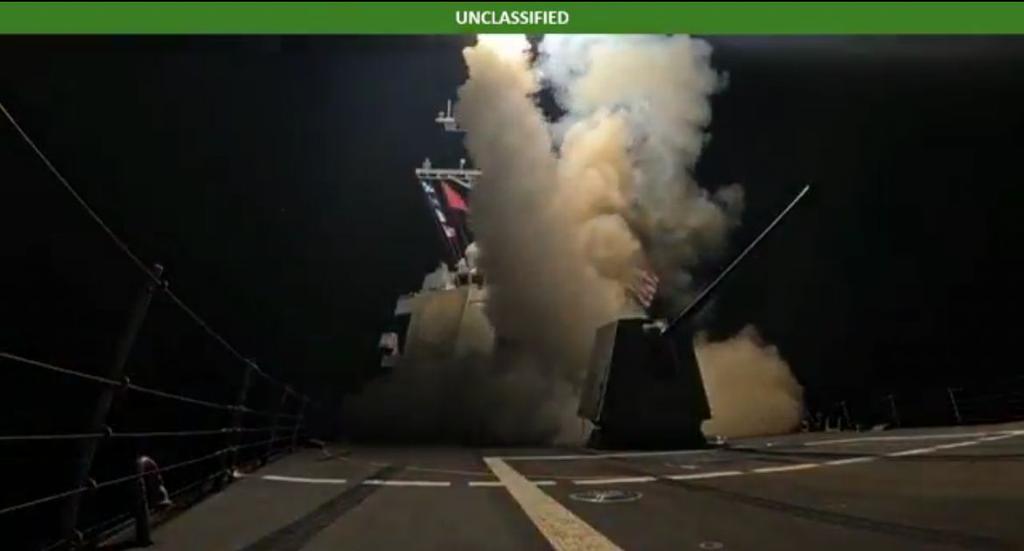
When American drones struck suspected terrorist positions in Sokoto State on Christmas night, the operation was presented as a moral intervention.
The White House framed it as decisive action against Islamic State elements threatening Nigeria, with a strong suggestion that it was meant to protect persecuted Christians. The symbolism was hard to miss. Christmas Day. A Muslim majority region. A president whose most loyal supporters see him as a global defender of Christianity.
Subsequent disclosures have only deepened that symbolism. President Donald Trump later confirmed that the strikes were deliberately delayed so they would fall on Christmas Day. Supporters celebrated the timing as a “Christmas present” to Christians. Conservative commentators amplified the message online, praising Trump for choosing the date deliberately. The framing was not subtle. It was political. It was religious. And it was aimed squarely at a domestic audience.
Nigeria’s government confirmed that the strikes targeted two ISIS linked enclaves in the Bauni Forest area of Tangaza Local Government Area in Sokoto State. Officials said the sites were being used as assembly and staging grounds by foreign fighters entering from the Sahel. They also confirmed that Nigeria continues to work closely with the United States and other partners on counterterrorism.

The operation involved U.S. Reaper drones and cruise missiles launched from platforms in the Gulf of Guinea, with the knowledge and approval of President Bola Tinubu. Nigerian authorities described it as part of ongoing military cooperation and intelligence sharing.
Debris from the strikes reportedly fell in Jabo in Tambuwal Local Government Area and near a hotel in Offa, Kwara State. While no civilian casualties were officially recorded, residents spoke of fear, confusion and unanswered questions.
Even with these explanations, the strikes raise a central issue that cannot be ignored. Were they really about protecting Christians in Nigeria, or was Nigeria turned into a stage for a carefully choreographed political message shaped in Washington?
To understand this, it is necessary to look beyond Nigeria.
Trump’s strongest and most reliable support base remains white evangelical Christians in the United States. Writers such as Tim Alberta and Sarah Posner have documented how this alliance is not built on personal morality but on power, symbolism and confrontation. What matters is not who Trump is, but what he appears to fight. Evangelicals offer loyalty. Trump offers spectacle.
Pew Research data consistently shows that this bloc has stayed with Trump even when other groups drifted away. Claims of Christian persecution abroad play a powerful role in sustaining that loyalty. They simplify complex conflicts into moral stories of good versus evil. Nigeria, with its history of religious violence, fits neatly into that narrative.
There is no denying the suffering of Christians in Nigeria, especially in parts of the Middle Belt where killings, displacement and destruction of communities have been severe. But Sokoto is not where this violence has been most intense. Security analysts have pointed out that the Bauni Forest strikes targeted foreign ISIS fighters, not the armed groups responsible for the deadliest attacks on Christian farming communities in Benue, Plateau and Southern Kaduna.
That gap matters.
Emmanuel Ogebe, a Washington based human rights lawyer, described the operation as low risk and highly visible, carried out in an area where the United States already had deep operational knowledge. In his view, the choice of location and timing delivered symbolic value for American evangelicals, while doing little to address the areas where Christians face the gravest danger.
This is where the strikes begin to look less like protection and more like performance.
They also reflect what critics often describe as Wag the Dog politics, the use of military action to create dramatic moments that project strength, dominate headlines and send reassuring signals to domestic supporters, even when the targets are not the core drivers of insecurity.
But Trump’s domestic politics is only one part of the story.
The strikes also sit at the intersection of a crowded and uneasy geopolitical landscape. In West Africa, the United States, France and their allies are alarmed by a wave of military takeovers. Mali, Burkina Faso and Niger have fallen to juntas that have cut ties with the West and embraced Russia. The fear in Western capitals is contagion.
This fear was laid bare by the attempted coup in Benin Republic in December 2025. The plotters cited growing jihadist violence in northern Benin, military casualties and government failure as their major justification. The same argument used by coup leaders elsewhere in the Sahel appeared again.
Professor of International Relations, Femi Otubanjo, warned at the time that a successful coup in Benin would have been catastrophic for the sub region.
“Don’t forget that even in our own country, only last month or so, there were rumours, stories of a coup attempt. So that kind of coup movement needed to be stopped and nipped in the bud. So, it was a major fundamental action for the sake of the stability of the West African sub region.”
Benin matters deeply to Western interests because it remains aligned with the West and because landlocked Sahelian states still rely on Beninese ports to export oil and goods. This is why France and the United States pushed hard for regional military readiness when the coup attempt emerged. They could not afford to lose Benin the way they lost Mali, Burkina Faso and Niger.
From this perspective, U.S. involvement in Nigeria’s security fight begins to look like an act of self preservation. Washington fears that sustained insecurity can become the excuse for military takeovers. If Nigeria, the region’s anchor state, were to slide in that direction, the consequences would be enormous.
Seen this way, the choice of targets in Sokoto makes sense. Foreign ISIS fighters are easier to frame as an external threat. They are easier to strike. And crucially, hitting them allows Washington to say it is acting, without confronting the politically explosive conflicts in the Middle Belt involving banditry, land disputes and ethnic violence.
It also serves President Bola Tinubu’s interests.
Tinubu faces intense pressure to show progress against insecurity. Any visible action, especially one backed by the United States, helps him project control and resolve. In a political climate where security failures can quickly become rallying points for dissent, cooperation with Washington offers cover and credibility. It also feeds into calculations about reelection.
Beyond security, economic and strategic interests loom large.
Nigeria has begun to signal a willingness to accept other currencies for its oil sales, including the naira. For the United States, whose global influence rests heavily on the dollar’s dominance in energy markets, this is unsettling. Such moves do not trigger airstrikes on their own, but they shape how partnerships are evaluated.
There is also the aviation question.
Nigeria is considering certifying China’s COMAC C919 passenger aircraft for use by local airlines. Talks are ongoing between Nigerian aviation authorities and China’s state owned manufacturer. The C919 is designed to compete directly with the Boeing 737 MAX and Airbus A320neo. It entered commercial service in 2023 and is the first large passenger jet developed by China.
If Nigeria proceeds, it would challenge the long standing dominance of Boeing and Airbus in African aviation. It would also weaken the grip of U.S. and European certification regimes. For Washington and its allies, this is not a small issue.
Add China’s growing footprint in Nigerian infrastructure, technology and trade, and the picture becomes clearer. The United States wants to remain Nigeria’s indispensable partner, especially on security. Military cooperation is one of the fastest ways to reinforce that status.
All of this explains why the strikes in Sokoto brought together strange bedfellows. Trump’s evangelical base seeking symbolism. Western governments anxious about coups and Russian influence. Washington guarding the dollar and industrial dominance. Abuja seeking legitimacy and stability.
What is striking is who barely features in this equation. Christians facing daily violence in Nigeria. Their suffering is real. Their fear is justified. But in this episode, it served mainly as language, a justification, a moral wrapper around decisions driven by other interests.
Some activists from Nigeria’s Middle Belt in the United States have indeed been lobbying Washington to intervene militarily. Their pain and anger are understandable. But lobbying pressure does not explain the choice of targets, the timing or the messaging. Those were shaped elsewhere.
Nigeria risks mistaking leverage for power. Yes, it matters economically. Yes, it matters strategically. But without care, it can slide from being a player into being a pawn, used in contests it does not control.
Trump’s Christmas Day strikes tell us less about saving Christians and more about how modern power operates.
The lesson remains simple. Real safety comes from steady action and clear priorities rooted in local realities. It does not come from dramatic gestures designed for applause.
Remi Ladigbolu is a Lagos based journalist.
-

 News11 hours ago
Nigeria Spent ₦1.16trn On Fuel Subsidy In 2021 – RMAFC
-
Business11 hours ago
Dangote refinery IPO enters final stretch ahead of October offer
-
News11 hours ago
Reps uncover fresh discrepancies in PFIPC probe as State House disowns agency, FRSC explains official number plates
-
News11 hours ago
Gunmen Kill 3 Herders, 14 Cattle In Fresh Plateau Attack
-
Politics11 hours ago
Tinubu’s directive to EFCC on Osun account shows commitment to electoral fairness – Afikuyomi
-
News11 hours ago
How we uncovered two more fake agencies created by PFIPC’s Adeyemi – ICPC
-
Politics10 hours ago
‘Impossible’ — reactions as Peter Obi says he visited every secondary school in Anambra as governor
-
News10 hours ago
Nigerians, others affected as Trump signs order to curb birthright citizenship ‘tourism’