Business
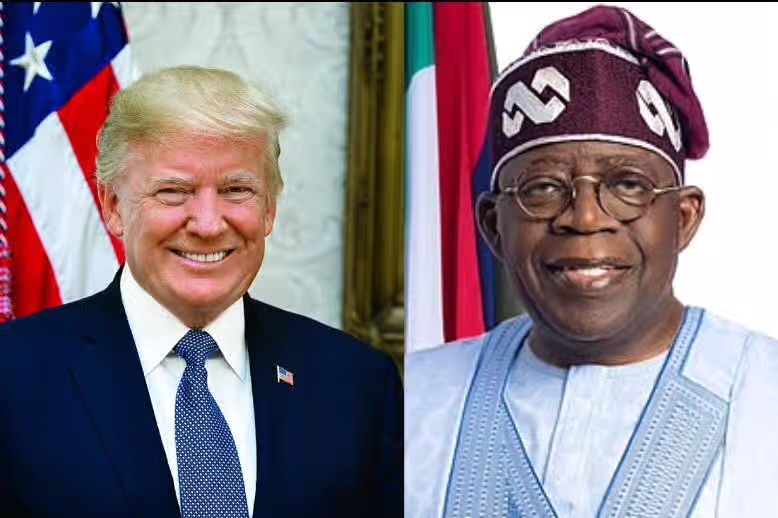
FG seeks to calm markets as U.S. airstrikes test sovereignty, economy

• Yoruba coalition hails U.S. action, seeks restructuring, Gumi’s arrest
• Strikes a damning verdict on Nigeria’s security crisis, says Hashim
• Edun: Security operation strengthens, not weakens, economy
• U.S. lawmaker: Nigeria, Syria strikes fit long-standing anti-extremism policy
• ISWAP raids Yobe villages as troops kill nine bandits in Kano clash
• Why Sokoto was targeted first in U.S. strikes, by Yoruba Ronu
The military intervention by the United States (U.S.) against terrorist hideouts in Sokoto has thrust Nigeria into a delicate phase of its counter-terrorism struggle, igniting fierce debate over sovereignty, governance failure and the limits of foreign involvement in domestic security.
Beyond the security and political implications, the strikes have also rattled investor confidence, compelling the Federal Government to move swiftly to reassure markets that the operation poses no threat to Nigeria’s economic fundamentals or reform trajectory.

The Alliance for Yoruba Democratic Movements (AYDM), a coalition of about 130 pan-Yoruba organisations, described the alleged operation as a bold and necessary step to curb the spread of violent extremism, which it said has increasingly threatened Nigeria’s sovereignty and democratic order.
In a statement jointly signed by its General Secretary, Popoola Ajayi, and Rasaq Arogundade, AYDM urged Nigerian authorities to sustain intelligence-driven collaboration with global partners, insisting that no nation can defeat terrorism in isolation.
“We welcome the attacks on terrorists determined to take over the Nigerian space,” the group said. “They show that Nigeria is building effective global partnerships to reclaim its lost sovereignty. However, the strikes alone are not enough.”
AYDM went further to call for the immediate arrest of Islamic cleric Sheikh Ahmad Gumi, whom it described as the ideological face of terrorism in the country, accusing him of providing intellectual justification for extremist violence.
“Sheikh Gumi should be arrested. He is a terrorist masquerading as an Islamic scholar,” the group alleged, threatening to mount local and international campaigns to push for his prosecution at the International Criminal Court (ICC).
The group also issued a security alert to governors in the South-West, warning that terrorist groups seeking retaliation could redirect attacks towards the region, particularly Lagos, Nigeria’s commercial nerve centre and the political home base of President Bola Ahmed Tinubu.
According to AYDM, the growing wave of Islamic extremism in Nigeria reflects what it termed a “violent clash of civilisations”, a development it said demands far-reaching constitutional reforms, including the decentralisation or restructuring of the Nigerian state to allow ethnic self-determination.
“It is time to restructure Nigeria so that those who believe in a theocratic state and those who cherish democracy can exist within their own sovereign republics,” the statement added.
The coalition also urged the Federal Government to widen its security alliances beyond the United States to include countries such as Russia and Israel, which it described as nations with extensive counter-terrorism experience.
“Nigeria needs as many friends as possible to defeat terror. Collaboration with Russia, given its role in counter-terrorism operations in the Sahel, is necessary if Nigeria must effectively confront this menace,” AYDM said.
U.S. strikes a damning verdict on Nigeria’s security crisis, says Hashim
However, a sharply contrasting view came from a former presidential candidate and political activist, Gbenga Hashim, who described the U.S. airstrikes as a damning indictment of Nigeria’s security system and governance failures under the All Progressives Congress (APC)-led administration.
In a statement issued yesterday, Hashim said the intervention reflected growing international alarm over Nigeria’s deteriorating security situation, particularly in the North-West, where terrorist groups are allegedly consolidating territorial influence.
“Nigeria is too large, too strategic and too important to be allowed to fail,” Hashim said, arguing that global actors could no longer ignore the emergence of an Islamic State-aligned presence within the country.
He revealed that since 2021, and more intensely over the past year, his team had warned that security modelling in the North-West pointed towards a dangerous trajectory, including the risk of an extremist enclave if urgent corrective measures were not taken.
Hashim attributed the worsening crisis to deepening poverty, prolonged governance failure and weakened institutions, which he said had emboldened extremist groups while silencing moderate political and secular voices.
“More worrying is the elevation of individuals who enable or rationalise extremism into positions of political influence,” he said, warning that such compromises had created conditions for terror groups to aspire to territorial control.
While acknowledging that international airstrikes could temporarily degrade terrorist capabilities, Hashim insisted that sustainable solutions must come from internal reforms, improved governance and decisive leadership.
“External interventions will not produce lasting results without urgent internal reforms, transparent accountability frameworks and clear security coordination between sovereign nations,” he warned.
Hashim also questioned the readiness of the Tinubu administration to confront extremist networks decisively, alleging that political compromises dating back to the 2015 power struggle continue to constrain the government’s response.
In conclusion, he warned that Nigeria faces an existential threat that can no longer be addressed with denial or half-measures, calling for courageous leadership to prevent further deterioration of national security.
FG reassures investors after Sokoto airstrike, says economy stable
Meanwhile, the Federal Government yesterday moved to calm investor concerns following the joint U.S.–Nigeria security operation in Sokoto on Christmas Day, stressing that the country remains firmly focused on economic reform and growth.
In a statement personally signed by the finance minister and coordinating minister of the economy, Wale Edun, the operation was described as “precise, intelligence-led, and focused exclusively on terrorist elements that threaten innocent lives, national stability, and economic activity”.
Edun said Nigeria was not at war with itself or any nation, but was confronting terrorism in partnership with trusted international allies.
“Far from destabilising markets or weakening confidence, such actions strengthen the foundations of peace, protect productive communities, and reinforce the conditions required for sustainable growth,” he said. “Security and economic stability are inseparable; every effort to safeguard Nigerians is, by definition, pro-growth and pro-investment.”
The statement followed heightened scrutiny from investors and analysts after the military operation, amid concerns about security risks and their potential impact on markets. The government said it has continued to reassure global partners that Nigeria’s economic fundamentals remain intact and that recent security measures are consistent with stability.
Highlighting macroeconomic performance in 2025, Edun said Nigeria’s gross domestic product grew by 4.23 per cent in the second quarter and 3.98 per cent in the third, with expectations of a stronger fourth quarter. Inflation, he added, has declined for the seventh consecutive period and is now below 15 per cent, signalling improving price stability.
“Our financial markets remain resilient. Domestic and international debt markets are stable and functioning efficiently, supported by prudent fiscal management,” Edun said, citing credit rating upgrades from Moody’s, Fitch and Standard & Poor’s as independent endorsements of the reform agenda.
He reaffirmed the administration’s commitment to fiscal discipline and economic transformation, saying: “We have maintained fiscal discipline, prioritised efficiency, and protected macroeconomic stability—demonstrating resilience in the face of external shocks.”
Looking ahead to 2026, Edun said the government aims to consolidate the gains of 2025, strengthen economic resilience and build a sustainable, inclusive, growth-oriented economy. “The actions we take today—on security, reforms, and fiscal discipline—are aligned with that goal,” he said.
As markets prepare to reopen on Monday, the government said Nigeria remains open for business. “The fundamentals are strengthening, the policy direction is clear, and the resolve of this administration, to protect lives, secure prosperity, and grow the economy, is unwavering,” Edun said.
U.S. lawmaker: Nigeria, Syria strikes fit long-standing anti-extremism policy
This came as a senior Republican on the United States House armed services committee said recent U.S. military strikes in Nigeria and Syria are consistent with Washington’s long-standing foreign policy against Islamic extremism across both terms of Donald Trump.
Mike Turner, an Ohio congressman, said yesterday that the strikes were a “continuation of our conflict with (the Islamic State)”.
“It’s been, you know, around the world, Iraq, Syria. You’re seeing it now in Nigeria,” Turner said.
He rejected suggestions that the strikes signalled a shift in a second Trump term, saying U.S. policy towards the Islamic State (IS) had remained “very consistent” in efforts to defeat the group in Iraq, Syria and “here in Nigeria”.
Turner said the United States was “seeing that (IS) around the world has not been defeated but will continue to be a target and something that, with our allies, we’re going to have to continue to respond to or they’re going to continue to be a threat”.
His comments came three days after the Pentagon launched cruise missile strikes on terrorist camps in north-western Nigeria, an operation Trump later described as a “Christmas present” for IS militants in the country.
The president later amplified his remarks on WABC radio in New York, calling IS “butchers” who “got a very bad Christmas present”. Referring to the persecution of Christians in the region, Trump said he had “told Nigeria, and I told the people around Nigeria, that if you do it, you’re going to get hit”.
U.S. defence secretary Pete Hegseth said on X that Trump had made it clear that “the killing of innocent Christians in Nigeria (and elsewhere) must end”. He added that the defence department, which the administration has rebranded the war department, “is always ready, so [IS] found out tonight – on Christmas. More to come.”
Turner said the consistency of the U.S. approach also applied to its position on Russia’s war in Ukraine, describing Russian strikes on Christmas Day and overnight on Saturday as a reminder “that we can’t be for this”.
“When we address the issue of whose side we’re on, you can’t be America first and be pro-Russia,” he said. “Russia is a self-declared adversary of the United States. They are mercilessly killing Ukrainians and trying to take Ukrainian land. So, the president has rightly said we need to end this war.”
ISWAP raids Yobe villages as troops kill nine bandits in Kano clash
Suspected Islamic State West Africa Province (ISWAP) fighters have carried out coordinated attacks on Ja Jibiri and Ladu villages in Yobe State, injuring a village head, abducting a driver and looting a health facility.
The incident was disclosed yesterday in a post on X by counter-insurgency security expert Zagazola Makama, who cited security sources.
According to the post, the attacks occurred at about 12:20 a.m. on December 27, 2025. During the raid on Ja Jibiri village, the village head, Lawan Hassan, 45, was shot in the left shoulder.
The attackers later moved to Ladu village, where they abducted a 40-year-old driver, Madu Kura, who was driving a Toyota Hilux. They also broke into the Primary Health Care Medical Centre, looting medical consumables and other valuables, and made away with a Golf vehicle.
Hassan was rushed to Geidam Hospital for treatment. Security operatives in the area have been placed on high alert, with monitoring and efforts ongoing to track down the attackers.
Meanwhile, nine bandits were reportedly killed during a prolonged exchange of gunfire between the Nigerian military and armed criminals at Bakaji and Unguwar Garma in the Goron Dutse area of Shanono Local Council, Kano State.
One vigilante member was killed and another wounded during the encounter.
The bandits, who stormed the area late on Saturday, engaged troops in a gun duel that lasted several hours. Chairman of the Shanono/Bagwai Community Security Forum, Yahya Bagobiri, confirmed the incident while speaking to reporters yesterday.
He said the bandits initially fled after heavy fire from the military but escaped with about 40 cows and six abducted persons.
“The military killed the bandits and recovered motorcycles, but the criminals sneaked back around 5:00 a.m.–6:00 a.m., opening heavy fire on the military, though they could not penetrate the area,” Bagobiri said.
“Because they came in hundreds, they still abducted six persons and rustled 40 cows. But thanks to the military, who returned heavy fire, killing nine of them, the bandits abandoned many motorcycles.”
Why Sokoto was targeted first in U.S. strikes, by Yoruba Ronu
Relatedly, a South-West group, the Yoruba Ronu Leadership Forum, said the choice of Sokoto as the first target of the reported U.S. intervention was neither accidental nor merely symbolic.
The President of the forum, Akin Malaolu, explained that Sokoto’s historical and strategic position as the former seat of the Sokoto Caliphate makes it a critical transit and settlement point for extremist groups moving from the Sahel into Nigeria.
“Sokoto is the first bus stop between the Sahel and Nigeria,” Malaolu said. “Terrorist presence there is real but grossly under-reported. To curtail the inflow of ISIS elements, Sokoto would naturally be under constant surveillance.”
He added that the intervention could trigger the relocation of terrorist cells into urban centres, warning security agencies to immediately tighten surveillance around markets, schools, worship centres and other crowded public spaces.
“Nigeria is entering a second phase of the war on terrorism. It must now be fought with heightened vigilance, especially in cities and state capitals,” he said.
While welcoming foreign assistance, the group cautioned that responsibility for securing the country ultimately rests with Nigerian security agencies, urging President Bola Ahmed Tinubu not to be complacent.
“This is not the time for the President to feel relaxed, even in Lagos. There is much work to be done, and it requires constant engagement,” the forum said. (Guardian)
-

 Business19 hours ago
BREAKING: FCCPC says industry report suggests possible manipulation of cement prices
-
Business20 hours ago
Dangote Refinery Secures $1 Billion Backing Ahead of Planned IPO
-
Politics11 hours ago
‘Adeleke isn’t Fubara’ — Dele Momodu faults Wike’s claim he could have helped Tinubu win Osun
-
News21 hours ago
NDLEA seizes 184kg of cocaine from Lagos courier firm, arrests socialite KC Luxury
-
Sports11 hours ago
Bayern’s Musiala suffers another collapse in three days
-
Business24 hours ago
Food Prices Rise As Inflation Slows
-
Opinion11 hours ago
Tinubu, terminate the dodgy £746m ports deal
-
News11 hours ago
Troops repel terrorists attack, rescue 14 kidnapped victims in Katsina