News
Obasa’s ouster, Benue speaker’s suspension — state assemblies gripped by crisis in 2025

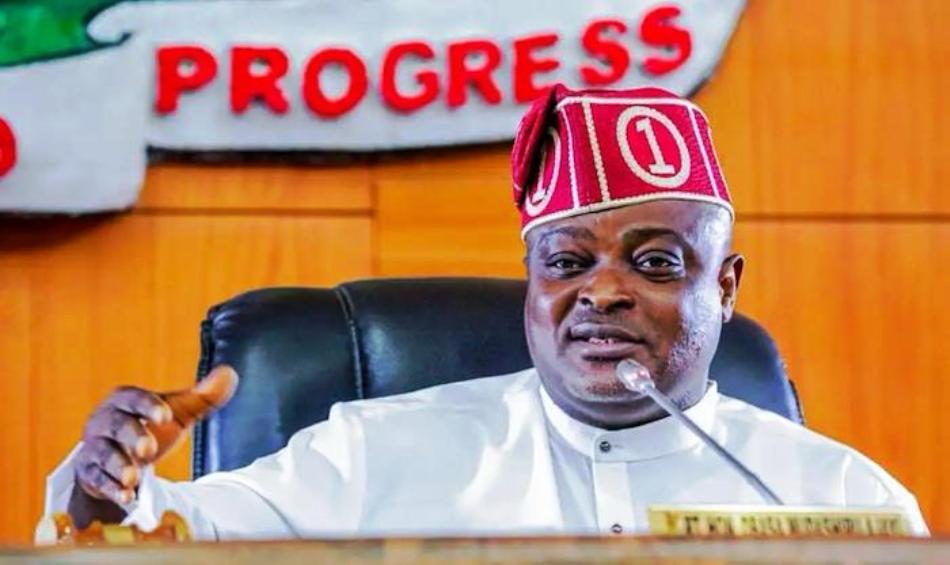
In a year marked by political upheaval, Nigeria’s state houses of assembly became battlegrounds for power struggles, impeachments, and suspensions.
From Lagos to Benue and Rivers, institutions meant to represent the people’s interests were hampered by internal conflicts, raising questions about governance stability and the influence of external forces.
THE FALL AND RISE OF MUDASHIRU OBASA
The year 2025 began with a seismic shake-up in the Lagos state house of assembly when, on January 13, lawmakers impeached Mudashiru Obasa, the speaker, on allegations bordering on gross misconduct.

Obasa, who had held the position since 2015 and was in his third term, was accused of financial impropriety and abuse of office, though supporters dismissed these as politically motivated smears.
The impeachment, backed by 36 of 40 members, saw Mojisola Meranda, deputy speaker, becoming new speaker of the house. But the drama was far from over.
In late February, Obasa stormed the assembly complex with supporters, declaring himself reinstated and resuming duties amid chaos.
“I’ve resumed, and I remain the speaker of the assembly,” Obasa said, escalating tensions that led to physical confrontations before the leadership of the All Progressives Congress (APC) in Lagos intervened.
By March 3, Meranda was tendering her resignation, paving the way for Obasa’s official reinstatement.
Meanwhile, a court in April further solidified his position, ruling that the January proceedings were “illegal, unconstitutional, null and void”.
Analysts pointed to behind-the-scenes maneuvering by Babajide Sanwo-Olu, governor of the state, and the ruling APC, highlighting how party loyalty often trumps legislative independence.
This crisis, which lasted for over seven weeks, disrupted legislative activities, delaying budget approvals and oversight functions.
BENUE SUSPENSION SAGA: FROM RESIGNATION TO PROLONGED EXILE
In Benue state, the house of assembly turmoil revolved around Hyacinth Dajoh, former speaker, whose tenure ended in a whirlwind of resignations and suspensions.
On August 25, Dajoh resigned abruptly, just days after suspending four members —including the deputy whip — for alleged insubordination.
He was swiftly replaced, but the following day, the assembly suspended him for three months over claims that he plotted to impeach Hyacinth Alia, governor of the state.
The suspension was extended by six months in November, amid investigations into Dajoh’s conduct. Allies of the former speaker decried it as a witch-hunt, while assembly members justified it as necessary to maintain stability.
“This extension is based on Dajoh’s refusal to cooperate with probes,” a lawmaker told reporters on condition of anonymity.
The Benue crisis reflected deeper governor-legislature tensions, common in states where executives wield significant influence over assemblies.
With Dajoh’s allies pushing for his reinstatement as late as December, the crisis continues to highlight how vendetta can hinder state development, especially in a region plagued by security challenges.
IMPEACHMENT THREATS AND EMERGENCY RULE IN RIVERS
Perhaps the most explosive crisis unfolded in Rivers, where the house of assembly feud with Siminalayi Fubara, governor of the state, assumed national proportion.
In March, lawmakers initiated impeachment proceedings against Fubara and his deputy, Ngozi Odu, accusing them of misconduct and abuse of power.
The move stemmed from a protracted rift with Nyesom Wike, former governor of the state and now Federal Capital Territory (FCT) minister, who allegedly backed the pro-impeachment faction.
Vandalism of oil pipelines and a “crisis-ridden” assembly led President Bola Tinubu to declare a state of emergency in September, suspending the governor, deputy, and the entire house.
“The Governor of Rivers State, Mr Siminalayi Fubara, his deputy, Mrs Ngozi Odu and all elected members of the House of Assembly of Rivers State are hereby suspended for an initial period of six months,” Tinubu said in his emergency rule declaration.
The intervention halted governance, with Ibok-Ete Ibas stepping in as sole administrator of the state, amid protests.
The emergency was lifted in September, but scars remained. The crisis cost the state in investments and public trust, illustrating how godfathers can destabilise successors.
EDO ASSEMBLY REALIGNS AS APC SECURES MAJORITY
The Edo state house of assembly is witnessing a rapid realignment as the APC consolidates its hold to “provide robust legislative support for the governor’s agenda”.
In April, Blessing Agbebaku defected from the Peoples Democratic Party (PDP) to the APC, bringing along 17 LGA chairpersons, councillors, and other PDP members.
With 18 of the 24 assembly seats now held by the APC, the party has strengthened its majority in the house, a development hailed by party leaders as vital for the state’s progress.
However, the shift has led to significant changes within opposition ranks.
Maria Oligbi-Edeko, the PDP deputy speaker representing Esan North-East II, resigned citing her party’s minority status in the assembly.
Further boosting the APC’s numbers were defections from four lawmakers — three from the PDP and one from the Labour Party (LP), raising APC’s membership to 13 while reducing the PDP to 11.
The defectors, including Donald Okugbe, Bright Iyamu, Richard Edosa, and Sunday Ojezele, highlighted the fluidity of the crisis confronting the state assembly.
As 2026 approaches, stakeholders call for reforms, including stricter impeachment thresholds and judicial oversight. Without them, state assemblies risk remaining arenas for elite power plays rather than pillars of democracy.
SUSPENDED PDP LAWMAKERS DEFECT TO OPPOSITION AMID DEEPENING CRISIS
In Zamfara, the house of assembly has been divided since early 2024.
Six suspended lawmakers elected on the PDP platform but operating a parallel faction, defected to the opposition APC on December 25, 2025.
The defectors cited lingering internal crises in the PDP, alleged poor governance under Dauda Lawal, governor of Zamfara, and what they described as constitutional breaches in the assembly.
The defectors, including factional Speaker Bashar Gummi (Gummi I), Nasiru Maru (Maru North), Bashir Masama (Bukkuyum North), Bashir Bello (Bungudu West), Amiru Keta (Tsafe West), and Muktar Kaura (Kaura North), had been suspended nearly two years ago alongside three APC members.
The defectors alleged that the other faction of the assembly had been passing bills and taking key decisions without forming the constitutionally required quorum, insisting that such actions were null and void. (The Cable)
-

 Politics21 hours ago
‘Adeleke isn’t Fubara’ — Dele Momodu faults Wike’s claim he could have helped Tinubu win Osun
-
Sports20 hours ago
Bayern’s Musiala suffers another collapse in three days
-
News21 hours ago
Troops repel terrorists attack, rescue 14 kidnapped victims in Katsina
-
Opinion21 hours ago
Tinubu, terminate the dodgy £746m ports deal
-
News21 hours ago
FAAC: FG, states, LGs share N3 trn
-
Politics23 hours ago
‘Abuja Politicians’ Made APC Lose Osun – Gov Sule
-
Politics21 hours ago
2027: SDP’s Adebayo faults Tinubu’s absence at National Peace Accord
-
Business18 hours ago
Africa’s biggest bank targets stake in OPay ahead of IPO – Report