News
FCTA To Spend 73% Of 2026 Budget On Maitama

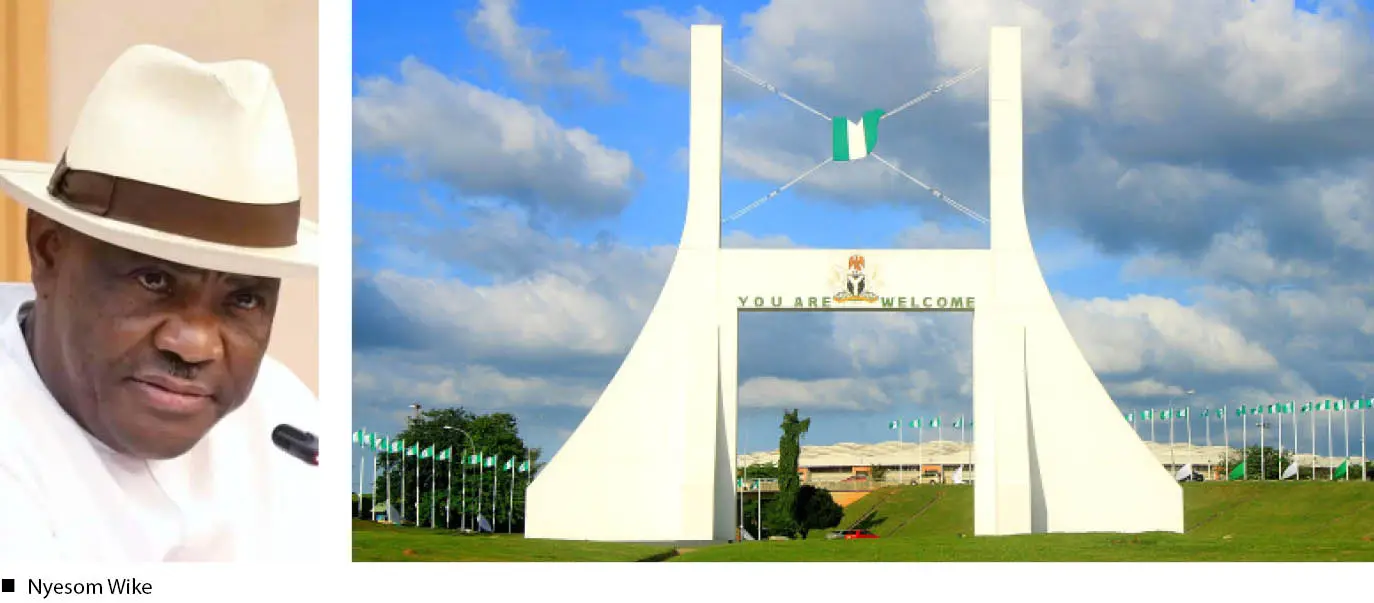
The Federal Capital Territory Authority (FCTA) is planning on spending 73 per cent of its entire 2026 budget in Maitama, a highbrow area of the nation’s seat of power.
According to the details of the budget, the FCTA proposed to spend N335bn from the total N460.73bn in the district.
The development highlights the wide disparity in infrastructure in the FCT amidst cries of underdevelopment by many communities in the federal capital.
A breakdown shows N35bn will go to the provision of infrastructure to Maitama II District, while N300bn will be used for maintenance of Maitama 2 District infrastructure (phase 1).

Daily Trust reports that Maitama 2 is an extension of Maitama District, and it is an emerging area that has spurred development from real estate developers.
According to a property website, Nigeria Property Centre, the average price of land for sale in Maitama 2, Maitama District, Abuja is N350,000,000.
It, however, said the prices vary by location, size and features and said there are 61 available lands for sale in Maitama 2, Maitama District, Abuja, Nigeria.
Already, the Maitama District in Phase 1 is dubbed the Ikoyi of Abuja as it hosts residential choices of many top government officials and wealthy, influential figures.
Also, it hosts various foreign embassies, high commissions, and governmental buildings and houses several of Abuja’s most well-known landmarks, such as the Millennium Park, Minister’s Hill, the Unity Fountain, the IBB Golf Club, and the Transcorp Hilton.
It is also the headquarters of several government agencies like the NCC, NCS, NUC, AMCON, NSIA, NIPC, NEPC, CAC, NYSC, RMRDC, NHRC, TETFUND, INEC, NEMA, TCN, and other parastatals.
Other projects the agency wants to carry out during the year includes extension of inner southern expressway (isex) within the FCT at the cost of N35bn and provision of pedestrian access control at interchanges in the FCT for N6.3 bn.
Also, the full scope development of FCT highway (Kuje Road) from Airport Expressway to OSEX with a spur at Kyami District will cost N7bn, while the construction of a 30km road across six area councils will cost N10.5bn.
It budgeted N31.36bn for the Abuja Metrolight Rail, while N437.5m will go for the settlement of residential and office accommodation rent for international organisations in FCT, and provision of satellite towns water projects will gulp N35bn.
It also wants to construct solar powered motorized boreholes in selected primary schools in Kuje Area Council, FCT, at a cost of N140m.
Case of prioritising urban dwellers
Daily Trust reports that the preference for urban residents in the proposed FCT budget highlights the age-long challenge confronting the rural dwellers, as residents in rural communities lament rising poverty, lack of infrastructure and underdevelopment in the FCT communities.
Recently, residents of the Gaube community in the Federal Capital Territory expressed grave concerns over the lack of basic amenities.
From limited access to healthcare and inadequate educational facilities to growing insecurity, residents say poor infrastructure is affecting their daily lives and livelihoods.
In most satellite towns within the Federal Capital Territory (FCT), residents have continued to decry crowded living environments lacking adequate infrastructural progress as envisioned in the Abuja master plan.
For an extended period, the rate of essential services, utilities, and vital infrastructure provision in these towns has lagged behind the increasing population influx into these suburban areas of the FCT.
Due to a high influx of unskilled and semi-skilled labor into the capital territory, housing remains the most underdeveloped sector in Abuja’s satellite towns, where most workers and lower-income individuals reside.
The original vision of the master plan emphasized that a majority of the workforce would settle in these satellite locations.
This intention also justifies the construction of the Abuja rail system, which was designed to connect the six area councils with the central city, facilitating easier transportation for workers commuting to and from the city.
Recently, residents of the Kaido-Tsoho community in the Dobi ward of Gwagwalada Area Council raised concerns regarding the deteriorating state of their local roads, appealing for intervention from the FCT Minister.
They underscored that the poor condition has caused significant hardship, as it complicates routines related to both economic activities and the transport of agricultural products to nearby markets, especially during the rainy season when the roads become largely unusable.
Members of the Kaido-Tsoho community further elaborated that accessing medical treatment in Gwagwalada poses a challenge due to the poor road conditions, which prove particularly hazardous for pregnant women needing transport during labor. Similar challenges are prevalent for residents across other area councils in the FCT.
During the 2025 Town Planners Day hosted by the Nigerian Institute of Town Planners (NITP) in Abuja, NITP/FCT Chapter Chairman, Town Planner Queen I. Phillips, said, “The Abuja master plan envisioned a balanced development strategy, with satellite towns designed to complement the Federal Capital City.”
“Yet, the current situation reveals significant inequalities. Numerous satellite towns are still struggling with insufficient infrastructure, subpar service delivery, and weak governance frameworks,” she added.
However, Nyesom Wike has also made some interventions in the infrastructure of the six area councils since his appointment as the FCT minister, directing attention to the long-standing issues of neglect faced by Abuja’s satellite communities.
Wike once announced that President Bola Ahmed Tinubu had allocated approximately N300 billion for the advancement of satellite towns across the six area councils of the FCT.
The government had launched the 9km Paikon Kore-Ibwa road project in the Gwagwalada Area Council, where he noted that while the road project’s construction cost was estimated at N8.5 billion, N50 billion had already been channeled into various initiatives within Gwagwalada.
FG jettisons Nigeria Air, pushes for airport concession
In another development relating to the 2026 appropriation Bill, the federal government has hinted at going ahead with the concession of four international airports.
The airports include the Murtala Muhammed International Airport (MMIA), Lagos; Nnamdi Azikiwe International Airport, Abuja; Port Harcourt International Airport, Rivers, and Mallam Aminu Kano International Airport, Kano.
However, as the 2026 budget of the Ministry of Aviation and Aerospace Development indicated, no fund allocation for the Nigeria Air project.
Daily Trust reports that the Nigeria Air project and Airport concession were major components of the aviation development roadmap of the immediate past administration.
In the proposed 2026 Appropriation Bill, the Federal Government allocated about N87.3 billion to the Ministry and some of its agencies.
The agencies with budgetary allocation are the Nigerian Meteorological Agency (NIMET); Nigerian College of Aviation Technology (NCAT), Nigerian Airspace Management Agency (NAMA), and the Nigerian Safety Investigation Bureau (NSIB).
The Nigeria Civil Aviation Authority (NCAA) and the Federal Airports Authority of Nigeria (FAAN), considered as major revenue-generating agencies, were exempted from the 2026 budget.
Our correspondent reports that the 2026 allocation to the Ministry represents a decline from the N105.95 billion earmarked in 2025 but an increase from the N63.32 billion approved in 2024.
However, all the projects were listed as ongoing, as no single new project would be undertaken in the budget.
The controversial Nigeria Air project, which has faced long delays, is missing from the 2026 budget, while a provision of 30m was made as a consultancy project for the concession of the listed airports.
The Ministry of Aviation and Aerospace Development itself receives N50,646,938,934, while NiMet is allocated N11,836,942,378, and NCAT gets N11,281,209,862.
A substantial portion of the budget, N33.9 billion, is earmarked for the rehabilitation and upgrade of airports nationwide. This includes improvements to runways, aprons, terminals, perimeter fencing, and safety-critical systems at various domestic and international aerodromes. The investment seeks to address longstanding issues such as cracked runways and outdated facilities, aiming to enhance efficiency and safety in the aviation sector.
Among highlighted projects under the ministry’s supervision are three initiatives totaling about N10 billion:
N1 billion for the expansion of the General Aviation Terminal at Mallam Aminu Kano International Airport, Kano;
N4 billion as a refund to the Kebbi State government for the construction of Sir Ahmadu Bello International Airport, Birnin Kebbi;
N5 billion for the construction of a corporate headquarters building and staff accommodation for the ministry and its agencies and another N5 billion for Safety and security critical projects and airport certification nationwide/ ETC (CAT 3 AFL, disabled aircraft recovery equipment).
(Daily trust)
-

 News7 hours ago
Abuja Workers Turn To Pick-Up Trucks Amid Rising Transport Costs
-
 Politics12 hours ago
Security Operatives Guard Tinubu’s Billboards Ahead Campaign Launch
-
 News7 hours ago
Ebola patient in Nigeria is Swiss, had not visited DR Congo – Foreign Ministry
-
Politics7 hours ago
Results With Discrepancies Won’t Be Uploaded On IREV – INEC
-
 News7 hours ago
Zamfara Community Fights Back
-
Politics7 hours ago
2027: You Can’t Hide Voters’ Register And Expect Trust – Atiku Tells INEC
-
Politics7 hours ago
South-East has better presidential options than Peter Obi – Umahi
-
Metro7 hours ago
One Dead, Several Feared Trapped As Building Collapses In Lagos