Business
Nigeria breaks 12-year tomato scarcity jinx

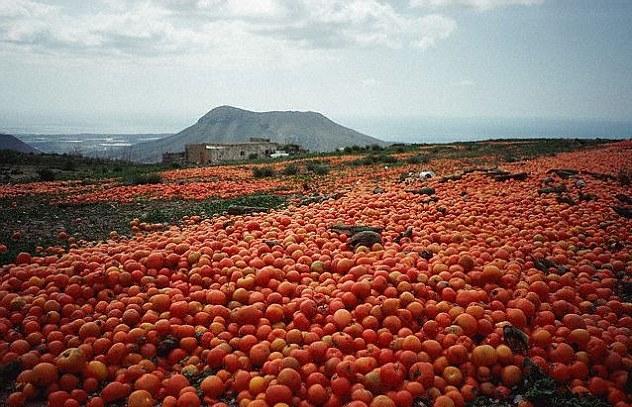
…Efforts to boost production starting to pay off
For the first time in more than a decade, Nigeria escaped its annual tomato price shock in 2025, offering long-awaited relief to households and manufacturers after 12 years of persistent price surges.
Experts attribute the turnaround to years of collaborative efforts to boost local production, tackle post-harvest losses and the yearly ‘Tuta Absoluta’ that ravages farmlands.

Since 2013, Africa’s most populous nation has faced recurring tomato shortages, triggering sharp price increases and prompting imports from neighbouring West African countries to bridge supply gaps.
These disruptions have strained tomato paste manufacturers, forcing many to shut down temporarily, and compelling consumers to adjust cooking habits by switching away from the nutrient-rich vegetable during peak scarcity periods.
“For the first time in several years, we did not experience a tomato price crisis in 2025, even after the Tuta Absoluta outbreak in May,” said Africanfarmer Mogaji, chief executive officer of X-Ray Consulting.
Mogaji attributed the stability in prices of tomato throughout 2025 to collaborative efforts between private and public sectors, noting that efforts have started paying off.
“We were able to do this owing to collaborative efforts by the private and public sectors,” Mogaji said.
BusinessDay’s market analysis shows that the price of a large basket of fresh vegetables in Lagos averaged N35,000 in January 2025 and rose slightly to about N43,000 by December, representing an increase of roughly 22 percent. This contrasts with previous years, when prices often jumped by more than 100 percent, particularly during the lean season.
Mayowa Ekundayo, chief operating officer of Postagvest Solutions Limited, said that the price stability of the fresh vegetables in 2025 can be ascribed to a combination of factors, ranging from new entrants of farmers to intervention programmes.
He noted that partnerships and alliances across the value chain helped in addressing issues limiting tomato productivity.
According to him, these interventions ensured tomato farmers had access to improved seeds and training that helped in boosting output, especially in the South-West region of the country.
“The yearly price spike was seen as an investment opportunity and, in 2025, lots of people who wanted to cash in invested in tomato production. This increased the output of the vegetables and helped stabilise prices,” Ekundayo said.
“These factors have cumulatively contributed to developing the tomato subsector in the country and helping us to avert the yearly price hike,” he added.
Experts claim that the South-West region, which accounts for less than 10 percent of the country’s annual tomato production, recorded an increased output in 2025 due to support from intervention programmes that provided farmers with improved seeds and training. However, there is no official data to back that claim.
“The South-West, which usually depends heavily on the North for its tomato supplies, is now growing more of the fresh vegetable through collaborative efforts from the government and intervention programmes such as 2Scale and HortiNigeria,” Ekundayo explained.
The initiatives also created a five-year horticulture road map for boosting tomato production in the six South-West states, he noted.
The country churned out 3.7 million metric tons of fresh tomato in 2024, with an average yield of 4,532 kg/hectare, according to data from the Food and Agriculture Organisation (FAO).
While production of the crop has increased, the country is still unable to meet local demand as about 50 percent of tomato produce is wasted due to a lack of storage facilities, poor handling and a poor transportation network across the country.
Sani Danladi, secretary-general of the National Tomato Growers, Processors and Marketers Association of Nigeria, said there was increased output across key producing states last year, which helped in stabilising prices of the produce throughout 2025.
He noted that the sector also saw new entrants of farmers who discovered that farming is a viable business. Danladi explained that despite worsening insecurity and climate change, support from the government and private sector helped tomato farmers to produce the vegetable in large volumes last year.
He is optimistic that the price of the fresh vegetables will remain stable in 2026. (BusinessDay)
-

 News17 hours ago
FG unveils loan for Nigerians to build or buy houses – How to apply
-
Politics17 hours ago
Osun Election: Bamidele urges Oyebamiji to congratulate Adeleke, offer policy ideas
-
Politics23 hours ago
‘I don’t want to be part of Nigerian politics; it’s evil’ — Davido
-
Metro17 hours ago
Tupac Shakur’s accused killer was out for ‘revenge’, jury hears
-
News9 hours ago
Insecurity: 31 states spend N252bn on security in six months
-
Politics17 hours ago
UK commends Osun election, urges Nigeria to apply lessons to 2027 poll
-
Politics9 hours ago
Osun poll raises 2027 questions as APC reviews defeat, observers flag flaws
-
Politics16 hours ago
ANALYSIS: How Large Voter Turnout Diluted Vote Buying In Osun