Opinion
A reflection on the Alaafin: Preserving Yoruba cultural authority in modern times

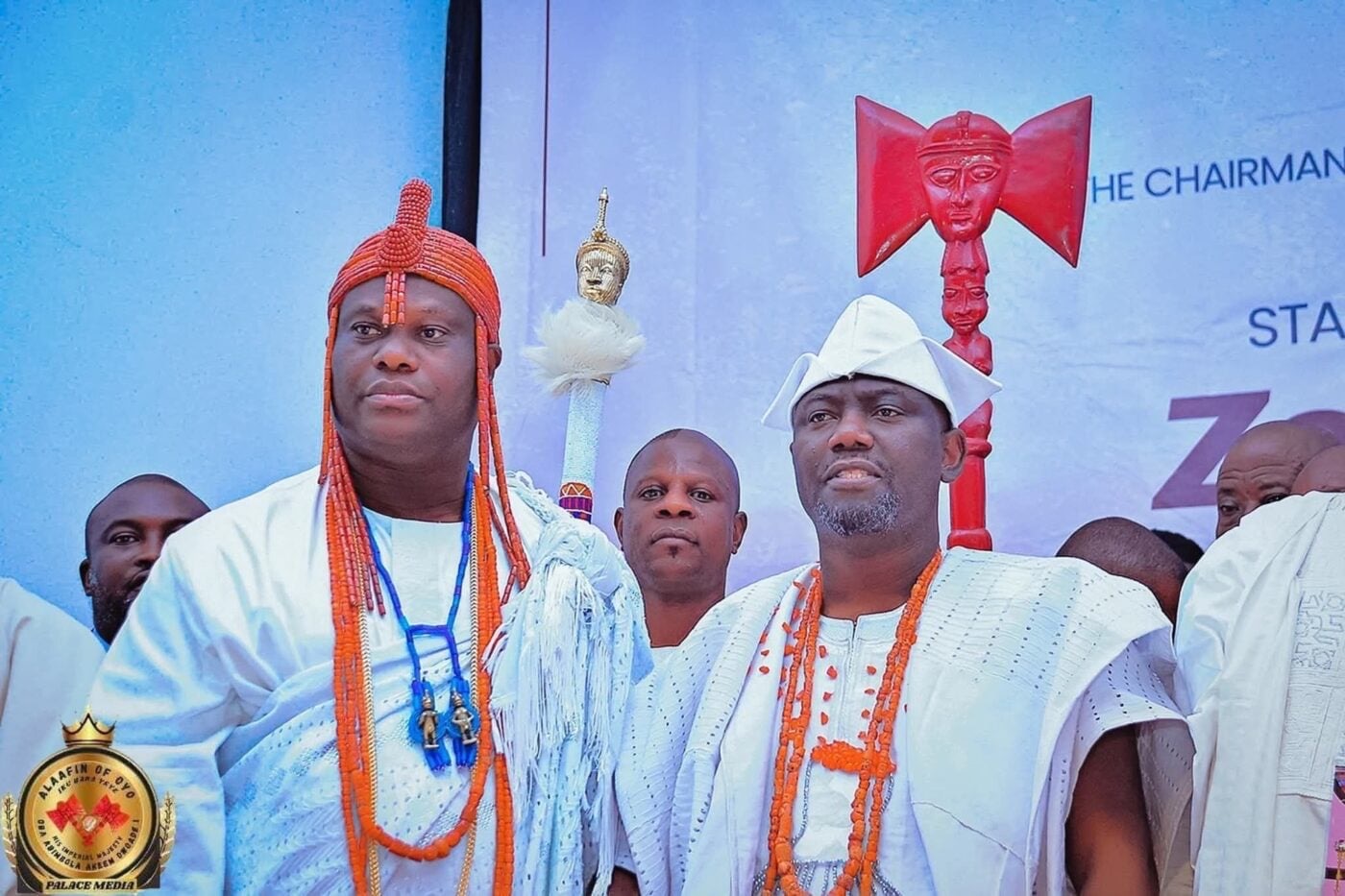
Ejo ki i se ti ara eni ki a ma mo da (One must be honest with oneself, even when judgement is uncomfortable).
Any fair reflection on the present controversy surrounding the Alaafin’s place within contemporary governance must begin with that honesty.
Oyo’s historical relegation did not arise from a single cause. It arose from a mix of internal missteps, deliberate political manoeuvres, colonial priorities, and post-colonial calculations. Acknowledging this does not weaken the Alaafin institution. It strengthens the credibility of any serious defence of it.
I maintain, without qualification, that the Alaafin’s prestige remains untainted and unblemished. I speak of the throne, not the individual who occupies it at any given moment.

Cultural authority is not conferred by statute, governmental circulars, political goodwill, or administrative convenience. It grows out of history, collective memory, the deep emotional geography of a people, and the enduring symbolism they attach to power and continuity. That is why the Alaafin, alongside the Ooni of Ife, remains central to Yoruba civilisation.
This reflection does not contest Ife’s role as the spiritual source of the Yoruba world. Ile-Ife occupies that sacred position and will always do so. But spiritual origin and historical evolution are not the same thing. The greater arc of Yoruba political development, statecraft, territorial expansion, military organisation, and imperial administration flowed primarily through Oyo. That distinction matters, not for supremacy contests, but for historical clarity.
From ancient times, the Alaafin throne has been repeatedly assailed, not because it was weak, but because it stood as a symbol of Yoruba survival and cohesion. Jihadist incursions recognised Oyo as the political spine of the civilisation they sought to dismantle. Colonial administrators later saw in the Alaafin a ruler too proud, too rooted, too autonomous, and too self-assured to be easily managed. His resistance was not always tactful, but it was unmistakable.
This tension reached a critical point in the 1930s. Alaafin Siyanbola Onikepe Ladigbolu I, for all his administrative shortcomings, embodied the old conception of kingship. He saw himself not as a local chief, but as a sovereign shaped by centuries of authority, ritual legitimacy, inherited power, and communal allegiance. That self-image clashed sharply with colonial expectations.
It was during this period that the Resident of Oyo Province was controversially relocated from Oyo to Ibadan, officially for administrative convenience, bureaucratic efficiency, logistical ease, and colonial oversight. Historical records show that this decision was taken without approval from Lagos and against the clear objection of the Alaafin.
Scholars such as J. A. Atanda later documented how this single act shifted the political and administrative centre of gravity in ways that permanently altered the fortunes of both cities. It marked the beginning of Ibadan’s steady ascent as an administrative capital, a status it would later consolidate as the capital of the old Western Region, the old Western State, and eventually Oyo State itself. If Ibadan occupies that position today, this was how it happened. The explanation offered then echoes eerily in present justifications offered today.
Earlier still, that same Resident, H. L. Ward-Price, reportedly told the Owa Obokun of Ijesaland that white ants were already eating the legs of the Alaafin’s stool. It was not an idle metaphor. It was an official acknowledgement that colonial policy had set in motion a gradual erosion of Oyo’s political influence, institutional leverage, territorial reach, and symbolic authority. That erosion did not erase the Alaafin’s cultural authority, but it reshaped the landscape in which it had to exist.
It is therefore no coincidence that Ibadan’s rise followed that relocation. Even the naming of institutions such as Adeoyo Hospital in Ibadan reflects an older recognition of Oyo’s overlordship at a time when there was neither an Oyo State nor an Ibadan-centric political order. These are historical markers, enduring administrative traditions, cultural signposts, and institutional memories, not matters of sentiment.
Chief Obafemi Awolowo’s 1945 article on Alaafin Ladigbolu captured this contradiction with rare candour. He was unsparing in his criticism of Ladigbolu’s administrative style, governing temperament, political instincts, and relationship with colonial officials. That relationship undoubtedly bred resentment and contributed to Oyo’s later neglect. Yet, in the same piece, Awolowo affirmed that Ladigbolu was the ruler of nearly the entire Oyo Province and described him, without ambiguity, as the king of the Yoruba. Both truths coexist. One does not cancel the other.
That same Alaafin hosted and presided over the first conference of Yoruba Obas in Oyo in 1937. This fact alone is often overlooked, yet it speaks volumes about where cultural leadership was instinctively located at the time.
It is also important to state, soberly and without celebration, that when Ladigbolu died, the ritual role traditionally performed by the Olokun Esin was deliberately frustrated by colonial authorities. The Olokun Esin himself was detained and prevented from carrying out that role. In consequence, the ritual was performed by the Olokun Esin’s son in his place. This is a matter of historical record, not approval. It remains one of the many tragic symbols of how external power interfered with deeply rooted institutions.
The Western Region government later deepened this shift. In seeking political balance, it elevated the Ooni of Ife to a prominence that served contemporary needs, electoral strategy, regional stability, and administrative pragmatism. While this did not diminish Ife’s spiritual importance, it was also part of a broader strategy to dilute the Alaafin’s influence. Over time, this recalibration hardened into convention.
Today’s debates must be understood against that long backdrop. Councils of Obas and Chiefs are political constructs. Their chairmanship is, by nature, fluid, rotational, contingent, and situational. What is permanent is cultural legitimacy. Only two Yoruba stools command instinctive reverence across Yoruba communities at home and in the diaspora, the Alaafin of Oyo and the Ooni of Ife. That reality already sets them apart, regardless of who occupies any rotating administrative position.
It is also worth noting that history warns against triumphalism. Mokan, mokan loye nkan; oye to kan ara Awo, o nbo wa kan ara Ede. (What afflicts one neighbour will, in time, reach another). Those who today derive relevance from political convenience should recognise how quickly such arrangements change. Rotational chairmanships can always rotate further. Political favour is never permanent. Cultural memory is.
I agree with thoughtful counsel offered to the new Alaafin that relevance today requires wisdom, restraint, service, and moral clarity. I also agree that traditional institutions must continuously justify their place through leadership, example, community engagement, and ethical consistency. Where I differ from some contemporary commentators is in the suggestion that historical relevance has expired. History does not expire. It recedes or resurfaces depending on how societies choose to remember.
The Alaafin institution does not require political or cosmetic validation to remain relevant. Its authority does not rest on proclamations, councils, legal instruments, or ceremonial rankings. It rests on centuries of continuity, sacrifice, statecraft, and symbolism that no legislation can erase. Empires fall, but thrones rooted in collective identity endure as reference points long after power has shifted.
This reflection is not written in anger, nor as a call to arms. It is an appeal for perspective. Yoruba history is large enough to accommodate Ife’s spiritual primacy, Oyo’s political legacy, Ibadan’s historical assertiveness, and the evolving realities of modern governance. What it cannot afford is the casual erosion of institutions that anchor identity.
In the end, those who identify as Yoruba inherit more than political structures. They inherit memory, obligation, responsibility, and continuity. The Alaafin stool sits at the heart of that memory. To honour it is not to deny others. It is to preserve a heritage that belongs to all.
Remi Ladigbolu is a Lagos-based journalist.
-

 Business15 hours ago
Refinery access war: Dangote, regulator clash in court
-
Politics15 hours ago
Election violence fears as Customs seizes 603 firearms
-
Politics14 hours ago
‘He balanced Nigeria’s diversity’ — Charismatic bishops endorse Tinubu for second term
-
Politics14 hours ago
Higher FAAC allocations an illusion, haven’t made Nigerians richer – Atiku
-
News15 hours ago
Six-hour nightmare as bridge repairs choke Lagos-Ibadan Expressway
-
News15 hours ago
70-year-old woman accused of cocaine trafficking gets N150m bail
-
Metro14 hours ago
Moroccan Woman Denies Detention, Says She’s Safe With Family
-
Politics14 hours ago
Political commentator Dan Shagamu found dead in Kano home