Politics
Governor Yusuf Will Be Defeated In APC – Kwankwaso

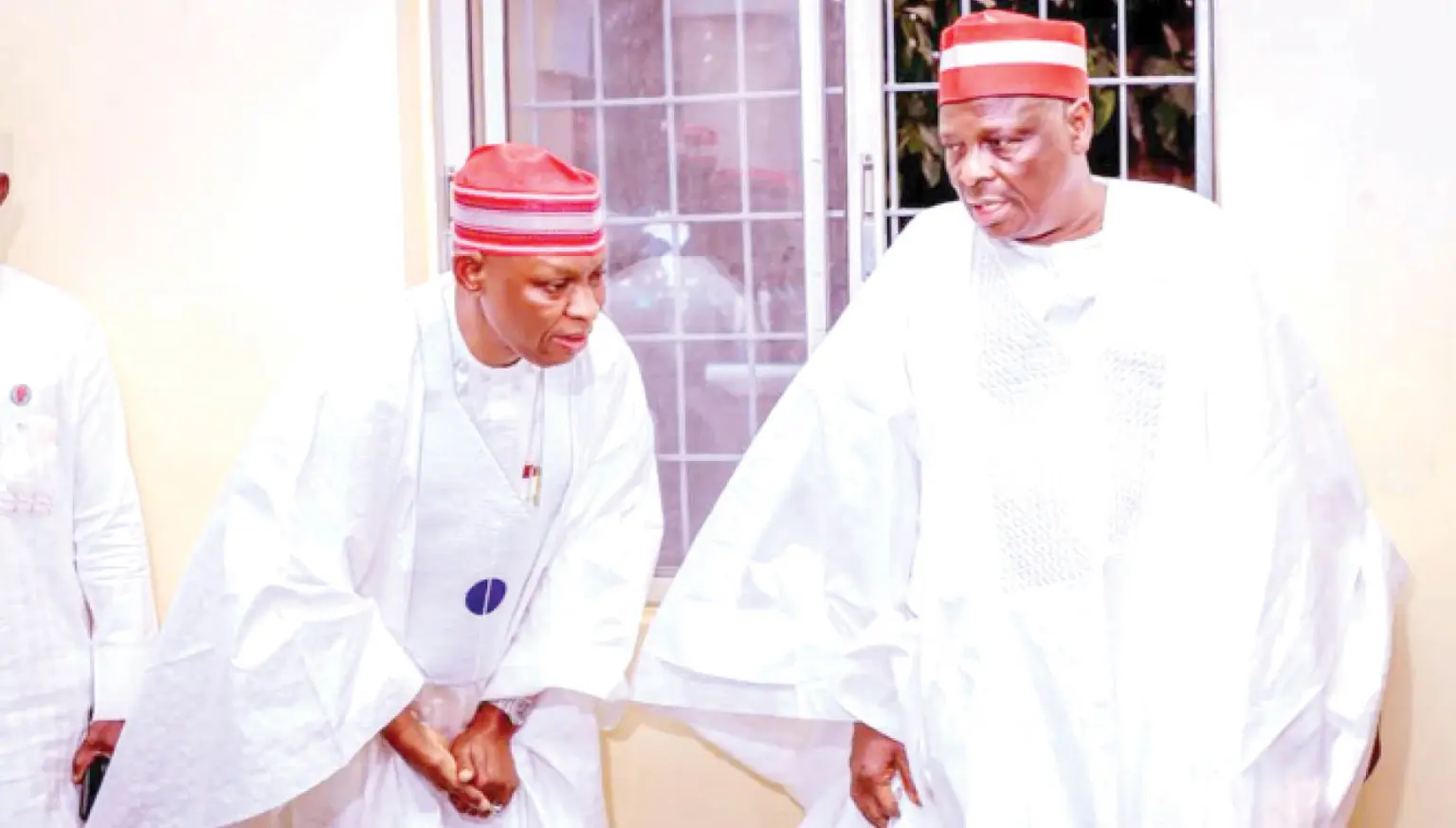
Former presidential candidate and leader of the New Nigeria Peoples Party (NNPP), Senator Rabiu Musa Kwankwaso, has said Kano State Governor, Abba Kabir Yusuf, and his close associates will regret leaving the party, insisting that the governor’s political fate has already been sealed by his alliance with former Governor Abdullahi Umar Ganduje.
Kwankwaso, who spoke in an interview on BBC Hausa on Wednesday, said the manner in which Ganduje received Yusuf into the All Progressives Congress (APC) and publicly raised his hand was a clear indication that the governor had already lost his re-election bid.
“If Ganduje truly had the power to raise someone’s hand to victory, he would have done so in 2019. If he had that power, he would have done so in 2023,” Kwankwaso said.
In an earlier interview with BBC, Ganduje said political rivalries had been laid to rest with the defection of the governor to the APC.

But Kwankwaso said he was convinced that Governor Yusuf and those who defected with him would face serious political challenges in the APC, adding that even if the governor does not return to the NNPP, “he will regret it”.
‘Abba’s defection still feels unreal’
Kwankwaso said Yusuf’s exit from the NNPP came as a shock to many people, including himself, noting that he initially found it difficult to believe the development.
“Many people I spoke to thought it was some kind of arrangement between him and me, or between him and others. Even I sometimes feel like it is a dream. I still ask myself how things reached this point,” he said.
Kwankwaso said he was deeply disappointed that the governor “handed over the mandate of NNPP members and the people of Kano to the Gandujiyya political camp” without what he considered a convincing justification.
“When I lie down, I reflect and ask myself: what really happened? Who was at fault? Was it me? Was it the party? Were party members at fault? But I have not been able to find the answer,” he said.
Kwankwaso said all the reasons Yusuf either personally gave him or conveyed through intermediaries for defecting were issues that could have been resolved through dialogue and cooperation within the party.
He dismissed claims of an internal crisis within the NNPP, one of the reasons cited by the governor, insisting that no political party is entirely free of disagreements.
“To the best of my knowledge, there is no party more peaceful and stable than the NNPP. And if there is any, let them conduct national conventions and candidate selection processes, then you will see disputes,” he said.
‘Kwankwasiyya ideology not transferable’
On those who have defected from the NNPP but continue to identify with the Kwankwasiyya movement, Kwankwaso said such a position was untenable, describing it as a choice between “light and darkness”.
“Light and darkness have already been defined in Kano. If you want to practise Kwankwasiyya, who asked you to leave Kwankwasiyya? Stay where Kwankwasiyya is and practise it there,” he said.
He added that Kano remained an NNPP stronghold, noting that consultations were already under way to build alliances aimed at what he described as rescuing Nigeria from its current situation.
Kano voters chose Kwankwaso, not Abba – NNPP
Backing Kwankwaso’s position, the NNPP’s National Legal Adviser, Magaji Mato (SAN) said Kano voters elected the ideology and leadership of Kwankwaso, not Yusuf, during the 2023 governorship election.
Speaking on the Arise TV, Mato said the NNPP’s victory in Kano was driven by the popularity of the Kwankwasiyya movement and its founder, arguing that Yusuf merely rode on that political structure to power.
“I can authoritatively tell you that it wasn’t Abba that was voted into power; it was Kwankwaso. Even him, and anybody in Kano, will testify to that fact,” he said.
Mato said Yusuf’s defection would not weaken the NNPP, describing the party as ideologically rooted and driven by conviction rather than office holders.
According to him, the NNPP existed as a strong platform in Kano before the 2023 elections, but it was Kwankwaso who elevated it from obscurity to national relevance.
He dismissed claims that the NNPP is factionalised, saying INEC recognises only one NNPP leadership and that there is no court judgment anywhere in the country recognising factions within the party.
Governor’s camp explains rift
While the governor is yet to formally exchange words with Kwankwaso or speak on their personal relationship, one of his aides said the crisis was rooted in unresolved governance and leadership issues linked to the Kwankwaso political structure.
The Senior Special Assistant to the Governor on Social Media, Salisu Yahaya Hotoro, in a statement on his verified Facebook page, cited issues such as the Novemed case, controversies surrounding the foreign scholarship programme, alleged irregularities in land transactions, and procurement of waterworks machinery as factors that laid the groundwork for the fallout.
“These and other developments during the party’s leadership are among the factors that led to what we are witnessing today,” Hotoro stated.
He insisted that core Kwankwasiyya programmes had not been abandoned by the Yusuf administration.
He added that the public would, in due course, be able to distinguish between those who betrayed the interests of Kano people and those who remained committed to protecting them.
In a separate post, the governor’s aide recalled that as far back as 2016, when the Kwankwasiyya movement was in opposition, it accused the then government of deviating from its core philosophy and programmes.
He listed initiatives such as mass weddings for widows, overseas scholarships for youths, construction of classrooms, continuation of 5km road projects, school feeding programmes, vocational training and empowerment of youths, installation of streetlights, and empowerment schemes for women as the hallmark of the Kwankwasiyya ideology.
Hotoro insisted that those programmes have not been abandoned by the current administration, dismissing claims that the government had betrayed the movement’s ideals.
“But today, no matter who makes the claim, it cannot be said that those programmes are no longer being implemented,” he said.
He further alleged that some political actors were concealing certain actions from the public and had instead branded the entire situation as “betrayal,” without offering clear explanations.
Hotoro said the government and its supporters would continue to present their own account of events, allowing the people of Kano to judge the competing claims.
Analyst warns of fresh crisis
A political scientist at Bayero University, Kano, Professor Kamilu Sani Fage, warned that the growing rift could degenerate into another major political crisis in the state.
Fage told Daily Trust that recent statements by leaders and aides on both sides suggest that the fallout may deepen, potentially mirroring past political confrontations in Kano.
According to him, claims by the NNPP’s National Legal Adviser that Kano voters elected Kwankwaso’s ideology rather than Governor Yusuf, alongside counter-allegations from government aides accusing Kwankwaso of betrayal, indicate a widening crack that could be exploited by political actors.
“There is every likelihood that the split between Abba and Kwankwaso may degenerate into what we saw before. It may take a new turn, but it is likely to happen,” Fage said.
He warned that internal divisions are often worsened by political loyalists and opportunists seeking personal advantage.
“Once there is a crack in the wall, sycophants will widen it for their own benefit. That is what we are likely to see, and it could take us back to earlier political conflicts in the state,” he added.
Fage noted that the situation could recreate past rivalries that once polarised Kano politics, cautioning that the unfolding developments may usher in a new phase of political instability.
On Governor Yusuf’s alignment with key figures in the APC, including former Governor Abdullahi Ganduje and Deputy Senate President Barau Jibrin, Fage described the alliance as a “strange romance” driven largely by political necessity ahead of the 2027 elections.
He observed that while some APC leaders may harbour longstanding grievances against Kwankwaso, the overriding influence of President Bola Ahmed Tinubu could force unity within the ruling party.
“The president is desperate about 2027, and he is likely to throw his weight behind Abba. Once that happens, others will follow suit because they do not want to go against the president,” he said.
According to the academic, APC leaders in Kano may temporarily set aside internal grudges in order to align with the president’s political calculations.
Fage added that the ruling party and its allies may also use the governor’s defection to project political strength by portraying it as a major blow to the Kwankwasiyya movement.
He concluded that while the emerging alliances may appear solid on the surface, underlying tensions remain, and how they unfold could significantly shape Kano’s political landscape ahead of the next general elections. (Daily trust)
-

 News15 hours ago
How Tinubu’s Subsidy Removal Saved ₦53tn — Adedeji
-
News16 hours ago
PFIPC scandal: Adeyemi demands media, lawyers’ presence before Reps probe
-
Politics16 hours ago
Atiku accuses Obasanjo of 20-year campaign of lies, deceit
-
Metro16 hours ago
“Because of fear of Allah, I’ve never slept with any other woman since I got married” – Aregbesola
-
News16 hours ago
Alfred Kasunmu, former Lagos attorney-general, is dead
-
News15 hours ago
Sanwo-Olu straight-faced as Umahi asks Lagos to fund coastal highway drainages, service lanes
-
Business15 hours ago
CBN shelves N700bn T-bills auction amid liquidity squeeze
-
Politics15 hours ago
Presidency, Atiku in fresh war of words over killings