Business
Only foreign firms have capacity to work in offshore exploration – Lokpobiri

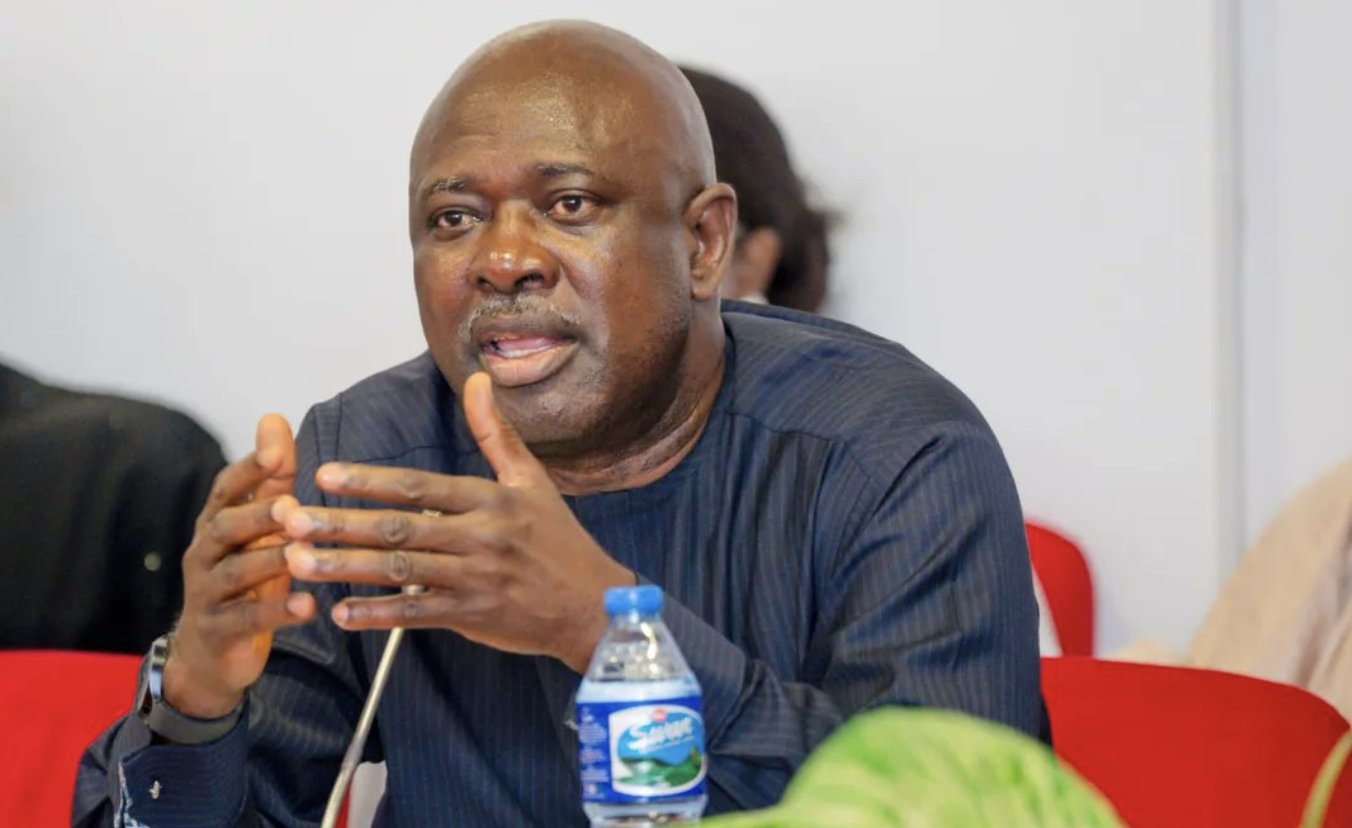
Heineken Lokpobiri, minister of state for petroleum resources (oil), says local companies cannot do any work in offshore exploration.
Lokpobiri said only foreign firms have the exclusive capacity.
The minister spoke on Monday in Abuja while delivering his opening remarks at the pre-conference of the 2026 Nigeria International Energy Summit (NIES).
However, he said Nigeria’s oil fields are large enough for local firms and engineering, procurement, and construction (EPC) companies, which are foreign specialised contractors, to coexist.

Lokpobiri added that local content is fundamental to Nigeria’s achievement of energy growth.
The minister said one of the first issues he encountered after assuming office was related to local content.
“Every time I travel, I am confronted with why the cost of projects is even higher in a country than at home. So we had to find a solution, and we found out that the problem was the misapplication of the local content,” the minister said.
“Our field is big enough for both EPC companies and the local companies to coexist. Do you agree with me that the local companies today cannot do any work in offshore exploration?
“That remains within the exclusive capacity of EPC. And most of the time when I engage members of EPC, they will tell me their approach and concept is higher because they seem to be a monopoly.”
He explained that monopoly, in this context, is not about siphoning resources but about being forced to accept whatever price is offered due to a lack of competition.
“There is no competition between international EPCs and indigenous firms. The space is big enough to accommodate everybody,” the minister added.
Lokpobiri said that despite increased local participation, Nigeria does not yet have the technical capacity to execute complex offshore and deepwater projects on its own.
He attributed the problem to what he called a “misapplication” of the local content law since its enactment in 2010, when he served on the national assembly committee that reviewed the legislation.
According to the minister, the law was never meant to exclude international firms, but to intentionally develop Nigerian capacity through structured partnerships.
“The spirit of the local content Act was to build capacity, not to push EPC companies away. Unfortunately, we promoted middlemen instead of growing strong Nigerian companies,” he added.
The minister also criticised the use of funding mechanisms under the Nigeria Oil and Gas Industry Act (NOGIC), noting that access to finance has not consistently led to increased capacity.
“I discovered that many companies that benefited from local content financing did not grow any capacity. They took the money and financed their lifestyle. That was never the intent,” Lokpobiri said.
He explained that the shortfall led to his decision to chair the Nigerian content development council, in order to provide “real strategic leadership” and ensure funds were channelled to companies committed to long-term growth.
“Our objective now is to bring everybody together, indigenous companies, local firms, and international partners, so that there is real value retention, capacity building, and sustainability,” the minister said.
Lokpobiri added that strong local content depends on investing in human capital, pointing to current efforts by the Nigerian Content Development and Monitoring Board (NCDMB) and industry partners.(The cable)
-

 News13 hours ago
IG Didn’t Order Officers To Shoot Criminals On Sight – Police
-
News13 hours ago
Jonathan, Osinbajo Met With Militants, Who Will Engage Boko Haram? – Gumi
-
News13 hours ago
North Has Lost Its Values – Ango Abdullahi
-
News12 hours ago
Mary Habila’s death in Umahi’s house suspicious — Southern Kaduna lawyers
-
Opinion13 hours ago
Crime And No Punishment
-
Metro13 hours ago
Delta: Suspected Cultist Allegedly Shoots Colleague Who Renounced Membership
-
News12 hours ago
Five govs to adopt security outfits as state police
-
Sports12 hours ago
Sports Commission defends N6.44bn World Cup qualifiers budget