News
Lagos Assembly orders immediate halt to Makoko demolitions amid protests against govt’s actions

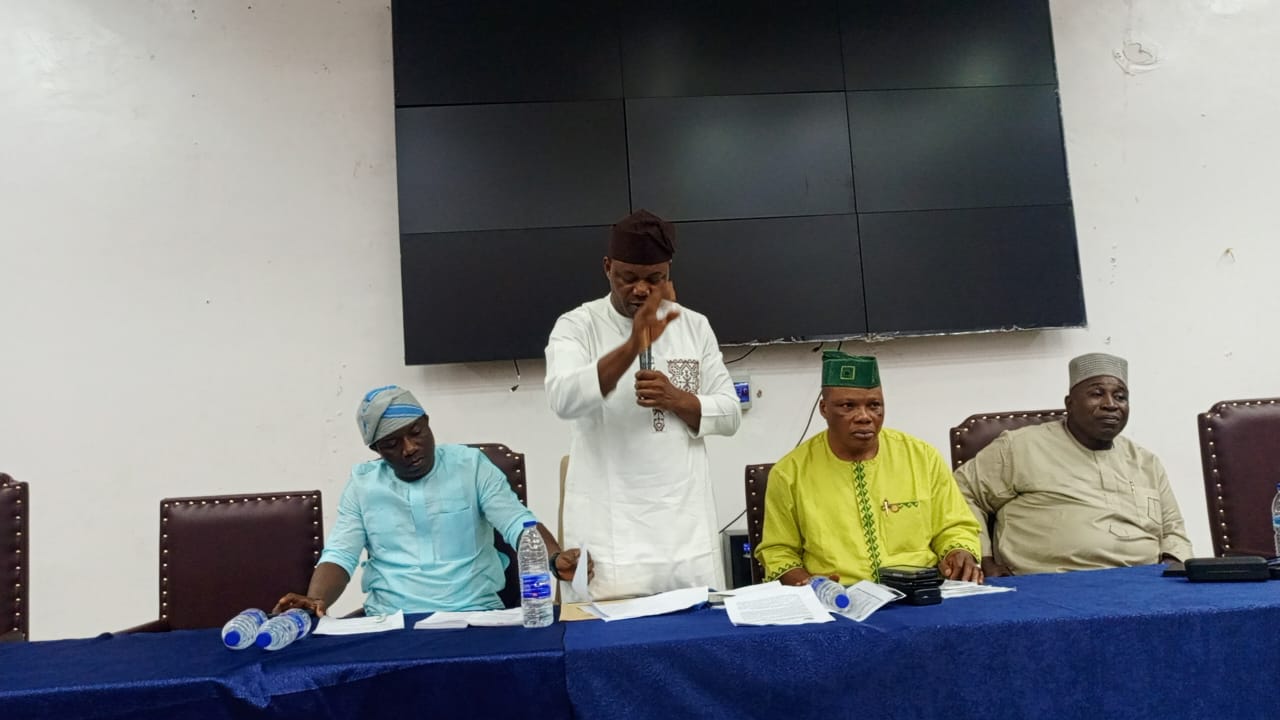
The Lagos State House of Assembly has ordered an immediate halt to ongoing demolitions in water front community Makoko, following protests by residents and advocacy groups last Tuesday.
The demolitions have left hundreds displaced and sparked calls for accountability.
Majority Leader of the House, Noheem Adams, who chaired a meeting between lawmakers and representatives of the Makoko community at the Assembly Complex in Alausa, Ikeja, gave the directive to halt the demolitions on Tuesday.
“On behalf of the Speaker of the Lagos State House of Assembly, Rt. Hon. Mudashiru Ajayi Obasa, and honourable members of this House, we are taking this matter seriously,” Mr Adams said. “All ongoing demolitions should be stopped.”

He added that the Assembly would work with relevant ministries and agencies to review issues surrounding the demolitions and ensure all stakeholders are properly engaged.
He stated that the Assembly will get the names of the task force that will be set up to examine concerns raised by residents, including disputes over setback measurements reportedly ranging between 15 and 30 metres along the waterfront.
Community representatives expressed dissatisfaction with the lack of clarity regarding the specific measurements enforced.
“The actual measure was supposed to be 15, 20 and 30 metres. There is nothing we have heard here about those things at all,” a school teacher and president of the Makoko Students Association, Kojah Phinehas, said, calling for clearer guidelines.
Residents allege illegal evictions beyond 30-metre setback
Lawyer Jiti Ogunye, representing Makoko residents, accused the Lagos State Government of carrying out forced evictions and demolitions beyond the initially communicated 30-metre setback, rendering hundreds homeless.

“The petition before this honourable House concerns forced evictions and illegal demolitions threatening tens of thousands of residents in Makoko and adjoining communities,” Mr Ogunye said during the meeting.
According to him, residents were initially informed that structures within 30 metres of the waterfront would be affected.
However, demolition activities reportedly extended far beyond that limit. “After the 30-metre area was cleared, the exercise went beyond 30 metres — to 100 metres, to 250 metres, and in some instances up to 522 metres,” he said.
He added that the lack of clarity and inconsistent enforcement created confusion and fear among residents, many of whom have already been displaced.
“As of today, many hundreds of people have been displaced,” Mr Ogunye said, urging the Assembly to investigate the demolition process, clarify setback regulations, and ensure enforcement complies with due process and human rights standards.
Government denies exceeding setback, confirms halt to demolitions
Responding to the allegations at the meeting, Olajide Babatunde, Special Adviser to the Governor on E-GIS and Urban Development, said the Lagos State Government had not extended demolitions to 500 metres as claimed.

He emphasised that Governor Babajide Sanwo-Olu had ordered a halt to further demolition in Makoko.
“Mr Governor has already stopped anybody from carrying out any demolition in Makoko,” Mr Babatunde said. He added that a task force, including the local government chairman and other stakeholders, would engage the community and address concerns arising from the exercise.
The adviser acknowledged that different setback figures — 30 metres, 100 metres, and up to 200 metres — had been discussed at various stages in line with planning regulations, but denied any extension to 500 metres.
He also dismissed claims of fatalities linked to the demolition exercise. “To the best of my knowledge, I am not aware that any life was lost in the process,” he said.
According to Mr Babatunde, the Makoko regeneration plan, including provisions for floating structures and shoreline improvements, aims to modernise the historic fishing community while improving living conditions.
Palliative measures and regeneration funding
The chairperson of Yaba Local Council Development Area (LCDA), Bayo Adefuye, announced that N20 million has been set aside for palliative support for affected residents.
While the funds have not yet been disbursed due to ongoing tensions, he said the council plans to provide food to families living on boats.
The Lagos State Government has also announced plans to invest about $10 million in regenerating Makoko.
According to the state government, it the state will contribute $2 million, with international partners, including the United Nations, expected to provide up to $8 million for a proposed “water city” project aimed at modernising the waterfront settlement.
Mr Babatunde explained that the project is still at the planning stage, and government interventions so far have been limited to removing structures in high-tension power line corridors to prevent accidents.
He noted that residents were consulted through engagements with UN agencies and government officials.
“Two major options were considered under the Makoko regeneration plan: a shoreline extension and the water city project. Environmental concerns made the water city concept more viable,” he said.
Intervention, protest, amicable settlement
Following the protests, the Lagos State House of Assembly invited leaders of Makoko and adjoining communities to review petitions over the demolitions.
Civil society groups have been vocal about the demolition exercise. But some community leaders expressed willingness to work directly with the government to resolve the crisis without external advocacy groups.
Their priorities include dialogue, clarity on setback measurements, proper documentation of affected structures, and sustainable development that preserves fishing livelihoods. This position contrasts with rights groups who have accused the government of forced evictions and human rights violations.
Tensions escalated last Wednesday when residents from Makoko, Owode-Onirin, Oworonshoki, Bariga, Ajegunle, and other affected communities staged a peaceful protest at the Lagos State House of Assembly. They demanded compensation for destroyed properties and an end to indiscriminate demolitions.
PREMIUM TIMES observed that the protest remained peaceful until shortly after 1 p.m., when police operatives fired teargas and attempted arrests, including that of protest leader Hassan Soweto. Elderly residents and children were reportedly affected, and several protesters sustained injuries requiring hospital treatment.
Civil rights activists described the police response as excessive. Ayoyinka Oni of the Coalition Against Demolition, Forced Eviction, Land Grabbing, and Displacement called it “brutality,” while Ibrahim Oluwatoba of Voice of the Masses alleged that the police action was deliberate despite prior notification of a peaceful protest.
The Centre for Human and Socio-Economic Rights (CHSR) has demanded an independent investigation into the crackdown and called for the immediate removal of Lagos State Commissioner of Police, Moshood Jimoh.
CHSR President Alex Omotehinse alleged that six young men from Owode-Onirin were killed during protests in August 2025 and remain uninvestigated.
Human rights activist Hassan Taiwo, also known as Soweto, accused the police commissioner of personally ordering his assault, unlawful detention, and attempted forced medication following the protest.
Activists spotlighted a history of impunity, citing a 2025 court ruling awarding N10 million to victims of police brutality during EndSARS commemorations, which has yet to be enforced.
Residents insist demolitions extended beyond the 30-metre safety setback, claiming a lack of profiling, documentation, and numbering of destroyed structures has complicated compensation and resettlement.
While the government cites public safety, infrastructure protection, and urban planning standards, civil society groups argue that the demolitions disproportionately target poor waterfront dwellers without adequate consultation or resettlement plans.(Premium Times)
-

 Business23 hours ago
FCMB Group Reports ₦202.1 Billion Profit Before Tax for 2025, ₦87.0 Billion in Q1 2026
-
Business23 hours ago
Three years after devaluation, corporate profits have bounced back in Dollar terms
-
 Business23 hours ago
From Lagos to New York: Inside Segun Agbaje’s N8.5bn multi-currency stock portfolio
-
News10 hours ago
Why 75-year-old pilot flew aircraft that landed on Delta road — NCAA
-
Metro15 hours ago
Inside Story Of Househelps From ‘Hell’
-
News14 hours ago
Dislodged terrorists migrate to S’East, S’South
-
Business23 hours ago
VAT collections hit N2.42 trillion in Q1 2026, up 17% year-on-year
-
Politics23 hours ago
2027: How Governor Alia is turning the tables on Benue’s godfather