News
Nigerian leaders eager to step into colonisers’ shoes – Soyinka

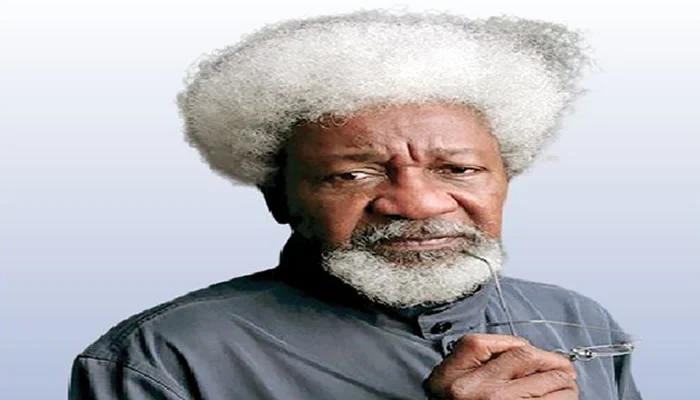
Nobel laureate, Prof. Wole Soyinka, on Thursday, said that despite the joy that came with Nigeria’s independence in 1960, government representatives were eager to step into the colonisers’ shoes at the time.
The renowned playwright stated this while featuring as a guest during “A Conversation with the Nobel Laureate” at the Yoruba Tennis Club, Onikan, Lagos, as part of programmes to mark the 100th anniversary of the socio-cultural club.
When quizzed on some of the plays he had written, including ‘A Dance of the Forests,’ and what revisiting the ideas behind the work would be like, Soyinka stressed the historical perspective behind the play, noting especially that it was inspired by events in the independence era.
The 91-year-old Nobel laureate told the gathering, composed of Yoruba Tennis Club members, secondary school students, and invited guests, that if he had to write the play again, it would be more “cruel” than the original.

“As students abroad at the time of independence, we were very excited about the prospect of independence. We looked forward to it and wanted to rush out of our studies and come home. We considered ourselves as the Renaissance people, those who were going to show the colonisers that we knew their secret, and that we could improve on what they tried to teach us. So, we were excited.
“But we were also alarmed at the representatives of the liberation – what they said, how they carried themselves, how they conducted themselves during the period of seeming independence, how they related to the populace – and we came to one conclusion: that they were, in many cases, and in the majority, only too eager to step into the shoes of our colonisers.
It was a case of the white man goes, the black man returns, and that was what ‘A Dance of the Forests’ was all about.”
He added, “It was saying let’s not glamorise our past, lest we fall into the pitfall which had been dug for us by the departing colonisers. We rejoiced, we were excited, and we wanted to come home, but we should not be tempted to step into the shoes of our alienated conquerors.
“Today, if I had to rewrite that, I would stress that aspect even more – didn’t we warn you? But you saw the pit and still fell into it. So, it would be far more cruel than the original version.”
Soyinka also advised citizens against tyranny, stressing that tyranny does not only have to do with people in power or government, but also involves people who are intolerant of alternative views, citing election periods as case studies.
“What constitutes tyranny? To understand tyranny is knowing that it is very deeply linked with justice… to come to terms with the understanding that those we look upon as capable of inflicting tyranny on the rest came originally from among the rest.
“Today, sometimes when we look around, especially at election time, the tendency towards total refusal – a rejection of a second view or another perspective – is total intolerance, which normally we would assign to the government, which does not like opposition. We rarely wonder whether we have emerged from that phase of recognition.
“One of the very first commitments that the citizen should make is to ensure that he or she does not act towards the other in the image of irresistible power. Yes, when it gets too much, we are all there together, in solidarity, and then it’s them versus us. But what is going on on a daily basis?… We tarry ourselves in the image that we say we repudiate.”
Soyinka, who has been a vocal critic of United States President Donald Trump, also warned the global audience against allowing tyranny to continue to fester in the name of rescue missions by global powers, condemning the US intervention in Venezuela and Russia’s actions in Ukraine.
“What we are encountering now is not new. It is a revelation of mammoth, not just theft, but robbery of other nations or coups by external powers, at the bottom of which is oil; you have the capacity to drain other people’s petroleum resources,” he said.
He noted that this did not mean he had sympathy for Venezuelan leader Nicolas Maduro, captured by the US, “or other enemies of humanity, who get their common match sooner or later, whether by what we call positive forces or opportunistic forces.”
He, however, stressed that sooner or later, the people would get to decide their fate for themselves, advising people, especially young ones, to leverage democratised technology, communications, and other available means to organise themselves.
Earlier, Soyinka saluted members of the club “for keeping the flag flying, for keeping this institution alive, vibrant, and intellectually productive. I wish to salute you also for taking pains to make people understand the origin of the association.”
Emphasising the essence of the club, he said, “Resistance, liberation, and revolution all take various forms, but they arrive at one destination ultimately, and that is keeping alive the intellectual capacity of the community.
“What became the Yoruba Tennis Club began as one of those possible paths to social liberation and recovery of dignity.”
Speaking earlier, the Chairman of the club, Chief Olawumi Gasper, said the club, being 100 years old, offered an opportunity to reflect on its commitment to honouring legacies and playing meaningful roles in Nigeria’s cultural and intellectual landscape.
Gasper said, “Yoruba Tennis Club is 100 years old, and we are celebrating a century at the forefront of history and tradition, reflecting the commitment to honouring legacy while continuing to play a meaningful role in shaping Nigeria’s cultural and intellectual landscape.
“We have served and will continue to serve as a hub for dialogue, fellowship, and leadership, consistently engaging with the current of history while preserving traditions. Today’s conversation with the Nobel laureate is a rare opportunity to engage Professor Wole Soyinka in a wide-ranging discussion on contemporary national and global issues.”
The event also featured a question-and-answer session from the audience, as well as the presentation of a framed photograph to Soyinka, as club members, clad in their uniform white agbada native attire, honoured the Nobel laureate. (Punch)
-

 Metro5 hours ago
My wife miraculously woke up after six months in coma – Akpabio
-
News11 hours ago
Tinubu Confirms Absence From UNGA, Asks Shettima To Lead Nigeria’s Delegation
-
News5 hours ago
Former Kogi governor Ibrahim Idris dies at 77
-
Politics5 hours ago
Presidential Campaign Council: We don’t need your validation – OK Movement replies NDC
-
Politics5 hours ago
2027: Remo group warns sons against breaking Ogun zoning pact
-
Politics5 hours ago
2027: I’ll Never Spend Holidays Abroad If Elected – Obi
-
Sports5 hours ago
Haaland Makes EPL Record As Manchester City Overcome Sunderland In 8-Goal Thriller
-
News5 hours ago
Niger govt unaware of miners’ arrest before deaths in NSCDC custody — Bago