Opinion
Why Makoko could become Lagos’ boldest urban experiment

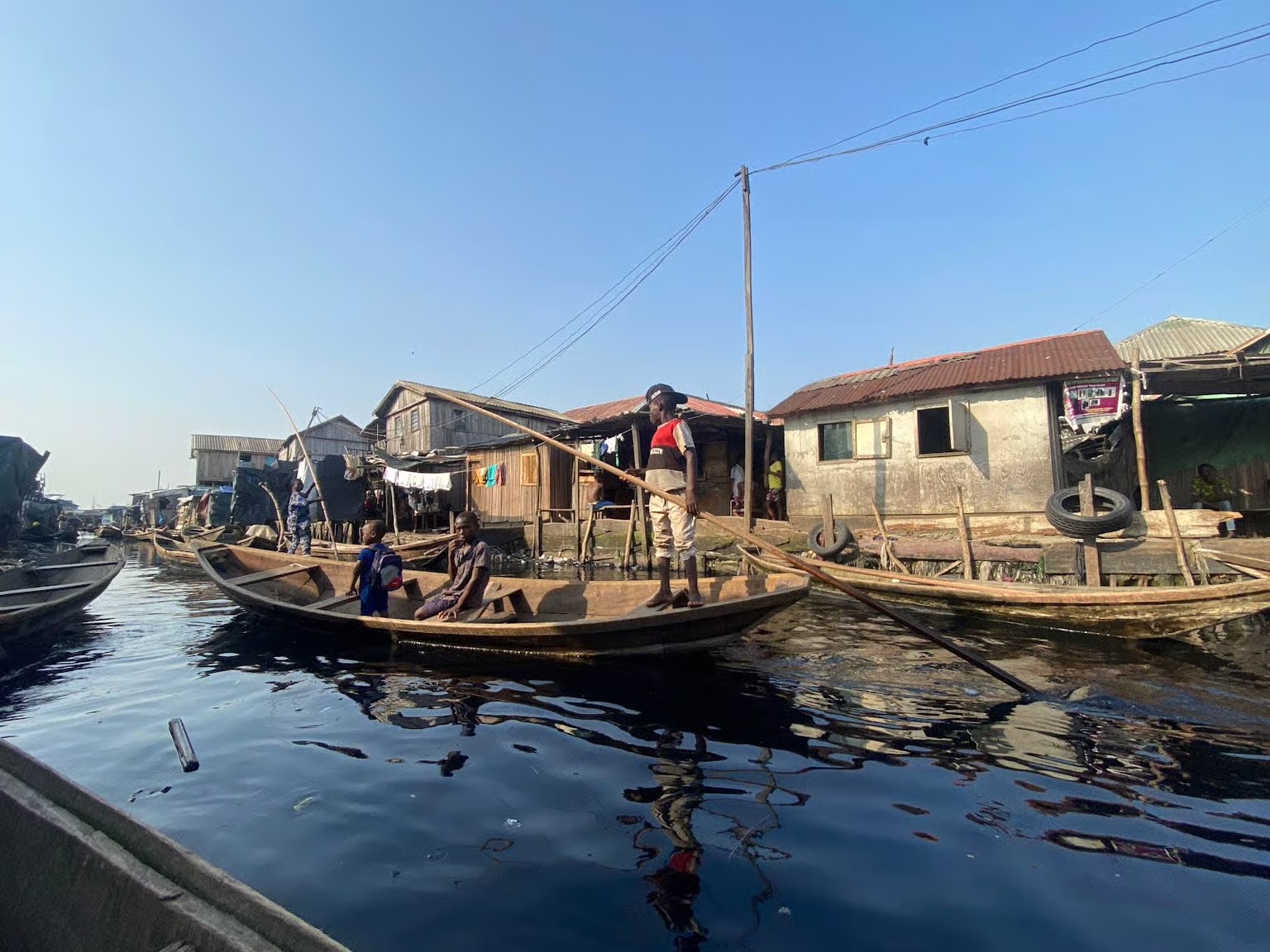
At a glance, the sight of bulldozers rolling into Makokoprovokes an instinctive reaction. Images of wooden homes collapsing into the lagoon are distressing, not merely because structures are being removed but because lives, histories and fragile livelihoods are visibly disrupted. These reactions are neither irrational nor sentimental.They speak to long-standing anxieties about how power is exercised in Lagos and who bears the cost of urban transformation.
Public policy, however, must sit at the uneasy intersection of empathy and responsibility.
Makoko presents Lagos with one of its most complex urban dilemmas: how to manage growth, safety, environmental risk and climate vulnerability without reproducing injustice or deepening exclusion.
The challenge is not whether intervention is needed, but how it is designed, sequenced and carried out.
Makoko occupies a unique place in Lagos’ urban fabric.
Often described as the ‘Venice of Africa,’ it is also home to tens of thousands of people whose presence on the lagoon is not accidental or opportunistic.Many families have lived and worked on the water for generations, building an economy around fishing, boat-making and water transport long before Lagos became a megacity.
The settlement’s informality is less a deliberate rejection of law than a consequence of decades of state absence, weak housing provision and rapid urbanisation that outpaced planning systems.
This context matters. While Makoko exists outside formal planning frameworks, it did not emerge in a vacuum.
Its growth reflects broader failures in affordable housing delivery, urban inclusion and coastal management.
To frame the community solely as an illegal encroachment risks simplifying a far more complicated urban reality and unfairly shifting responsibility onto residents who adapted creatively to survive where formal systems failed to reach.

Government engagement with Makoko has evolved over time, but not without missteps. Initial clearance actions in 2012 were justified on safety and environmental grounds, yet they were widely criticised for inadequate consultation, limited notice and insufficient resettlement planning. Those early interventions hardened distrust between residents and authorities, a legacy that continues to shape public perception today.
Between 2013 and 2016, the conversation began to change. Urban planners, architects, NGOs and international partners increasingly argued for upgrading rather than erasure. Proposals emerged around safer stilt housing, sanitation improvements and regulated waterfront zoning.
Importantly, these discussions acknowledged that Makoko’s residents were not obstacles to planning but essential partners in any sustainable solution. However, many of these ideas remained at the level of pilots and policy papers, with limited large-scale implementation.
From 2017 to 2020, Lagos intensified its focus on climate resilience, coastal protection and infrastructure expansion. Informal waterfront settlements were increasingly viewed through the lens of flood risk, environmental degradation and disaster prevention. These concerns are legitimate. Fire outbreaks, drowning incidents, structural collapses and disease outbreaks are real and recurring dangers in Makoko. Yet risk reduction does not automatically justify displacement, especially when safer alternatives can be developed in situ.
Since 2021, Nigeria’s economic and commercial nerve centre has moved toward a more structured intervention approach combining enforcement against new illegal encroachments with proposals for redevelopment under what is now increasingly framed as a Lagos Water City model, a strategy aimed at transforming vulnerable waterfront settlements into regulated, climate-resilient urban districts aligned with international waterfront development standards.
Against this backdrop, the Lagos Water City model presents an opportunity to rethink Makoko not as a problem to be erased but as a prototype for water-adapted urban living. If implemented inclusively, the model could transform daily life for residents while redefining how Lagos responds to climate change and urban pressure.
Central to this vision is housing that works with water rather than against it. Upgrading Makoko’s stilt homes into safer, flood-resilient structures could significantly reduce the risks posed by seasonal flooding.
Such an approach allows residents to remain within their historic environment while benefiting from improved living conditions.
Public health would also see dramatic improvements. Poor sanitation has long plagued Makoko, contaminating the lagoon and exposing residents, especially children, to preventable diseases. Integrating modern sanitation and waste management systems would improve health outcomes while restoring the ecological balance on which local livelihoods depend.
Mobility is another critical gain. Formal jetties and regulated water transport could offer faster, cheaper access to schools, markets, healthcare facilities and employment opportunities. In a city crippled by traffic congestion, water-based transport would connect Makoko more efficiently to the wider Lagos economy.
Economically, the Water City model could legitimise and expand existing livelihoods. Fishing, aquaculture, canoe-making and boat repairs, already central to survival in Makoko, could be modernised and integrated into the state’s emerging blue economy.
Responsible tourism and waterfront commerce could also generate jobs without erasing cultural identity.
Nevertheless, execution matters. Demolitions carried out ahead of visible, trusted redevelopment pathways risk undermining the very goals they claim to serve. Where residents see enforcement without parallel guarantees of rehousing, compensation or livelihood protection, scepticism is inevitable. A Water City cannot be built on uncertainty alone.
The state is correct that it has a constitutional responsibility to regulate land use and protect public safety.
It is also right to worry about environmental damage to the lagoon and the long-term sustainability of unregulated development. But responsibility cuts both ways. Uniform enforcement must be matched by uniform investment in alternatives. Regulation without inclusion breeds resistance, not order.
Environmental protection, often cited to justify clearance, should equally motivate upgrading.
Makoko’s lack of sewage systems, waste management and drainage is a public health crisis, but one rooted in neglect as much as informality. Integrating sanitation infrastructure, waste collection and water treatment would protect the lagoon while dramatically improving residents’ quality of life. These are not concessions; they are core urban services.
The promise of the Water City model lies precisely here: in reimagining Makoko not as an aberration, but as a testing ground for climate-adapted urban living. Safer, flood-resilient housing designed for aquatic environments could reduce disaster risks without severing cultural and economic ties to the water. Formal jetties and regulated water transport could connect residents more efficiently to schools, hospitals and markets, easing pressure on Lagos’ congested roads.
Economically, formal recognition could unlock growth. Fishing, aquaculture, canoe-making and boat repair are already sophisticated informal industries. With training, regulation and access to finance, they could become pillars of Lagos’ emerging blue economy. Responsible tourism, if community-led, could generate income while preserving Makoko’s distinctive identity rather than commodifying it.
International experience supports this approach.
From Brazil to India to South Africa, informal settlements have been upgraded into productive urban districts when governments chose partnership over force. These transitions were not painless, but they were guided by clear timelines, resident participation and credible commitments to improvement rather than displacement.
Lagos has taken steps in this direction.
The Sanwo-Olu administration has earmarked $2million funding for Makoko’s waterfront redevelopment since 2021, signalling an intent to integrate the community into broader urban renewal efforts. Yet funding alone is not enough.
Transparency, consistent engagement and visible pilot successes are essential to rebuild trust and demonstrate that redevelopment is not a prelude to erasure.
Makoko’s future does not have to be defined by demolition footage or protest slogans.
It can become one of Lagos’ most important urban experiments: proof that a megacity can confront informality, climate risk and inequality without defaulting to exclusion.
That outcome, however, depends on whether government matches authority with accountability and vision with compassion.
Pundits say if pursued with patience, genuine consultation and firm protections for residents, the Water City model could transform Makoko into a living laboratory for inclusive, water-based development in Africa.
In that future, Makoko would no longer symbolise failure or disorder but the possibility that Lagos can grow without leaving its most vulnerable communities behind.
OWEDE AGBAJILEKE is an Abuja-based journalist.
-

 Metro15 hours ago
EFCC moves to seize 57 Malami-linked properties
-
Politics15 hours ago
You Have Over 30 Governors In APC, What Are You Afraid Of? – David Mark To Tinubu
-
News15 hours ago
Plateau Killings: Tinubu Meets Victims’ Families At Airport
-
News15 hours ago
Makinde insists on Alli’s crowning despite Ibadan Obas’ boycott
-
Politics15 hours ago
2027 battle: INEC under fire as ADC crisis worsens
-
African News15 hours ago
Burkina junta chief says country must ‘forget’ democracy
-
News15 hours ago
Gunmen Abduct 9 In Sokoto Community
-
Politics15 hours ago
We helped make Abiodun Ogun gov – Daniel