Business
How Dangote plans to become Africa’s first $100bn-revenue conglomerate

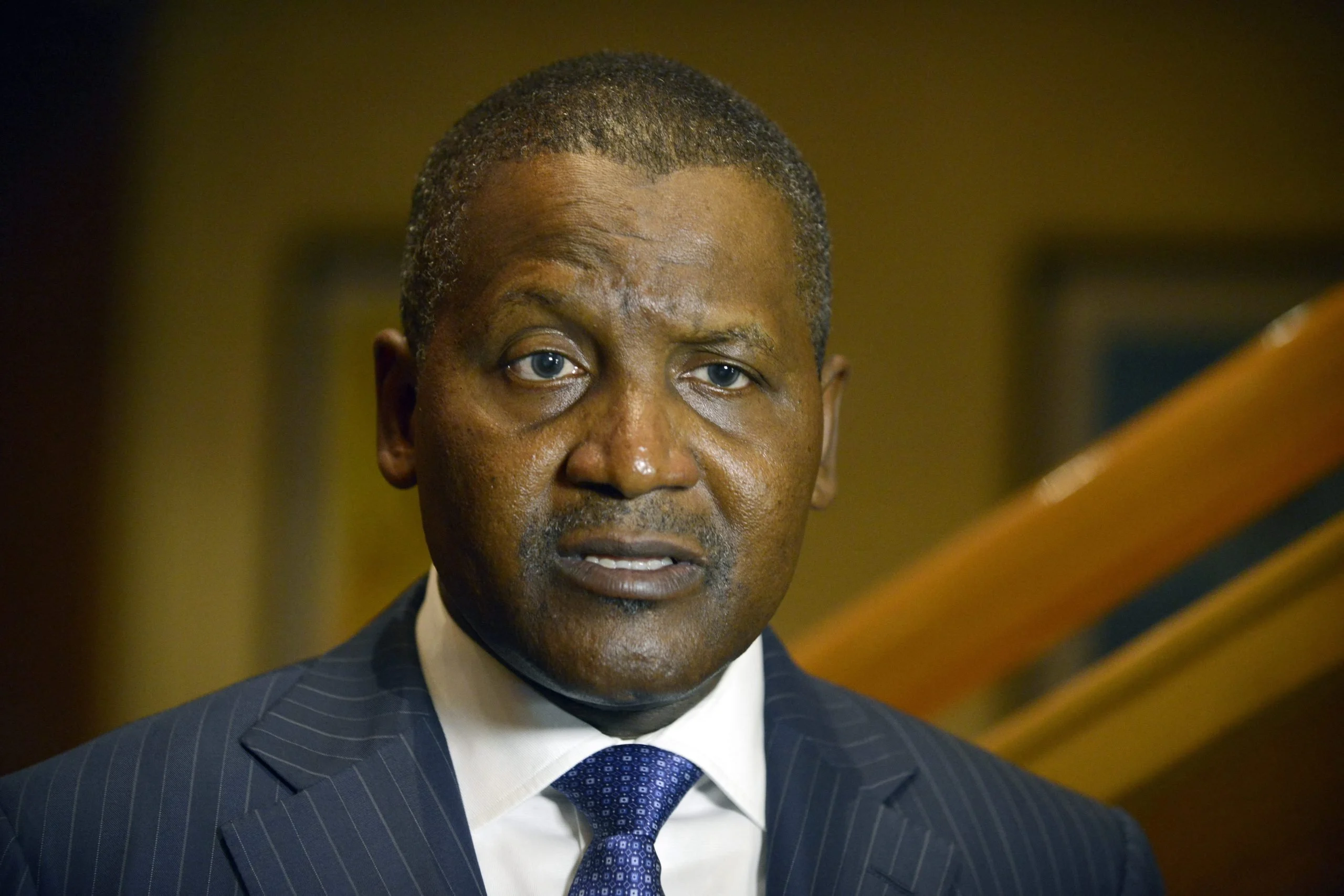
Less than a month after unveiling a five-year vision that includes new investment opportunities, Dangote Group has taken two major steps that will underpin its next phase of growth.
Three of its subsidiaries – Dangote Petroleum Refinery, Dangote Fertiliser and Dangote Cement –signed revised gas sales and purchase agreements with state-owned Nigerian National Petroleum Company to boost supply. This followed the announcement on 18 January of a $350m contract awarded to Engineers India Limited for the expansion of its refinery.
The agreements “mark a critical milestone in the expansion drive and a proactive measure to secure vast energy requirements for the anticipated increase in its production capacity”, said David Bird, CEO of Dangote Petroleum Refinery, at the signing ceremony.
Ayodele Oni, an energy analyst and partner at Bloomfield LP in Lagos, describes the revised gas deals as “a strategically important development” for Dangote’s expanding operations and Nigeria’s industrial gas sector.

“If implemented effectively and supported by complementary investments and sound regulation, the GSPAs represent a meaningful step toward securing domestic gas for major industrial projects and strengthening Nigeria’s gas market,” he tells The Africa Report.
He says regulatory changes, misaligned project timelines and shortfalls in upstream supply are potential stumbling blocks.
“Existing infrastructure – pipeline capacity, processing facilities and transmission networks –will need to keep pace with demand; upstream outages and other supply disruptions remain a material risk,” he adds.
“Equally important are robust payment terms and enforcement mechanisms to avert disputes and delays.”
The Dangote Group has set out one of the most ambitious corporate targets ever announced by an African company: to become a $100bn-revenue conglomerate with a $200bn market cap.
To get there, Aliko Dangote plans to invest $21bn over five years, according to his Vision 2030 roadmap seen by The Africa Report, doubling down on his signature playbook: massive scale, global cost-competitiveness and replacing African imports with local manufacturing.
“Our vision is to lead Africa’s industrial transformation by building globally competitive businesses that make the continent self-sufficient and prosperous,” the billionaire tycoon, who is the president and chief executive of the conglomerate, told an audience in Lagos on 11 December.
Since transitioning from trading to industry in the 1980s, the group has invested $25bn into assets like the 650,000 bpd Lagos refinery.
The payoff is visible: revenues jumped from $3.3bn to $18bn in five years. To hit the $100bn goal by 2030, the group must now quintuple sales, which is a growth rate far exceeding global oil and cement peers.
Energy and fertiliser expansion
The centerpiece of this growth is the refinery. Dangote plans to double capacity to 1.4 million bpd within three years for $10bn, positioning Lagos as a regional fuel hub. This expansion includes 3,150km of pipeline infrastructure to move products across Africa and a massive scale-up of petrochemicals.
In fertiliser, the group is investing $7bn to become the world’s largest urea producer. It plans to triple its Lagos capacity to 9mtpa and build a new plant in Ethiopia, bringing total output to 12mtpa.
The goal is to displace global incumbents and make the continent self-sufficient in soil nutrients.
Consolidating industry and agribusiness
Cement remains the group’s cash engine. An additional $3bn investment will boost capacity to 80mtpa by 2030. This includes the new Itoki plant in Nigeria, dedicated entirely to exports, which is expected to generate $500m in annual foreign exchange.
“We have the potential to be to Africa what Turkiye is to Europe: an indispensable source of supply,” Dangote said.
The group is also scaling food staples, targeting 500,000 tonnes of sugar and 1mtpa of rice production. This vertical integration is being supported by new ventures in shipping, moving up to 20 million tonnes of product annually, and a return to steel manufacturing and mineral mining.
New capital strategy
Delivering this roadmap requires a shift in corporate philosophy. Dangote is now prepared to dilute his ownership to as low as 51% in key assets to attract partners and unlock funding.
The group plans to list 10% of its refinery and petrochemicals complex in Lagos this year, using the proceeds to fund these aggressive expansions.
(The Africa Report)
-

 Politics24 hours ago
Tinubu using foreign reserves to create misleading impression of economic growth – Makinde
-
Politics24 hours ago
ADC mocks APC over ‘rented crowds, empty seats’ at Kaduna rally
-
Politics24 hours ago
2027: It’s Our Turn To Repay Tinubu – Shettima Tells Northerners
-
Politics24 hours ago
2027: Forget About Social Media News, Nigerians Love Tinubu – Information Minister
-
Metro23 hours ago
How AI-generated photo cost kidnap victim N4m ransom – Freed Benue graduate
-
Politics23 hours ago
Ebola: Parties reject campaign suspension
-
Metro23 hours ago
Self-driving car hits, kills man on US freeway
-
Metro23 hours ago
Expert warns of declining sperm concentration in Nigerian men