News
Tinubu’s administration revived dormant Siemens power deal, says German envoy

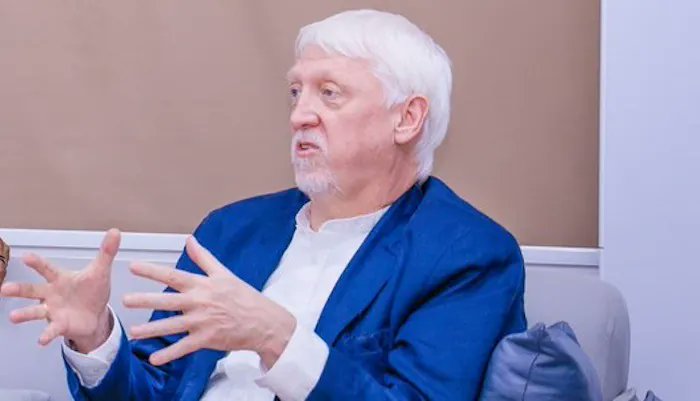
Johannes Lehne, Germany’s deputy head of mission in Nigeria, says the $2.3 billion Siemens power deal between the two nations remained largely dormant until President Bola Tinubu’s administration revived it.
Lehne spoke on Wednesday during the sub-Saharan Africa International Petroleum Exhibition and Conference (SAIPEC) in Lagos.
He said the bilateral partnership in the power sector, which had stalled, has now gained renewed momentum under the current government.
“The strange thing was that this partnership was dormant until the beginning of President Tinubu’s time, where we revived this,” he said.

“We are in the power sector. We have a Presidential Power Initiative (PPI) with President Bola Tinubu for the reactivation of the Nigerian transmission system and electricity.”
Lehne noted that beyond the PPI, Germany has expanded its energy cooperation with Nigeria through an energy support programme, drawing from Berlin’s experience in energy transition and diversification.
He said between 2021 and 2024, Germany intensified investments in renewable energy sources, including solar, wind, and geothermal, as part of efforts to cut reliance on hydrocarbons and reduce carbon emissions.
Despite this push, Lehne said what many countries describe as “energy transition” is often better described as an “energy addition,” involving a broader mix of sources rather than a complete replacement of fossil fuels.
“There is no real energy transition; there is energy addition and a different mix of energy sources, which every country should consider in order to have the right energy policy,” he said.
The envoy said gas remains central to Germany’s energy stability and will continue to be a key industrial feedstock for the next two to three decades.
However, he noted that the Russia-Ukraine crisis highlighted the risks of relying too heavily on a single supplier.
He said Germany has since diversified its energy imports and swiftly developed four liquefied natural gas (LNG) terminals — each capable of handling 80 to 84 gigawatt-hours (GWh) of gas daily — alongside existing pipeline supplies.
“For Germany, diversification of energy sources all over the world is part of policy. We need different partners. It is not clever to put all your eggs in one basket,” Lehne said.
He noted that Germany is ready to import gas from Nigeria if available.
In 2019, under the PPI, Nigeria signed a deal with Siemens, a Germany-based firm, to deliver 7,000 megawatts (MW) of electricity to the national grid by 2021, and 11,000 megawatts by 2023 — in phases one and two of the initiative, respectively.
The deal got the support of the German government.
In December 2021, the federal executive council (FEC) approved $1.9 million and €62.9 million for phase one of the project, which sought to modernise, rehabilitate, and expand the national grid.
On November 10, 2025, President Bola Tinubu said the progress of the Siemens power project is notable, but falls short of the expected level.(The Cable)
-

 Business19 hours ago
Energy costs rise as gas hits ₦1,500/kg
-
News20 hours ago
NCDMB promotes reading culture at book reading event
-
Politics20 hours ago
Wike Must Stop Sowing Division In The Party – APC Group Warns
-
News20 hours ago
FRSC warns motorists against fake traffic offence SMS
-
Business20 hours ago
Lekki Port stakeholders decry worsening traffic congestion
-
Politics20 hours ago
PHOTOS: Atiku hosts Aisha Buhari in Abuja, says visit underscores need for ‘better Nigeria’
-
News20 hours ago
Reforms raised revenue, but worsened hardship – Minister
-
News20 hours ago
Endless repairs, endless anguish on Lagos-Ibadan Expressway